
Livraison le jour même ou le lendemain

Qualité garantie

Débloquez vos offres de bienvenue: Livraison GRATUITE | Jusqu'à -80 % | 30 jours d'essai gratuits à JoyPlus
Téléchargez l'application
An RTK robot mower without a boundary wire can make maintaining a large garden much simpler – provided you check its features and limitations before buying. The promise of a cable-free autonomous mower is appealing, but certain details can quickly turn a good idea into equipment that’s impractical for everyday use.
RTK technology allows a connected robot mower to position itself accurately using satellite signals. However, it doesn’t guarantee instant installation in every garden. Dense trees, high walls, sunken areas or buildings can disrupt reception.
Before ordering, check the antenna installation requirements, the coverage of the entire lawn and whether any tricky areas exist. Even without a boundary wire, precise mapping is still essential.
A robot mower rated for 2,500 m² might suit a large lawn, but this theoretical area depends on several factors: mowing frequency, lawn layout, narrow passages, slope, dampness and charging time. A plot split into several zones requires more travel than an open space.
Cutting width and battery life also affect performance. A machine that can theoretically cover a large area may need several cycles to maintain a complex garden properly.
Slopes, edges, gravel and pathways near flower beds put extra strain on the machine. You should also plan a sheltered spot for the charging station. A robot mower shelter limits direct exposure to rain and UV rays, but it must be compatible with the mower’s dimensions and leave enough room for manoeuvring.
Finally, no autonomous mower completely replaces manual finishing. Edges and small corners often need an additional tool.
To choose a mower for a large lawn, compare the recommended area with your actual garden layout. The ISWARD GX states a recommended area of 2,500 m², a typical battery life of around 160 minutes per charge and a charging time of about 100 minutes. These figures come from the product sheet and may vary depending on usage conditions.
Automatic return to the station helps spread mowing cycles more evenly. If your garden has several zones, also check the number of mappable areas and the management options offered by the app or associated platform.
The maximum stated slope needs careful interpretation. For the ISWARD GX, the limit inside the working area is 57% or 30°, while the limit at the edge is 10% or 5.5°. This distinction matters: a machine can handle a slope in the middle of the lawn but may not be able to follow an inclined edge under the same conditions.
Also consider the soil type, camber and areas that could become slippery after rain. The manufacturer’s figures are no substitute for observing your own garden.
The ISWARD GX offers a cutting height range between 3 and 6 cm, with a cutting width of 23.5 cm. Adjustable height lets you adapt mowing to the season and grass type. A wider cut reduces the number of passes, while a narrower one makes manoeuvring easier in irregular spaces.
For a cordless electric mower, also check the battery type, built-in protections, the IP rating stated for the mower and station, and the recommended storage conditions.
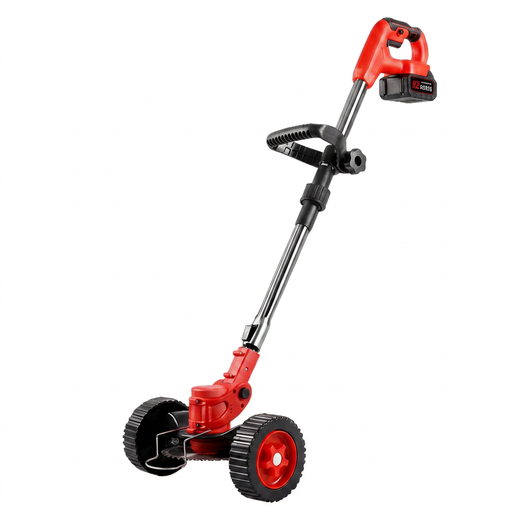
Why this choice suits this profile : This manual tool is ideal for small areas, edges and spots a robot can’t reach. It needs no cable, no charging and no installation.
Its targeted use stops you buying an oversized robot for just a few square metres or occasional finishing work.
Steel blade, ergonomic handle and manual operation with no fuel or electricity needed.
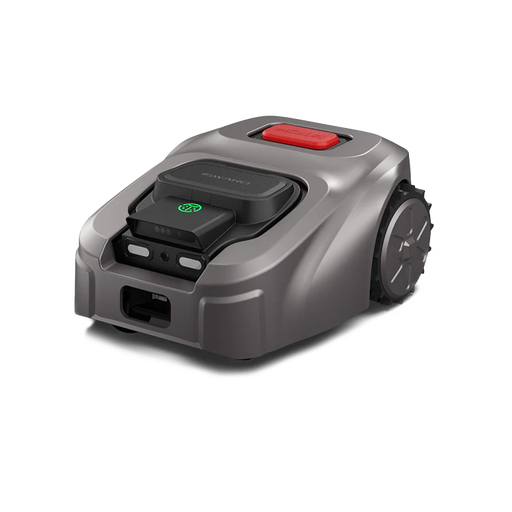
Why this choice suits this profile : This boundary-wire-free robot mower is designed for owners of large gardens who want connected navigation and automated management.
The product sheet clearly separates slope limits inside the working area and at the edge, making it easier to assess a hilly lawn.
Recommended area of 2,500 m², stated memory for 20 maps and rain, obstacle and tip-over sensors.
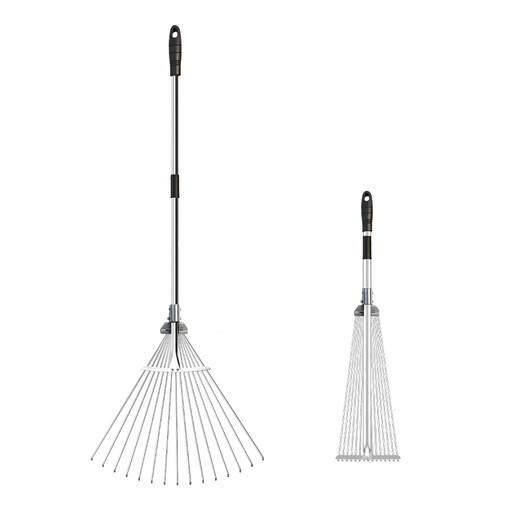
Why this choice suits this profile : This adjustable garden rake complements an autonomous mower in large spaces, especially after leaf fall or for gathering debris.
It serves as a reminder that a manual tool is still needed for leaves and areas excluded from the robot’s map.
15 metal tines, adjustable length up to 160 cm and a stated working width of up to 62 cm.
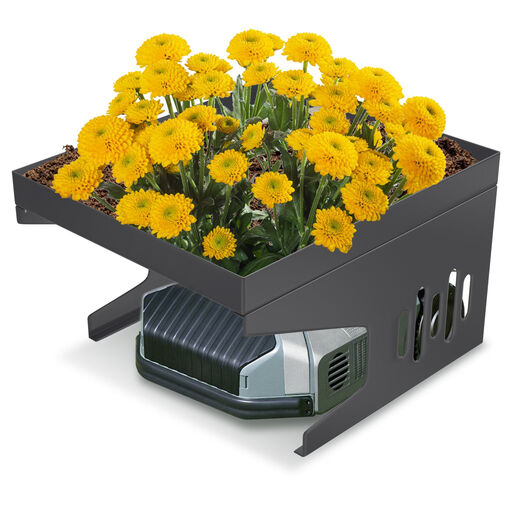
Why this choice suits this profile : This shelter is ideal for users who want to protect the station and mower between cycles, without compromising the cable-free setup.
Its stated dimensions let you check compatibility before buying, rather than choosing a shelter that’s too narrow.
Metal structure stated as weather-resistant, with protection against rain and UV.
We’ve put together a comprehensive, real-time selection of products that meet these strict criteria as well as European safety requirements.
It can work without a boundary wire, but it needs adequate positioning coverage and a properly configured map. Obstacles, trees and shaded areas can reduce accuracy. Check the installation requirements for your specific model and garden before you start.
Consumption depends on battery capacity, mowing frequency, slope and the number of charging cycles. For the ISWARD GX, the product sheet states a LiFePO4 battery of 22.4 V and 4 Ah, which is 89.6 Wh. This figure helps estimate consumption per cycle, but the actual cost depends on your electricity tariff and usage time.
Lifespan depends on blade maintenance, the battery, the wheels and exposure to the weather. Clean the underside of the machine regularly, remove grass clippings and store the mower according to the manufacturer’s recommendations. A suitable shelter can limit direct exposure, but it doesn’t replace routine maintenance and checks.