
Livraison le jour même ou le lendemain

Qualité garantie

Débloquez vos offres de bienvenue: Livraison GRATUITE | Jusqu'à -80 % | 30 jours d'essai gratuits à JoyPlus
Téléchargez l'application
A cornerstone of social gatherings, the round table softens interiors with its curved lines that encourage connection and improve flow. Whether it's a coffee table in the heart of the living room, a garden table for sunny lunches, or a simple side table, its charm is undeniable. But be warned: this seemingly simple purchase can quickly become a headache. An attractive design can hide precarious stability, and so-called durable materials can prove disappointing with use.
As the editorial team's product expert, my mission is to guide you through the jungle of options to make the right choice. Let's break down the common mistakes to avoid and the essential criteria for finding the round table that will integrate seamlessly into your daily life.
Falling for a design can make you forget the essentials. To avoid buyer's remorse, here are two crucial points to watch out for.
To be sure of the quality and longevity of your future table, scrutinise these three fundamental points.
The secret to a table that doesn't wobble? Its base. Before you fall for the tabletop, inspect the foundation:
The choice of material will depend on your intended use and the look you're after.
A good table is, above all, one that is adapted to your space and your habits.
Instead of an endless list, we've selected models that meet specific needs while adhering to the quality criteria we've just discussed.
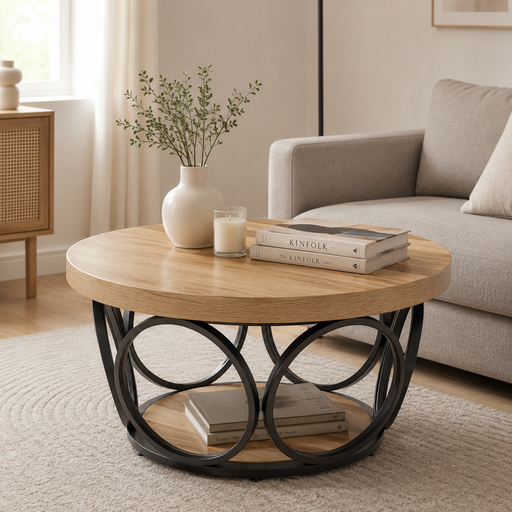
The Editor's Verdict: Perfect for taking centre stage in the living room, its 80 cm diameter offers a generous surface area. Its two-tier shelf is a clever feature for keeping remotes and magazines within reach but out of sight.
It doesn't rely on looks alone. Its sturdy metal frame and two-level design ensure excellent stability and real storage potential. This avoids the trap of a table that's "just for show" but impractical for daily use.
Its two-tier shelf, which provides generous storage volume to keep the living room tidy.
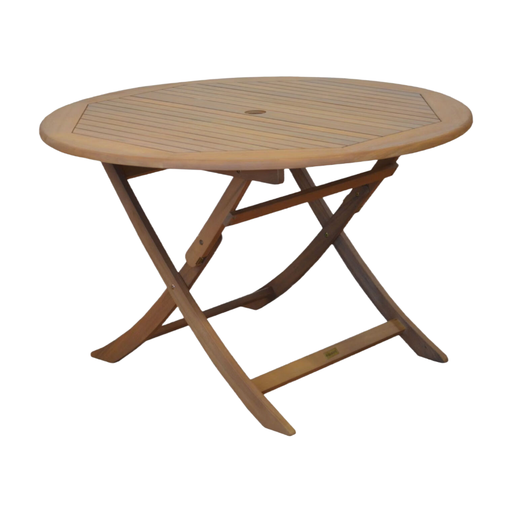
The Editor's Verdict: Built for the outdoors, this 120 cm diameter acacia table comfortably seats 4 guests. Its wood is naturally resistant and FSC-certified, a guarantee of sustainable forest management.
It sidesteps the trap of materials unsuitable for outdoor life. Acacia is a wood that naturally resists weather and insects, unlike untreated pine or a low-grade metal that would rust in record time.
Its folding base, which allows for easy off-season storage to free up space on the patio or in the garden shed.
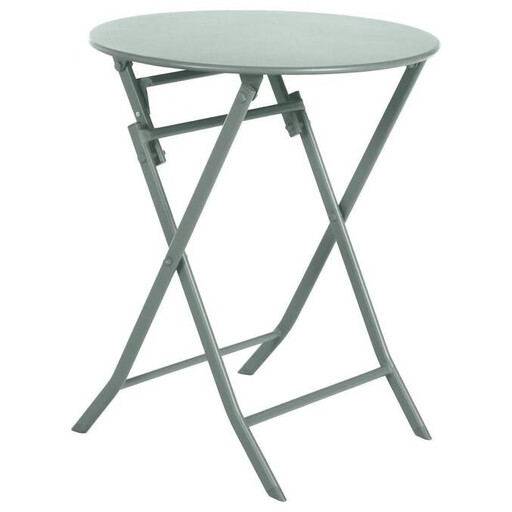
The Editor's Verdict: The perfect ally for balconies and small patios. This compact two-person table combines style and practicality. Its folding function is a decisive advantage for city dwellers looking to optimise their space.
It's designed for the outdoors, thanks to its epoxy-coated steel that effectively protects it from rust. Its folding design avoids the pitfall of fixed furniture that permanently clutters an already limited space.
Its ultra-compact size and vertical folding mechanism, allowing it to be stored against a wall or in a corner without wasting a single square inch.
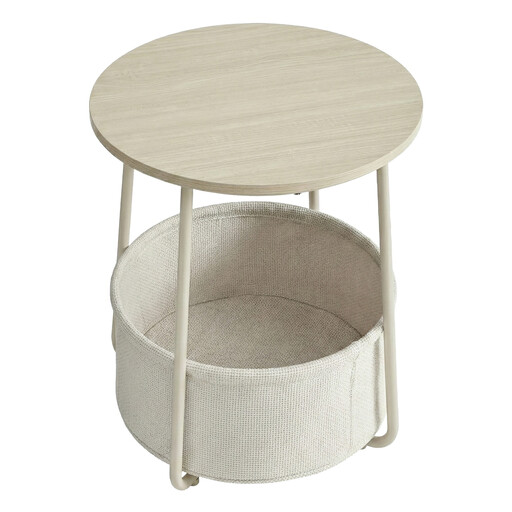
The Editor's Verdict: This round side table is the ideal two-in-one solution for next to a sofa or in a bedroom. Its integrated fabric basket is perfect for discreetly storing a throw blanket, books, or a few toys.
It sidesteps the trap of instability, a classic flaw in small side tables. Its U-shaped steel legs and adjustable feet ensure a solid base, even on a floor that isn't perfectly level.
Its fabric storage basket, as stylish as it is practical, which offers a clever storage solution without cluttering the space.
Discover our full selection of products that meet our strictest quality and safety criteria.
For a dining table, the golden rule is to allow 60 cm of space per guest. A 120 cm diameter table is therefore perfect for 4 people. For a coffee table, its diameter should not exceed two-thirds of your sofa's length. Always remember to leave at least 45 cm of circulation space all around it.
It all depends on the finish. For metal, a simple damp cloth will suffice. If it's painted, do not use abrasive products. For wood, an oiled solid wood top will need a new coat of oil once or twice a year to nourish and protect it. A more fragile veneer top should be cleaned with a soft cloth and a neutral cleaner.
A base with 3 or 4 legs distributes weight more evenly and offers better stability, especially if people tend to lean on the edges. A central pedestal can be just as stable, but on one condition: its base must be very wide and heavy enough to act as a counterbalance. This is a point to check with the utmost care, particularly on larger tables.