
Livraison le jour même ou le lendemain

Qualité garantie

Débloquez vos offres de bienvenue: Livraison GRATUITE | Jusqu'à -80 % | 30 jours d'essai gratuits à JoyPlus
Téléchargez l'application
The rotary multi-tool is appealing for its versatility: engraving, sanding, polishing, cutting... all with a single device. Yet, disappointment is often just around the corner. Too many DIYers end up with an underpowered device and a case full of unusable gadgets. To help you avoid this mishap, we've broken down the pitfalls to avoid and the essential criteria for a successful purchase.
Marketing is often deceptive, highlighting features that poorly conceal mediocre quality. Here are two points to watch out for to avoid throwing your money down the drain.
To find the rotary tool that truly meets your needs, rely on objective technical specifications, not the sirens of marketing.
The performance of a rotary tool rests on an inseparable duo: power, in Watts (W), and rotation speed, in revolutions per minute (RPM).
Forget quantity; prioritise the quality and relevance of the included accessory kit. A good starter kit should at least contain:
Also, remember to check the chuck's compatibility. A universal chuck or a set of collets of several diameters (typically 2.3?mm and 3.2?mm) will give you the freedom to use rotary tool accessories from other brands.
We have scrutinised several products to offer you a selection suited to different profiles, always keeping our criteria of performance and relevance in mind.
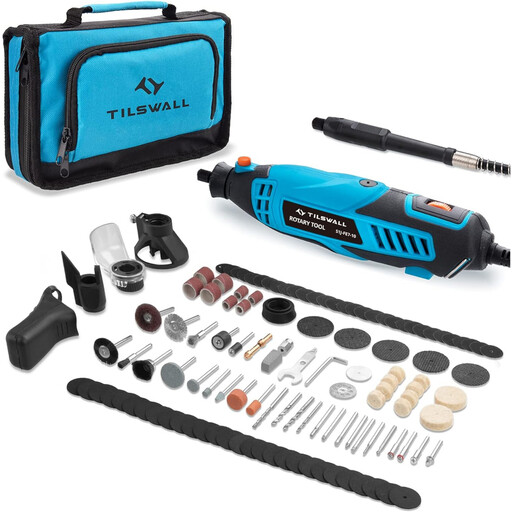
Why we chose it: This is the ideal starter kit for DIYers and makers looking for a complete and well-balanced set. It allows you to tackle a wide range of tasks, from glass engraving to finishing 3D-printed parts, without having to immediately buy more.
With its 160W motor and a variable speed up to 33,000 RPM, it escapes the underpowered motor trap. The 145-piece accessory kit is comprehensive enough to be genuinely useful, without falling into the trap of oversized kits filled with useless gadgets.
The auxiliary handle and integrated LED light are real assets for precision and comfort during detailed work. An undeniable plus for model making or engraving.
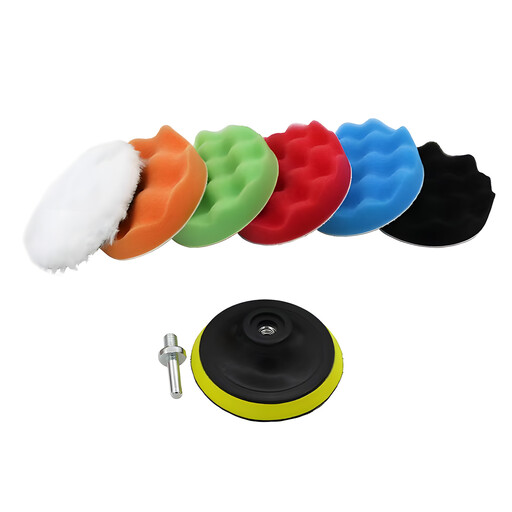
Why we chose it: Ideal for those who already own a drill or polisher and want to get equipped for polishing car bodywork, glass, or other delicate surfaces. Note that this is an add-on, not a standalone tool.
This kit doesn't promise the moon. It focuses on a single mission: polishing. By providing pads of different hardnesses, it ensures a progressive and professional result, far from the trap of "do-it-all" accessories that do nothing well.
The M10 drill adapter and hook-and-loop backing plate make it compatible with most power tools on the market. An economical and highly effective polishing solution.
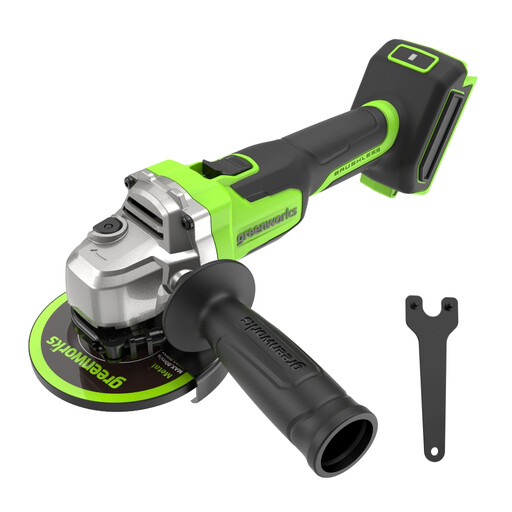
Why we chose it: When projects (cutting tiles, grinding welds, cutting metal) exceed the capabilities of a simple rotary tool, you need to step up to the next level. This **angle grinder** is a powerful and specialised machine.
This grinder doesn't aim for versatility at all costs. It delivers raw power (700W equivalent) for very specific tasks. This avoids the worst-case scenario: attempting heavy-duty work with an unsuitable precision tool, which is at best ineffective, at worst dangerous.
Its brushless motor and 24V battery power are synonymous with power, runtime, and freedom of movement. Decisive advantages for both workshop and on-site jobs.
We have compiled a complete and up-to-date selection of products that meet our strict selection criteria and current safety standards.
For versatile home and creative use (wood, plastic, soft metal), a power between 130 and 170W is ideal. It's the best compromise between the performance needed for grinding/cutting and the manoeuvrability required for precision work.
Absolutely, it's one of its flagship applications. A rotary tool is highly effective for deburring, smoothing layer lines, and polishing the surfaces of PLA, ABS, or PETG parts. The secret? Use low to moderate speeds to avoid melting the plastic, and favour fine sanding accessories and polishing felts.
After each use, clean grinding stones and cutters with a wire brush to remove residue. Sanding discs are consumables: replace them as soon as they are worn. Polishing felts, on the other hand, can be washed with soapy water and then air-dried. Finally, storing them neatly in their case protects them from impacts and extends their lifespan.