People looking to avoid caffeine
If avoiding caffeine is your main priority, check the claim on the product and its ingredients list. The word ‘infusion’ on its own doesn’t tell you whether it meets this requirement.


If you want to replace your morning coffee without giving up a hot drink, rooibos or a herbal infusion could be a good choice if you enjoy the taste and the label meets your needs regarding caffeine. If you’re mainly looking for the taste of tea, consider decaffeinated teas instead, but don’t assume they’re the same as a herbal tea explicitly labelled caffeine-free. For an evening cuppa, check the ingredients and brewing instructions for the product you choose.
If avoiding caffeine is your main priority, check the claim on the product and its ingredients list. The word ‘infusion’ on its own doesn’t tell you whether it meets this requirement.
Rooibos lets you keep the ritual of making a hot drink, but it tastes different from coffee. A flavoured blend is another option, as long as you check its ingredients.
A herbal blend can be a good choice if you fancy different flavours after dinner. Choose it for its ingredients and taste, rather than treating a ‘good night’ claim as proof that it improves sleep.
Worth considering: if you’d like a hot drink that’s different from coffee and want a product explicitly labelled ‘caffeine-free’ or ‘theine-free’.
Bear in mind: its flavour isn’t the same as coffee or tea. If you choose a flavoured blend, check the ingredients of that specific product.
Worth considering: if you care more about herbal or fruity flavours than finding something similar to your usual drink.
Check: the word ‘infusion’ alone doesn’t guarantee that a drink is caffeine-free, and packaging that positions a product as an evening drink doesn’t prove it affects sleep.
Worth considering: if you want to keep the taste of tea rather than switch to a herbal infusion.
Check: tea leaves naturally contain caffeine, according to the European Food Safety Authority (EFSA). Read the manufacturer’s exact wording before choosing.
Once you’ve chosen a type of drink, compare its caffeine claim, ingredients and format. These details matter just as much for your morning cup as for an evening one.
| Criteria | What to check | Who is it for? |
|---|---|---|
| Caffeine-free | Look for an explicit claim on the product and read the full ingredients list, checking in particular for any tea leaves. | If I want to avoid caffeine in my evening drink too, the recipe name alone isn’t enough. Around 36% of consumers make this their top priority. |
| Alternative to morning coffee | Choose between plain rooibos and a flavoured blend, depending on the taste you’re after. Check the number of tea bags and the brewing instructions. | At breakfast, I want to keep enjoying a hot, aromatic drink, even if it doesn’t taste like coffee. This is the top priority for around 29% of consumers. |
| Evening flavour | Read the listed herbs, fruit and flavourings, then check the brewing time for that blend. A promise of relaxation isn’t proof of effectiveness. | After dinner, I’m mainly looking for a flavour I enjoy, without expecting a herbal tea to affect my sleep. Around 21% of consumers prioritise this flavour ritual. |
| Ingredients and format | Compare the ingredients, any organic or fair trade claims specific to the product, the net weight and the packaging. | When two boxes look alike, I want to know what’s inside and how to prepare it. For around 14% of consumers, this information is the top priority. |
According to the EFSA, tea leaves naturally contain caffeine. So the name or an image on the box is no substitute for checking the ingredients.
If you’re looking for a caffeine-free drink, check the full ingredients list and the exact claim on the product.
This phrase describes how a blend is marketed, not a guaranteed result for sleep. The French Agency for Food, Environmental and Occupational Health & Safety (Anses) says caffeine can disrupt sleep; that doesn’t prove a herbal tea improves it.
Choose a drink for its ingredients and flavour. If you have persistent sleep problems, don’t use a herbal tea as a substitute for professional advice.
Two boxes may each contain 20 tea bags but have different net weights: Auchan’s listings show 40 g for the ETHIQUABLE rooibos featured here and 34 g for the Jardin BiO étic product.
Compare both the number of tea bags and the net weight to check the pack sizes.
Instructions vary from one product to another and can affect the flavour you get.
Follow the temperature, amount of water and brewing time shown on the box you’ve bought, rather than using the instructions for a different infusion.
A rooibos product to consider if you’re comparing short ingredient lists and ‘theine-free’ claims.
A plain rooibos for anyone who also wants to check organic and fair trade claims.
The Bonne Nuit blend combines several ingredients for an infusion with a different flavour profile from plain rooibos.
The Menthe cannelle product is an example of tea bags with mint and spice flavours.
This selection includes rooibos and herbal infusions in tea bags to consider for a hot drink, as well as a cold infusion and a ready-to-drink beverage. These last two formats aren’t a substitute for making a hot drink in the morning.
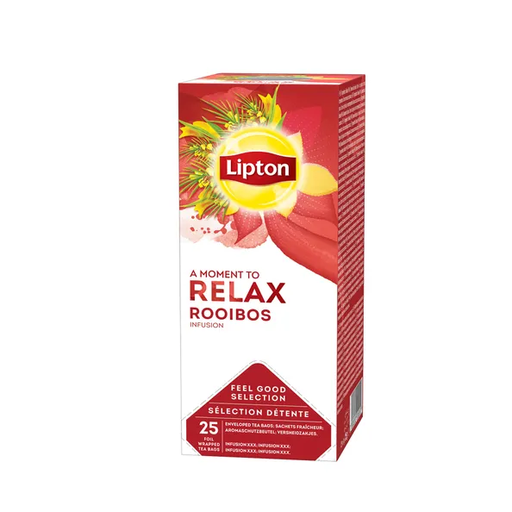 Image unavailable
Worth considering if you’d like to replace your coffee with rooibos in tea bags. If you need to avoid caffeine completely, check the relevant claim on the box.
 Image unavailable
A camomile infusion to consider if you prefer floral flavours to rooibos. If avoiding caffeine is essential, check the label as well as the brewing instructions on the box.
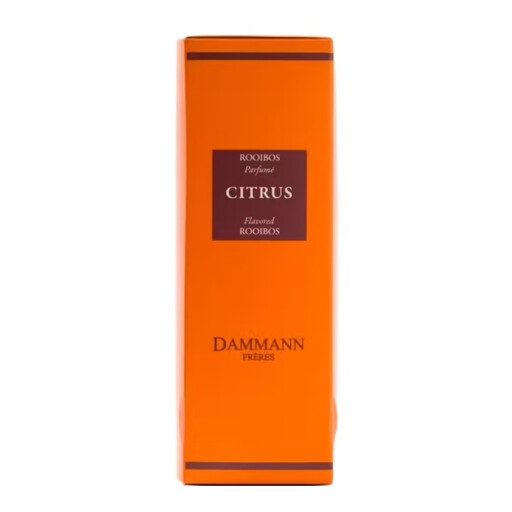 Image unavailable
This citrus rooibos is for anyone who’d prefer a flavoured blend to plain rooibos. Before buying, read the ingredients and check the caffeine claim on the packaging.
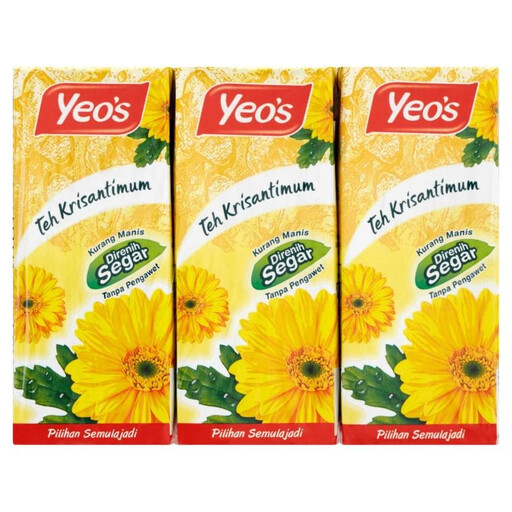 Image unavailable
This ready-to-drink format is handy when you want a break without having to brew anything, but it’s not suited to the ritual of a hot cuppa. Check the nutritional information and caffeine claim on the packaging.
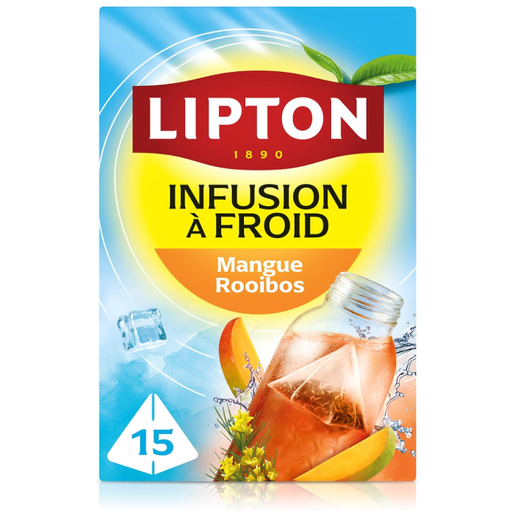 Image unavailable
This rooibos blend is designed to be made cold, rather than enjoyed as a hot morning drink. Check the packaging for the amount of water to use, the ingredients list and the caffeine claim.
No. Check the ingredients and the claim on the specific product rather than relying on the word ‘herbal tea’ alone. The EFSA notes, in particular, that tea leaves naturally contain caffeine.
Start with the product name, ingredients list, allergen information and net quantity. The DGCCRF notes that food labelling information must be visible, legible and written at least in French. If you’re choosing a caffeine-free drink, also check the exact claim on the product.
No, follow the instructions on each box. Auchan’s listing for ETHIQUABLE rooibos recommends 95 °C for 5 to 6 minutes, while Twinings France recommends 5 minutes for its Bonne Nuit blend.
No, the name of the Twinings blend doesn’t prove that it affects sleep. Anses says caffeine can delay falling asleep and reduce the length and quality of sleep, but that doesn’t prove a herbal infusion has the opposite effect.