
Livraison le jour même ou le lendemain

Qualité garantie

Débloquez vos offres de bienvenue: Livraison GRATUITE | Jusqu'à -80 % | 30 jours d'essai gratuits à JoyPlus
Téléchargez l'application
A rolling clothes rail can easily free up space in a bedroom, utility room or shop. However, you need to choose a model suited to how you intend to use it. A structure that is too lightweight may bend under the weight of coats, castors without brakes can make the whole unit unstable, and a fixed width can quickly limit storage capacity.
Before buying, there are three pitfalls to avoid:
For everyday use, start by checking the maximum static load specified by the manufacturer. This is the weight the rail can support while stationary, with the load distributed correctly. Winter coats, thick jackets and workwear can place considerable pressure on one side.
A double-rail clothes rack allows you to separate shirts, trousers and jackets, but you should check the capacity specified for each rail. Some JOYFURNOS models state a total load capacity of 100 kg, while the black double-rail model is rated for 80 kg in total, with a limit of 35 kg per rail and 10 kg for the lower rails.
These figures are not a margin that allows you to exceed the stated limits. To maintain good stability, spread clothes across the full length and place the heaviest items close to the uprights.
A metal clothes rail, particularly one made from steel, can be suitable for coats and intensive use, provided that the tubes, connectors and feet are assembled correctly. Where the thickness is specified, it provides a useful indication: some models in this selection use 1 mm steel tubes.
You should also check:
In a utility room, avoid leaving a metal clothes rail in a constantly damp area. Clean the metal parts with a slightly damp cloth, then dry them thoroughly. For occasional outdoor use, refer to the manufacturer’s instructions: a coating does not necessarily protect the structure from prolonged exposure to the elements.
A clothes rail with wheels should be easy to move, while staying firmly in place when you choose an outfit or hang up laundry. Swivel castors make it easier to change direction, while two braked wheels can keep the rail stationary.
Measure the width of doors, corridors and storage areas. An adjustable model measuring 92 to 132 cm may suit a bedroom or dressing room, but you will need to allow enough clearance when it is fully extended. Height also matters if the rail needs to fit under a shelf or be stored beneath a bed.
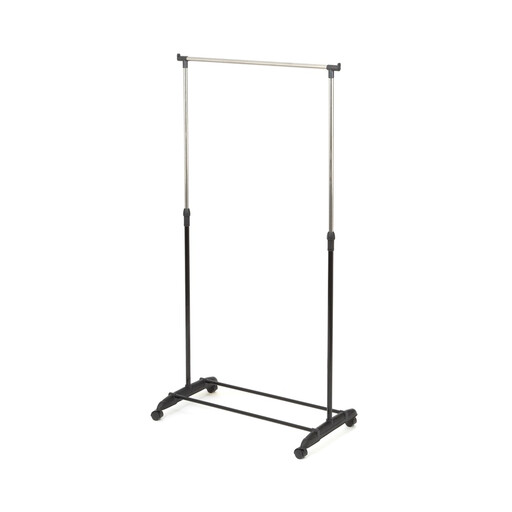
Why this choice suits this profile : its 78 × 42 cm footprint is ideal for small homes, student bedrooms or additional storage. Its adjustable height of 85 to 165 cm makes it easy to adapt the space to hanging clothes.
Its dimensions are clearly stated and its compact design helps avoid unpleasant surprises caused by its overall size.
Adjustable height, 78 × 42 cm base, metal and plastic construction, easy assembly and dismantling.
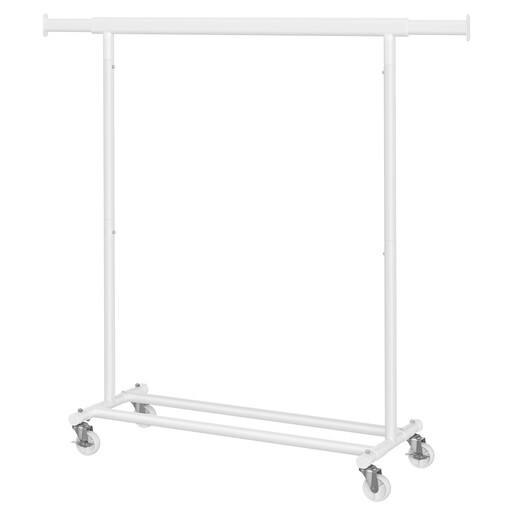
Why this choice suits this profile : this extendable clothes rail combines an adjustable width of 92 to 132 cm, four swivel castors and a stated total static load capacity of 100 kg. It is suitable for a well-stocked dressing room or for frequently rotating your clothes.
The capacity, dimensions and number of wheels are clearly specified. Two lockable castors help prevent unwanted movement.
1 mm steel tubes, extendable rail, two lower rails for boxes, assembly in three steps without tools, as stated.
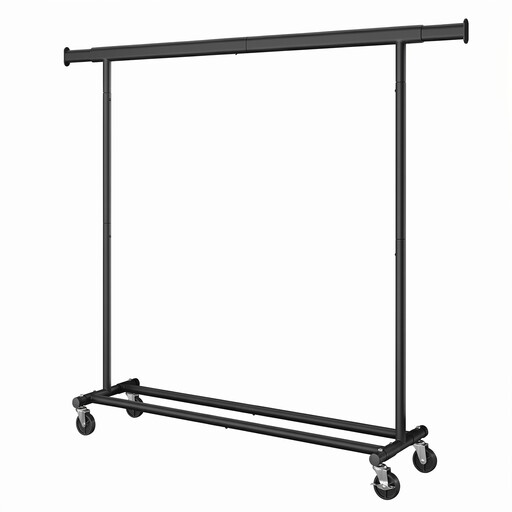
Why this choice suits this profile : its adjustable width of 160 to 200 cm and stated static load capacity of 150 kg meet the needs of a shop, a house move or substantial seasonal storage.
The high stated capacity is accompanied by precise dimensions. However, this model should only be used in rooms wide enough to accommodate its extended base.
Steel frame, castors with locking system, lower rails for boxes and tool-free assembly according to the product description.
We have put together a complete, real-time updated list of products that fully meet these strict selection criteria and European safety regulations.
An easy-to-assemble clothes rail should be put together on a clear floor, following the order shown in the instructions. Before hanging your clothes on it, check that every connector is properly inserted or screwed into place and that the castors are securely attached.
A few simple precautions can help extend its service life:
Whether you need a clothes rail for a bedroom, a clothes rail for a dressing room or a clothes rail for a utility room, your choice should depend less on appearance than on the supported load, the available space and your actual need for mobility. An adjustable structure and lower rails can also turn a simple clothes rail into a genuine storage solution for clothes, shoes, bags and boxes.
The load capacity depends on the model and should be checked in its product description. It may be expressed as a total weight, per rail or per lower level. This is generally a static load that should be distributed evenly, rather than a weight concentrated in one area.
Place it on a level floor, position the castors in the direction of movement, then apply the brakes where available. You should also avoid distributing the load unevenly. If the floor is uneven, check the rail’s stability before hanging heavy clothes on it.
A manual clothes rail does not use electricity. The main costs relate to the purchase, castor maintenance and, over time, the possible replacement of worn parts. A dismantlable model may also be easier to store during a house move or when changing over seasonal clothing.