Black tea lovers
You want the black tea flavour to come through, even if you add milk. Compare the stated proportion of black tea when it’s included in the ingredients list, but don’t treat it as a measure of how the chai will taste once brewed.


If you’re mainly looking for a strong black tea flavour, start by comparing the proportion of black tea in each recipe. Product listings published by Carrefour France state that Éthiquable and Carrefour Bio chais contain 83.5% black tea, compared with 33% for Yogi Tea chai, which is more focused on spices. These proportions describe the ingredients, not how strong the flavour will be after brewing. When choosing, also consider the spices, how you prepare it and your own preferences.
You want the black tea flavour to come through, even if you add milk. Compare the stated proportion of black tea when it’s included in the ingredients list, but don’t treat it as a measure of how the chai will taste once brewed.
You’re looking first and foremost for notes of cinnamon, ginger or pepper. Check which spices are in the recipe: a very spicy cup doesn’t necessarily have a strong black tea flavour.
Organic labels, Fairtrade ingredients or choosing a specialist brand matter to you when filling your basket. Check what each claim covers for the product you choose, separately from its ingredients and expected flavour.
To choose a robust chai, first decide whether you’re looking for a strong black tea flavour or a pronounced spice profile. Sourcing claims can then help you choose between recipes that match your taste preference.
| Criterion | What to check | Who it matters to |
|---|---|---|
| Black tea flavour | Compare the stated proportion of black tea in chai blends for brewing, when this information is provided. | If I want to taste the black tea even with milk, its share of the recipe matters more to me than the word “chai” on the pack; around 45% of consumers make this their priority. |
| Spice profile | Check the order of the ingredients and, if shown on the label, the percentages of cinnamon and ginger. | If I want the spices to take centre stage, I prioritise their flavour profile over the proportion of black tea. Around 33% of consumers put a strong spice flavour first. |
| Sourcing and brand credentials | Check the organic or Fairtrade claims made for the specific product, then look at its ingredients separately. | If I’m putting together a premium basket based on these commitments or a specialist brand, I want to know what they cover without assuming they promise a particular flavour. Around 22% of consumers put these criteria first. |
Carrefour France’s product listings state that Yogi Tea chai contains 27% cinnamon and 18% ginger, but just 33% black tea. Its ingredient profile is therefore different from a chai where black tea makes up 83.5% of the recipe.
If you’re looking for a black tea flavour, compare the stated proportions of black tea first, then look at the spices.
An organic claim or a brand’s premium positioning doesn’t measure how strong the drink will taste. Two chais that meet these criteria can have different ingredients.
Consider the claims that matter to you separately from the product’s ingredients list.
Tea naturally contains caffeine. Anses says that people’s sensitivity to its effects, particularly on sleep, varies.
If caffeine is a factor in your choice, consider when you drink your chai and what other caffeinated drinks you have. Don’t use the proportion of black tea in the blend alone to estimate the amount of caffeine in each cup.
A recipe you find on a product listing may not be available at your chosen store or for your chosen collection method.
Check the product in your basket once you’ve selected a store and, if necessary, keep another recipe that meets your main criterion in mind.
Choosing another product may mean comparing the ingredients again.
Its Tchaï Darjeeling is for people looking for a recipe with a strong black tea flavour who also care about the sourcing commitments stated for its ingredients.
Its organic spiced chai gives you another recipe to compare, with black tea making up the majority of the blend.
Its organic chai recipe puts more emphasis on cinnamon and ginger than on a high proportion of black tea.
Its organic Indian chai combines a black tea base with several spices, making it worth considering if you want to weigh up both aspects of the recipe.
Kashmir Tchaï is an organic black tea recipe with spices to consider if choosing a specialist brand matters to you.
If you’re looking for a chai where spices matter more than a strong black tea flavour, consider this Pukka option. Compare the proportions shown on the pack with those of recipes that put the tea first.
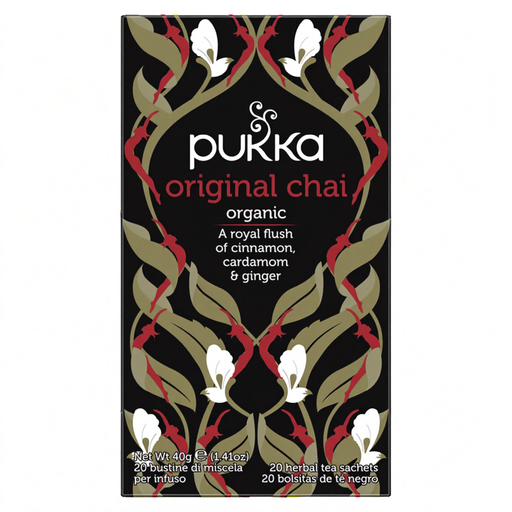 Image unavailable
Worth considering if you’re mainly looking for a chai with a strong spice profile. If you’re after a strong black tea flavour, check the proportions on the pack before choosing.
Compare the stated proportion of black tea in chai blends for brewing, then follow the preparation instructions on the pack. Carrefour France’s listings state that Éthiquable and Carrefour Bio contain 83.5% black tea, Cupper / Clipper contains 60% and Yogi Tea contains 33%. These figures describe the ingredients, not how the chai tastes once brewed.
No. The amount of spice and the amount of black tea are two separate criteria. Carrefour France states that Yogi Tea chai contains 27% cinnamon and 18% ginger, compared with 33% black tea. So think about which flavour you want to come through in your cup.
Start with the ingredients list, allergen information and net quantity. Your Europe, the European Union’s portal, lists these among the labelling information required for pre-packed food. When comparing two chais, also check the proportions of the ingredients if they’re provided.
Yes. Tea naturally contains caffeine, and Anses notes that people’s sensitivity to its effects varies. If this matters to you, consider when you drink it and what other sources of caffeine you have. The percentage of black tea in the blend alone doesn’t tell you how much caffeine there is in each cup.
Not necessarily: availability depends on the store and collection method. Check the product after choosing your store, especially if its specific ingredients are the reason you want to buy it.