
Livraison le jour même ou le lendemain

Qualité garantie

Débloquez vos offres de bienvenue: Livraison GRATUITE | Jusqu'à -80 % | 30 jours d'essai gratuits à JoyPlus
Téléchargez l'application
A robot vacuum and mop can make everyday cleaning easier, but not all models are created equal or designed for the same needs. Advertised suction power, connected features, all-in-one stations… some options genuinely make a difference, while others mainly increase the price without offering much benefit for your home.
To make an informed purchase, start by considering the surfaces to be cleaned, whether you have pets, the layout of the rooms and how much maintenance you are prepared to continue handling yourself.
A powerful robot vacuum is often promoted with a high number of pascals (Pa). This figure refers to the advertised suction pressure, but it cannot, on its own, predict real-world cleaning performance. The brush design, airflow, dustbin capacity and carpet detection also play a crucial role.
A model rated at 4 000 Pa may be perfectly suitable for a relatively uncluttered flat. By contrast, in a home with pets, a device equipped with a full-service station and an anti-tangle brush will often be more practical, even if its advertised power is not the highest. It is therefore better to consider the system as a whole rather than focusing on a single figure.
A robot vacuum with mop may simply dampen a cloth using a small built-in water tank. This is sufficient for light maintenance, but you will generally need to remove, rinse and dry the cloth after each cleaning cycle.
More advanced models have a station that can wash the mop pads, sometimes using hot water, and then dry them with warm air. This significantly reduces the amount of manual work, but does not eliminate it completely: you still need to fill the clean-water tank, empty the dirty-water tank and monitor consumables.
Before choosing a robot floor cleaner, measure the clearance beneath your furniture, the height of thresholds and the space available for the station. A bulky base will generally need to remain against a wall, with sufficient clearance in front and on both sides.
Cables, toys, socks and small objects should also be removed from the floor. Even sophisticated navigation cannot completely protect the robot from becoming stuck or vacuuming up an unsuitable object.
If you live with a dog or cat, prioritise a main brush designed to reduce hair and fur tangles. Automatic power boosting on carpets can also improve the collection of embedded dirt.
Advertised power varies considerably from one model to another: the specifications shown here include, for example, 4 000 Pa for some compact devices, 8 150 Pa for the JONR T5 Pro and up to 25 000 Pa for certain ECOVACS models. These figures should be treated with caution, as measurement methods and the overall design of the devices may differ.
A robot vacuum with LiDAR navigation uses a laser sensor to map rooms and plan its movements. This technology is particularly useful in homes with several rooms, corridors or multiple floors.
In the app, focus especially on the features that are actually available:
Cameras and obstacle-recognition systems can complement LiDAR, but they do not remove the need to pick up fragile objects or clear away cables.
A robot vacuum with emptying station means you do not have to empty the small integrated dustbin so frequently. Depending on the amount of dust and pet hair collected, some station bags can last for several weeks.
For the mopping function, check whether it has separate tanks, automatic mop-pad washing and warm-air drying. Even a self-cleaning robot vacuum still requires regular maintenance: the filter, brush, sensors, dirty-water tank and station tray must be cleaned in accordance with the instructions.
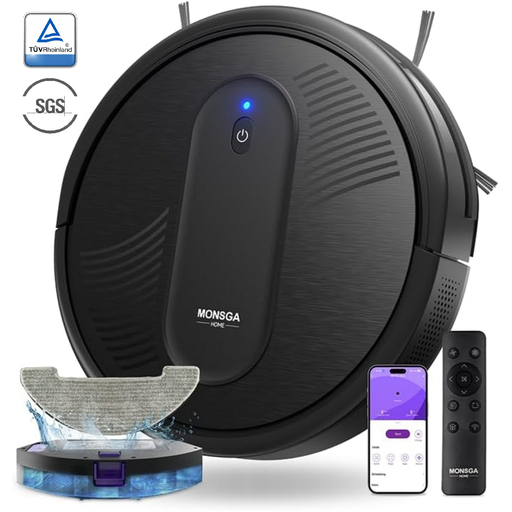
Why it suits this type of user: measuring approximately 8.1 cm high and combining vacuuming and mopping, it is well suited to first-time buyers in a flat or house with hard floors, carpets and low furniture.
The specifications mention several cleaning modes, control via remote or app, and a water tank with three moisture levels. Filling and cleaning nevertheless remain manual.
Advertised suction power of 4 000 Pa, advertised maximum runtime of 140 minutes, app control and Alexa compatibility according to the supplied description.
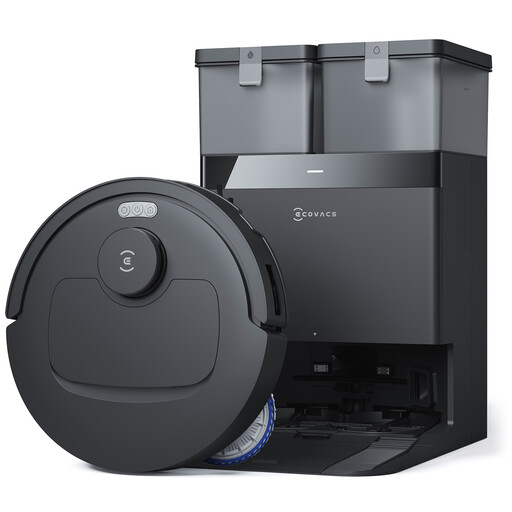
Why it suits this type of user: its OMNI station is designed for households that want to minimise manual intervention after each vacuuming and mopping cycle.
According to the product listing, the station empties the dustbin, washes the mop pads at 75 °C, dries them at 45 °C and dispenses detergent. The tanks still need to be monitored.
Advertised power of 25 000 Pa, TrueMapping 2.0 mapping, carpet detection and OZMO Turbo 2.0 mopping with two rotating mop pads.
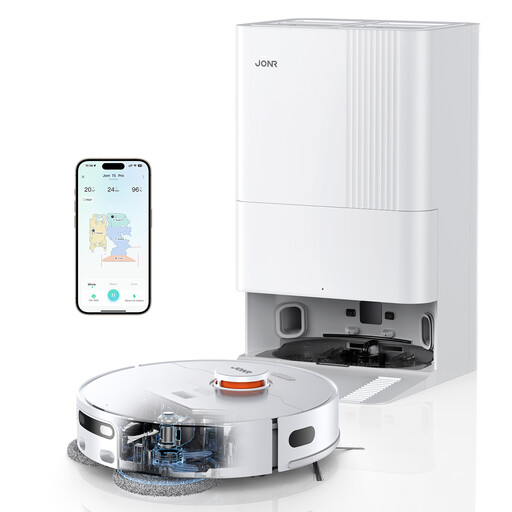
Why it suits this type of user: it is aimed at larger homes and households looking for a base that can empty the dustbin, clean the mop pads and dry them.
Laser navigation and obstacle recognition reduce random movement. The station automates several steps, but its tanks and dust bag still require maintenance.
Advertised suction power of 8 150 Pa, laser navigation, anti-tangle side brush and warm-air drying.
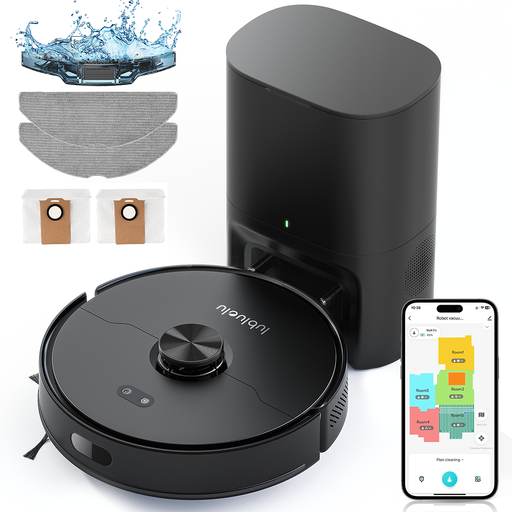
Why it suits this type of user: saving five maps and setting up no-go zones make it easier to use in a multi-level home.
LiDAR structures the cleaning routes, while the app allows you to adjust the water flow according to the floor covering. Remove the mopping plate before running the robot on carpet.
LiDAR navigation, five maps, advertised suction power of 4 000 Pa, app control and an advertised noise level of 55 dB in standard mode.
To ensure consistent cleaning routes, install the base on a level floor, against a wall and in a clear space. When creating the first map, open the interior doors and remove any objects that could obstruct the robot.
A few simple habits can help extend the life of your robot vacuum for carpets and hard floors:
Before placing your order, also check the availability of bags, filters, cleaning cloths and brushes, as well as the contact details of the person responsible in the European Union. This information is generally provided on the product listing or in the accompanying documentation.
We have compiled a complete, real-time updated list of products that meet these strict selection criteria and European safety requirements.
Yes, provided you choose a model that can detect carpets, adjust its suction power and avoid wetting rugs. In a home with several types of flooring, set no-mopping zones in the app and consult the manufacturer’s recommendations.
Electricity consumption depends on the number of cycles, the area cleaned and how often the robot needs to recharge. You also need to budget for station bags, filters, brushes and mop pads. A model that washes its mop pads with hot water may use more energy than a device with a simple cloth, but it reduces daily manual work.
This depends on the battery, how often it is used, maintenance and the availability of spare parts. Cleaning the filters, clearing the brushes and avoiding liquids or dangerous objects are essential precautions. Before ordering, check the warranty, after-sales service and availability of compatible accessories.