
Livraison le jour même ou le lendemain

Qualité garantie

Débloquez vos offres de bienvenue: Livraison GRATUITE | Jusqu'à -80 % | 30 jours d'essai gratuits à JoyPlus
Téléchargez l'application
The idea of a flawless lawn, mown to perfection without lifting a finger, is certainly appealing. The wireless robotic lawn mower for 800?m? promises this peace of mind, especially for owners of medium-sized gardens. However, the market is flooded with technological promises that can sometimes turn into a nightmare for your wallet. To avoid buyer's remorse, it's crucial to know how to sidestep marketing traps and focus on the features that truly make a difference.
Here are the 3 most common mistakes that can make your investment far less "automatic" than expected:
To make the right choice, focus on the technical specifications that guarantee true autonomy and an efficient mow. Here are three points you should never overlook.
The absence of a perimeter wire is a major convenience, but everything depends on the robot's ability to locate itself accurately. Two technologies dominate the market:
Some recent models combine both approaches for increased reliability, making them a prime choice for complex terrains.
The recommended area is an indicator, but it must be adjusted to the reality of your terrain. For an automatic mower for 800?m?, if your garden has numerous obstacles or narrow passages, it's best to assume its actual capacity will be reduced by 20-30%.
Also, check the maximum supported slope, expressed in degrees (°) or as a percentage (%). A 35% slope (about 19°) is a standard feature, but for steeper terrains, models that can handle up to 45% (about 24°) will be essential to prevent the robot from slipping or tipping over.
A Wi-Fi connected robotic mower is for more than just starting the mow remotely. A well-designed app becomes the true command centre for your machine. Essential features include:
Rather than an exhaustive list, here are options that cater to specific user profiles, taking into account our performance and reliability criteria.
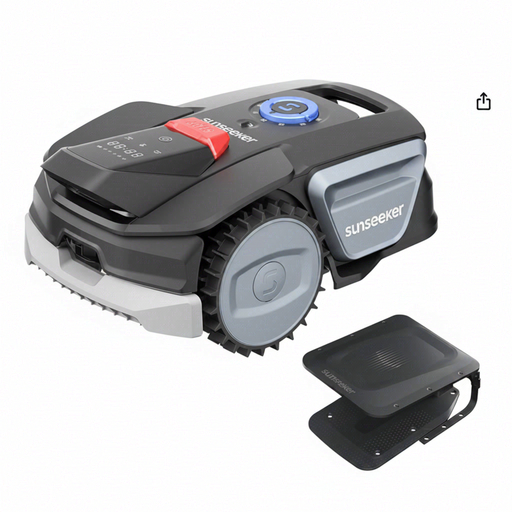
Why it's a match: Perfect for those with a garden under 300 m? who want to experience the joys of a wireless robot without breaking the bank. It's the ideal starting point for automating your lawn care.
It sidesteps the basic "AI" trap by integrating true AI vision for intelligent obstacle avoidance, a technology often reserved for much more expensive models.
Simplified "one-click" setup and full control via the app. Its included garage protects the device from the elements, a real plus for its longevity.
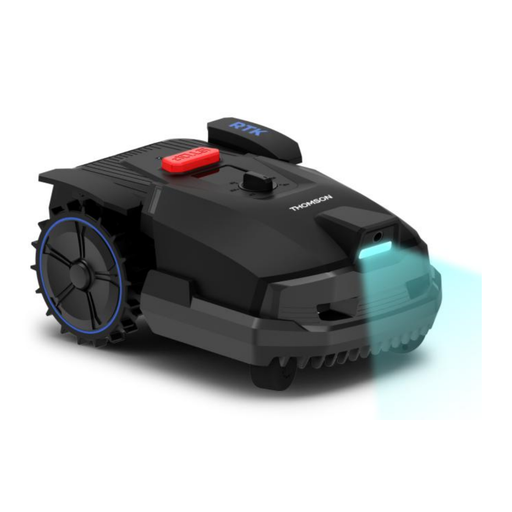
Why it's a match: This is the ideal solution for owners of medium-sized gardens seeking top-tier performance. Its 800 m? capacity and onboard technology will satisfy demanding users. Reviews for the THOMSON robotic mower often highlight its reliability.
It bypasses the unreliable "wireless" issue by combining RTK navigation for precision with an AI camera for obstacle avoidance, ensuring optimal coverage even on complex terrains.
Full Wi-Fi and Bluetooth connectivity via the MowMate app for absolute control. Its adjustable cutting height from 20 to 70 mm adapts to any preference.
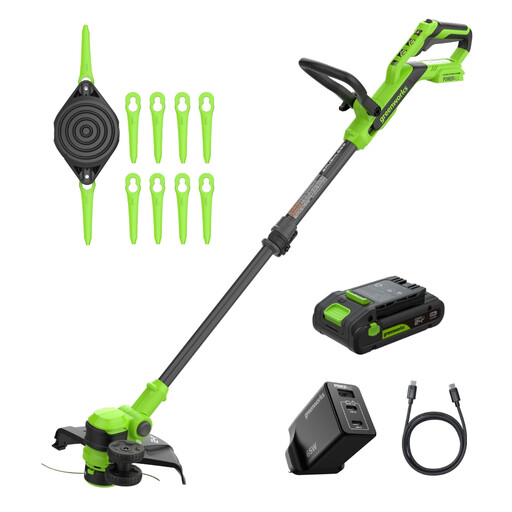
Why it's a match: A robot does the heavy lifting, but it will never create impeccable edges along pathways or cut grass right up against walls. This tool is the perfect complement for those aiming for a picture-perfect lawn.
It prevents the disappointment of realising that a robot alone isn't enough for a magazine-worthy finish. It's the realistic and effective solution for finishing touches, where pure automation shows its limits.
2-in-1 function (grass trimmer and edger) for maximum versatility. Its brushless motor and 24V battery offer power and runtime, without the constraint of a cord.
We have compiled a complete and up-to-date list of products that meet our quality requirements and current safety standards.
The lifespan of a robotic mower generally ranges from 5 to 10 years, with regular maintenance. The main wear-and-tear components are the battery (to be replaced every 3 to 5 years depending on use) and the blades (to be changed or sharpened once or twice per season). Storing it indoors during winter, in a dry and frost-free place, is also crucial for preserving its electronics and battery.
Yes, it is infinitely simpler than installing a model with a boundary wire to bury. The process typically involves:
Most robots are equipped with a rain sensor that instructs them to return to their base at the first drops of rain to avoid mowing wet grass, which damages the lawn and the cutting system. As for nighttime operation, an AI camera's performance is directly linked to ambient light. Although some models can operate with garden lighting, their detection capabilities are optimal in broad daylight. It is therefore strongly recommended to schedule mowing during the day.