
Livraison le jour même ou le lendemain

Qualité garantie

Débloquez vos offres de bienvenue: Livraison GRATUITE | Jusqu'à -80 % | 30 jours d'essai gratuits à JoyPlus
Téléchargez l'application
Maintaining a small garden can often feel like a chore. The noise, the time commitment, the trips to the recycling centre… The promise of a perfectly manicured lawn that mows itself is an appealing one. The wireless robotic lawnmower for small gardens is emerging as the ideal solution, but be warned: marketing is often misleading, and disappointment is common. Our mission is to help you decode the spec sheets to make the right choice—one that truly matches your property and your expectations.
Before you dive in, here are the 3 most common pitfalls to avoid:
To avoid buyer's remorse, focus on the few technical points that make all the difference in performance and user-friendliness.
This is the robot's brain, the technology that gives it true autonomy. Forget models that rely on a wire and turn to modern solutions:
An intelligent robot equipped with AI, capable of navigating on its own, guarantees a setup that takes just a few minutes, not several hours of DIY.
These two specifications must precisely match your garden.
It's often the details that make a difference in daily use. The inclusion of a robotic lawnmower with a garage (or sheltered charging station) is a significant advantage. It protects the device from weather and UV rays, extending its lifespan and preserving the look of its plastic components. Likewise, a well-designed mobile app should allow you to start a mow, define exclusion zones, and schedule sessions with ease.
Rather than an exhaustive list, here are user profiles with options that meet specific needs.
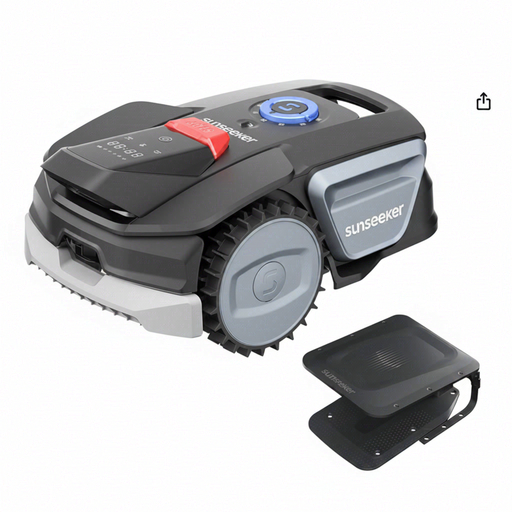
Why it's a great choice: Ideal for those looking for a "ready to mow" solution. Its 300 m? capacity and vision-based navigation make it the perfect robotic mower for a small garden. The included garage is a real bonus for protection and longevity.
It does away with the perimeter wire thanks to its Vision AI technology. Installation is as simple as placing the base and running the initial mapping from the app.
All-in-one solution with an included garage. It handles slopes up to 27% and is easily controlled via a dedicated app for one-click mowing.
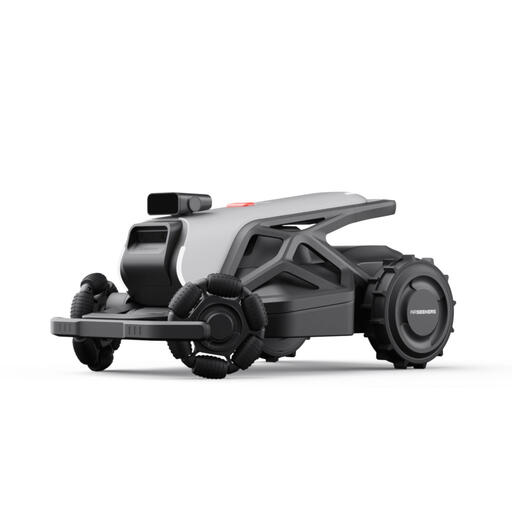
Why it's a great choice: For more demanding lawns with steep slopes or numerous obstacles. Its advanced technology and high capacity make it an ultra-high-performance choice for those who don't want to make any compromises.
It pushes the boundaries on complex terrains. Capable of handling slopes up to 65%, its triple VIO+VISION+RTK navigation allows it to go where others get stuck.
Top-tier navigation and traversal. Automatic RTK mapping for optimised coverage and incredibly effective obstacle avoidance.
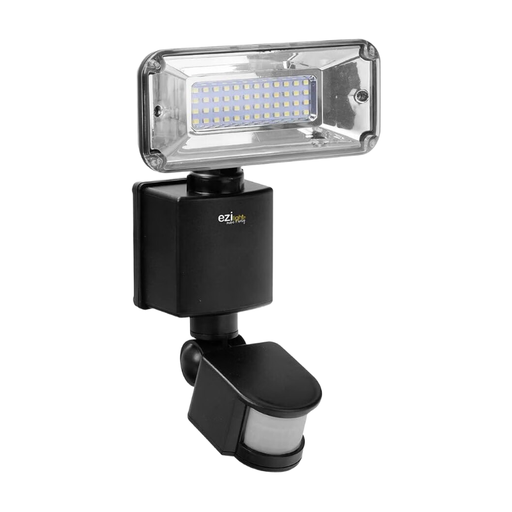
Why it's a great choice: For those thinking about automation beyond just the lawn. This solar-powered spotlight perfectly complements a robotic mower by adding a touch of convenience and security, all without any wires.
It avoids the pitfall of complex and expensive home automation systems. It's a standalone, solar-powered, and wireless solution that works right out of the box, in the same spirit as modern robotic mowers.
Zero-wire installation and 100% solar power. Its integrated motion detector provides security lighting that is both practical and a deterrent.
Garden automation doesn't stop at mowing. Discover other ingenious solutions to make your outdoor space even more enjoyable and easy to maintain.
The lifespan largely depends on maintenance. The main wear-and-tear parts are the battery (expect a noticeable loss of capacity after two to four years) and the cutting blades (which should be replaced once or twice per season). Storing the unit in a sheltered location, ideally in a dedicated garage, and performing regular cleaning can easily extend the device's life beyond five years.
Yes, for recent models that rely on vision or GPS. Unlike older systems that required you to outline the property with a wire, installing a visual navigation model is as simple as placing the charging station, connecting the robot, and running an initial mapping via the app. The process rarely takes more than 30 minutes.
No, and that's one of their biggest advantages. The noise level of a robotic lawnmower in action is typically between 55 and 65 dB, which is equivalent to a normal conversation or a modern dishwasher. This is incomparably quieter than a petrol mower (90-100 dB) or even an electric one (75-85 dB), allowing you to run it at any time, including on Sundays, without disturbing the neighbours.