Steeply sloping garden
If you want to spend less time mowing a bank by hand, first compare the measured gradient with the limit stated for the exact model and check its type of drive.


To choose a robotic lawn mower for a sloping garden, measure the steepest sections, cross-slopes and areas along the boundaries separately, then compare each measurement with the limits published for the exact model. If any part exceeds those limits or is difficult to access, mark out the compatible area and plan another way to maintain the rest.
If you want to spend less time mowing a bank by hand, first compare the measured gradient with the limit stated for the exact model and check its type of drive.
If the tricky areas are near a boundary, on a cross-slope or where the gradient changes, check the boundary limit and the working-area limit separately.
If your garden has several sections, check that the mower can map them out and reach them via the available passages, rather than relying solely on its stated maximum gradient.
For a sloping residential lawn in France, measure each difficult section and check the limits for its location before comparing traction or guidance features.
| What matters | What to check | Who it matters most to |
|---|---|---|
| Climbing the slope | Measure the vertical rise and horizontal distance of each challenging section; compare the result with the working-area limit stated for the exact model. | If your priority is mowing the steepest bank, start by checking the documented gradient and traction; around 36% of consumers put climbing at the top of their list. |
| Boundaries and cross-slopes | Measure cross-slopes, changes in gradient and areas along boundaries separately; check both the working-area and boundary limits where they are stated. | If the challenge is concentrated near a boundary or on a cross-slope, you’ll want to know whether that area is within the mower’s limits; around 29% of consumers prioritise this compatibility. |
| Accessing different areas | Identify passages, obstacles and areas to be mown, then check the installation requirements and multi-zone management features for the model you’re considering. | If your lawn is divided into separate areas, you’ll want to know whether the mower can reach and organise each one; around 21% of consumers prioritise access and zone mapping. |
| Wet ground | Check the instructions for the exact model and consider the route, especially turns on slopes, when the ground is wet. | If your garden is often wet, you’ll want to take movement and turning conditions into account; around 14% of consumers put changing ground conditions first. |
To calculate a gradient as a percentage, divide the vertical rise by the horizontal distance, using the same unit for both, then multiply by 100. For example, a 15 cm rise over 100 cm horizontally is 15%, not 15 degrees. Measure the challenging sections rather than relying on an average taken across the whole garden.
The limit for the working area may differ from the one for the perimeter. A boundary or bank could therefore remain outside the area that can be mown automatically, even if the central slope is within the limit.
Measure sloping sections and areas along the boundaries separately, then compare them with the limits for the exact model.
Any excluded boundary strip or bank will need to be maintained another way.
The stated traction capability doesn’t prove that the mower will keep its grip on every surface, when turning or on a wet cross-slope. A manufacturer’s stated limits aren’t independent tests on every type of ground.
Consider the layout of the route and the model’s instructions for use, rather than relying on the drive type alone.
The mower may still need to stop or be monitored more closely when the ground is wet.
Installing a boundary wire and setting up virtual zones meet different needs. Some connected features also depend on model-specific accessories and connection requirements.
Check what’s included in the pack, the guidance requirements and the features needed to organise zones before comparing models.
Depending on the model, you may need a connectivity accessory or to prepare the zones.
Limits vary across the Automower range. The Automower 435X AWD NERA is worth considering for steep gradients, provided you compare the exact model with your garden’s layout.
The smart SILENO max 1200 m² is an example of a boundary-wire model with separate limits for the working area and the boundary.
The LUBA mini 2 AWD 1000 is worth considering if traction and multi-zone management are priorities.
These models are worth considering when comparing stated gradient limits, traction and zone management for a sloping lawn.
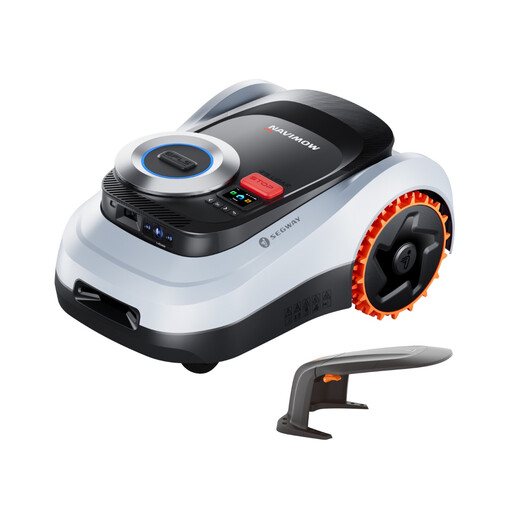 No image available
Worth considering if you want to compare a stated gradient limit of 45% and organise several mowing zones.
The title specifies a 1,500 m² area, wire-free mapping, all-terrain tyres, and a LiDAR and vision system. The model name indicates that a garage is included.
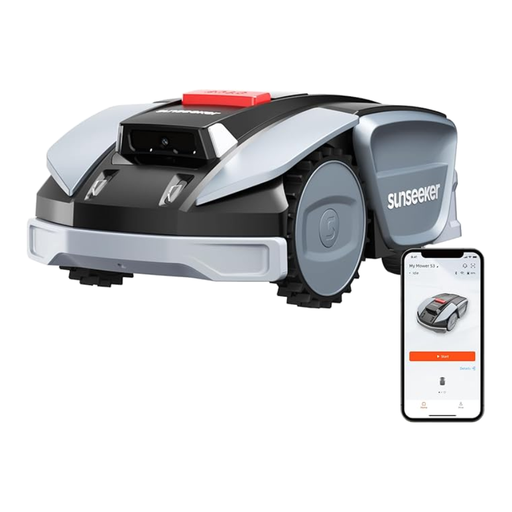 No image available
Worth considering if managing several zones is important for your garden.
The title specifies RTK and vision navigation, automatic mapping and multi-zone management. The stated maximum gradient isn’t included in the model name, so check the figure for the exact model before comparing it with your garden.
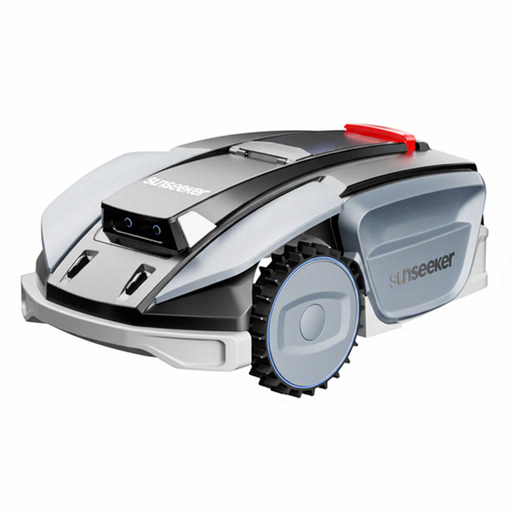 No image available
Worth considering if you’re looking for a model with all-wheel drive and multi-zone management.
The title states a gradient capability of up to 60%, a 1,600 m² area, RTK and vision navigation, automatic mapping and app control. Check the limits that apply to boundaries and your garden’s conditions.
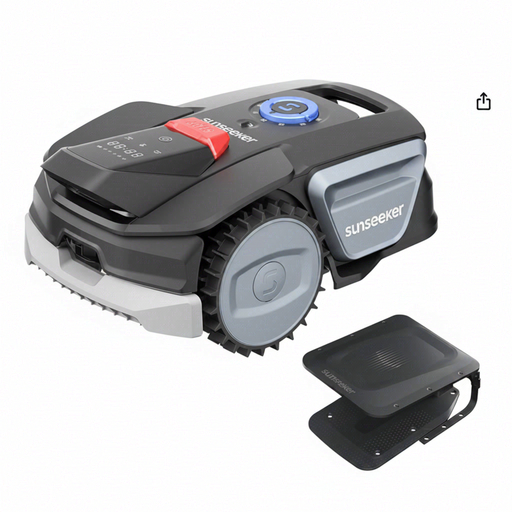 No image available
Worth considering for a small garden if the stated gradient matches the measurements of the areas you need to mow.
The title specifies a gradient capability of up to 27%, AI vision, obstacle avoidance and app control.
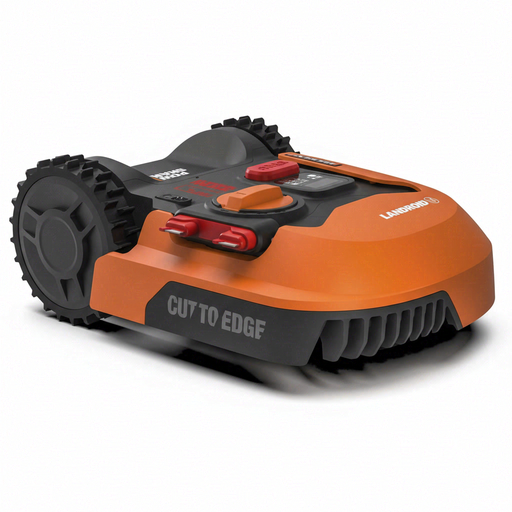 No image available
Worth considering if you’re looking for a model whose title states a 35% gradient capability and mowing close to boundaries.
The title specifies a 700 m² area, a 35% gradient capability, a rain sensor and an included boundary wire. Check the limits that apply to different areas of your garden.
Divide the vertical rise by the horizontal distance, using the same unit for both, then multiply by 100. A rise of 15 cm over 100 cm horizontally is 15%, not 15 degrees. Husqvarna recommends checking the most challenging sections rather than relying on an average for the whole garden.
Not necessarily: the limits may differ between the working area and the perimeter. Husqvarna distinguishes between these two situations for the relevant models; GARDENA states a limit of 30% in the working area and 15% at the boundary wire for the smart SILENO max 1200 m². A maximum figure also doesn’t guarantee grip on a wet cross-slope or when turning.
Don’t include that section in the mowing area for the mower you’re considering. Husqvarna’s installation instructions say to exclude slopes that exceed the model’s limits; arrange separate maintenance for the remaining area, and don’t assume that a different guidance system will improve traction.
Identify boundaries, obstacles and passages before laying a wire or setting up virtual zones, then check the installation requirements for the model you’ve chosen. For the smart SILENO max 1200 m², GARDENA specifies that the LONA connected feature requires a gateway, sold separately, a reliable internet connection and the app.
No. Using a robotic mower doesn’t automatically give you the right to disturb your neighbours. Service Public states that gardening equipment may be covered by local authority or prefectural orders setting permitted hours. Check the rules that apply at your address before scheduling mowing.