
Livraison le jour même ou le lendemain

Qualité garantie

Débloquez vos offres de bienvenue: Livraison GRATUITE | Jusqu'à -80 % | 30 jours d'essai gratuits à JoyPlus
Téléchargez l'application
Cleaning windows, mirrors or large patio doors can quickly become tedious when the surfaces are large, located on the outside or hard to reach. A robot window cleaner can cut down on repetitive manual work, but buying one requires a few checks. Behind the promises of “strong suction” and fully automatic cleaning, certain details can make the device impractical in a British home.
Most robot window cleaners operate plugged into the mains. Their built-in battery typically serves as a backup in case of a power cut, not as a cordless power source for extended use. So a model marketed as cordless doesn’t necessarily mean it can clean a patio door without a cable.
A safety tether, a backup battery and an edge-detection system are still essential, especially for windows fitted at height. These features reduce the risk of falling, but they don’t replace the need to keep an eye on the device.
A figure like 2,500 Pa, 2,800 Pa or 5,600 Pa describes the suction force claimed by the manufacturer, but it isn’t enough to judge cleaning quality. The condition of the glass, the presence of dust, the dampness of the cloth and the precision of the movement all play a part.
A robot window cleaner should be used on a smooth, undamaged and properly prepared surface. It is not suitable for a cracked, poorly fitted, very uneven window or one covered in thick deposits.
An automatic window cleaner doesn’t always remove the need to dust the frames or clean the pads. A large amount of sand or dust can be spread across the glass and leave streaks. Also check that compatible cloths are readily available and follow the recommended dosage for the cleaning solution.
For regular use, have several clean pads ready so you don’t redeposit dirt onto the windows.
To choose a robot window cleaner with strong suction, look at the value stated by the manufacturer, but also at the features that come with it:
Models with automatic path planning generally cover the surface more evenly, while a remote control lets you revisit an area or change the movement. For a patio door, measure the actual accessible width and height before placing your order.
A robot window cleaner with water spray can moisten the cloth as it goes. This feature doesn’t remove the need to fill the tank correctly or check that the liquid used is compatible with the device. Excessive spraying can cause drips or reduce suction.
Models without automatic spraying often require you to lightly dampen the edge of the pad before starting. In any case, the cloth must stay clean enough to avoid marks.
Check the voltage compatible with your installation and the length of the cable. The models shown here run on mains power and are not designed as cordless devices. The stated noise level, usually given in decibels, may also matter if you plan to clean during quiet hours.
Before first use, read the manual, attach the tether, connect the power supply and wait for the detection phase specified by the manufacturer. Do not let a child handle the robot.
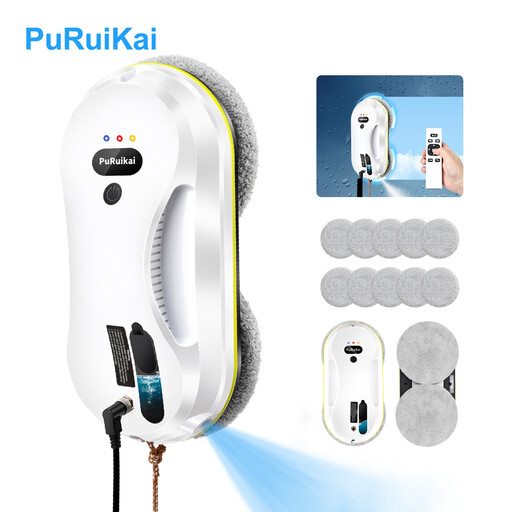
Why this choice suits this profile: This remote-controlled model is suitable for first-time use on smooth glass surfaces, particularly windows and patio doors accessible from inside.
The listing states a 4.5 m safety tether, automatic edge detection and protection against power cuts. However, the device must remain plugged in during cleaning.
50 ml tank, remote control, automatic path planning and a stated suction power of 2,800 Pa.
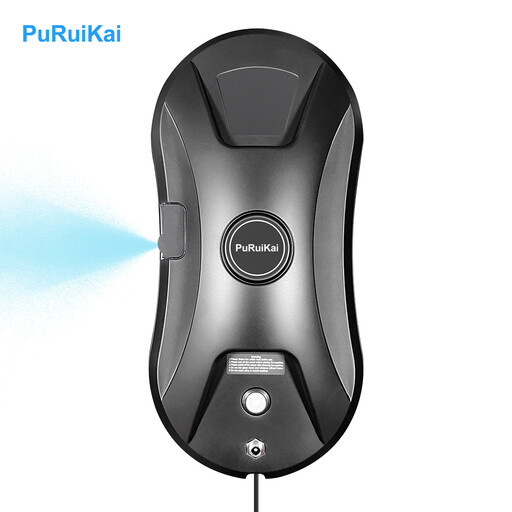
Why this choice suits this profile: Its stated suction force of 5,600 Pa may suit users looking for high grip on smooth, even glass surfaces.
The product listing pairs the stated high suction with intelligent water spray. The tether and supervision remain essential, as grip does not replace safety.
Stated suction of 5,600 Pa and water spray to assist movement across smooth surfaces.

Why this choice suits this profile: Its manual and automatic modes, laser sensor and stated dual spray meet the needs of frequent cleaning across several smooth glass surfaces.
The listing specifies mains power, a stated backup battery life of 30 minutes and the mandatory use of a tether. So this is not a cordless device.
50 ml tank, stated suction of 2,500 Pa, automatic edge detection and remote control.
We’ve put together a comprehensive, regularly updated list of products that meet these demanding selection criteria and European safety regulations.
Do not use a robot window cleaner on a surface that is wet enough to cause drips towards the electrical components. The device must be kept out of reach of children and must never be immersed.
Generally, no. On the models shown, the battery mainly serves as protection in the event of a power cut. The device must remain connected to the mains during operation. Always check the technical specifications of the model you choose.
Yes, provided the patio door is smooth, undamaged and compatible with the robot’s dimensions. Measure the surface, check the cable length and attach the safety tether. Frames, thick seals and differences in level can interrupt the path.
Ongoing costs mainly relate to electricity, replacement cloths and compatible cleaning solution. Consumption depends on the device’s power and the length of use. To keep costs down, clean the pads after each pass and avoid running the robot on a very dusty window.