
Livraison le jour même ou le lendemain

Qualité garantie

Débloquez vos offres de bienvenue: Livraison GRATUITE | Jusqu'à -80 % | 30 jours d'essai gratuits à JoyPlus
Téléchargez l'application
Cleaning a patio door, an exterior window or a high-up mirror takes time, often requires an awkward position and isn’t always easy to reach. A robot window cleaner can lighten this chore, provided you choose a model that’s genuinely suited to your home.
Product listings often highlight suction power, intelligent navigation or automatic spraying. These features have their merits, but they aren’t enough to guarantee a successful clean. Here are the criteria to examine before you place your order.
Many devices presented as autonomous actually need to stay plugged in during cleaning. Their built-in battery is only there to keep the appliance in place for a limited time in the event of a power cut.
This is particularly the case with several PuRuiKai models. The robot must be powered from the mains, while the battery temporarily provides anti-fall safety. If you’re looking for a cordless robot window cleaner, check for a rechargeable battery designed to power the appliance, not just a backup system.
High suction power can improve grip, but it doesn’t solve every problem. The quality of the pads, how clean the glass is, edge detection and consistent movement all play an important role too.
Even a powerful device can lose effectiveness on a dusty or overly damp window. The value quoted in Pa should therefore be weighed against the other features, never treated as the sole deciding factor.
A robot window cleaner works best on smooth, flat and sufficiently large surfaces. A cracked, textured, porous or poorly fitted window can compromise its grip. Frames, thick seals and raised features can also hinder its movement.
Before ordering, measure your smallest window and check the minimum compatible surface area. Some models, for example, require a window of at least 30 × 40 cm.
The suction must remain stable enough to hold the appliance on a vertical window. However, it never replaces basic safety precautions. For an exterior or high-up window, always use the safety tether attached to a solid anchor point indoors.
Also remember to check:
An anti-fall robot window cleaner is still an electrical appliance suspended on a vertical surface. It should be supervised while in operation, even when it combines several safety features.
An automatic navigation system can optimise the route and reduce missed areas. Planning technologies like WIN-SLAM 4.0 are designed to handle different types of windows, but the result also depends on the shape of the frames and the condition of the glass.
Edge cleaning is particularly useful for patio doors and large surfaces. That doesn’t mean every corner will be cleaned in exactly the same way. Check compatibility with frameless, tilted or floor-to-ceiling windows.
A robot window cleaner with water spraying can gradually moisten the surface and reduce the need for manual intervention. Depending on the model, spraying can be automatic, manual or delivered through several nozzles.
Before buying, check:
Too much water can leave streaks or affect grip. Conversely, a pad that’s too dry may just push dust around rather than capturing it. For an electric window cleaner, looking after the cloths matters just as much as the navigation technology.
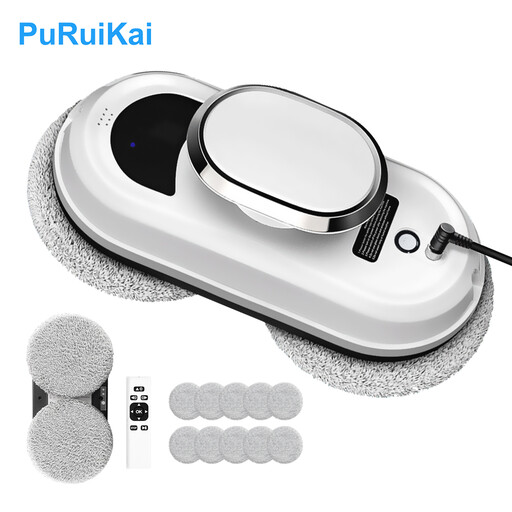
Why this suits them: It’s suitable for first-time use on windows and smooth surfaces, with a remote control and automatic route planning.
The listing states that mains power is required and the battery serves as backup. So there’s no risk of mistaking it for a cordless model.
Advertised suction of 2 × 2,800 Pa, automatic edge detection, safety tether and power cut protection.
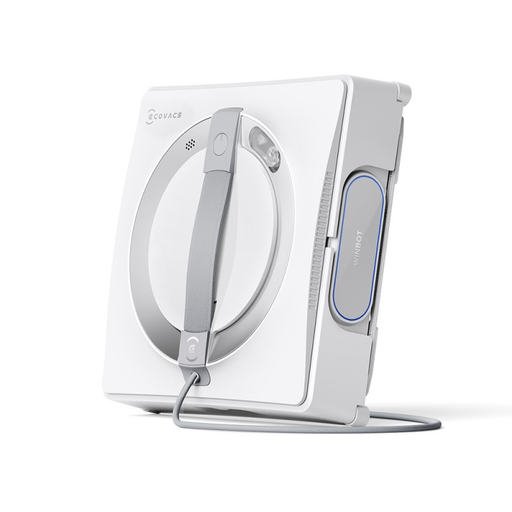
Why this suits them: Its multi-function station, various cleaning modes and app control make it ideal for regular use on large glazed surfaces.
The listing clearly distinguishes between battery and mains modes. The tether and station must still be used in line with the instructions.
Advertised suction of 5,500 Pa, three-nozzle spraying, 6-in-1 station, app and 12-level protection system.
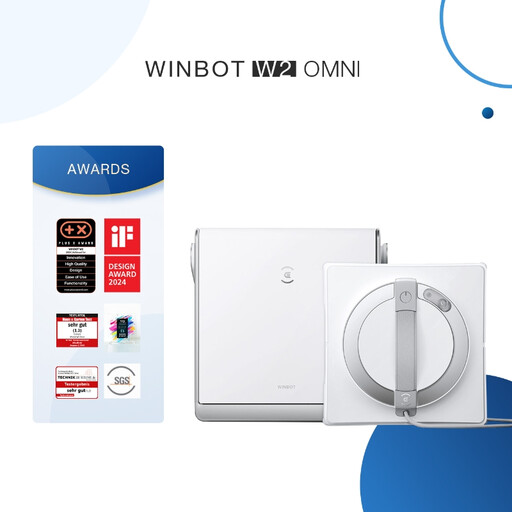
Why this suits them: It’s designed for varied setups, including patio doors, tilted windows and certain frameless surfaces.
The listing states a minimum window size of 30 × 40 cm and details the hardware and software protections. These limits should still be checked in your own home.
Station with cable management, 4,500 mAh battery, advertised suction of 96 W, three-nozzle spraying and WIN-SLAM 4.0 route planning.
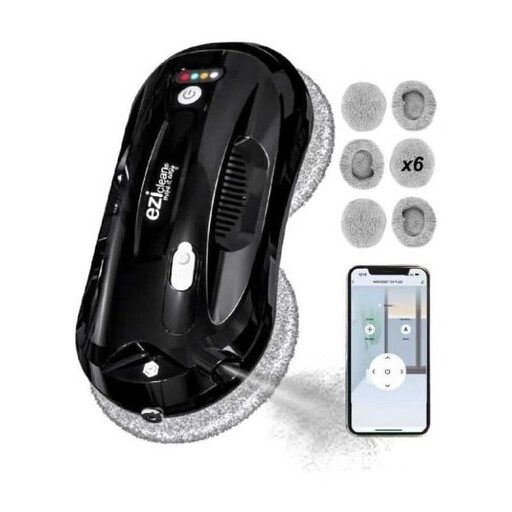
Why this suits them: Its advertised compatibility with windows, mirrors and smooth tiles suits homes with several flat surfaces.
The listing reminds you that surfaces must be flat and smooth. The safety tether remains essential on a vertical surface, even when the device is running on battery.
Phone-compatible control, advertised low-noise operation, charging station and cleaning accessories included.
We’ve put together a comprehensive, real-time updated selection of products that meet these strict criteria and the requirements of European safety regulations.
To minimise streaks and risks:
For a mirror or patio door, start by testing the robot on a small, easily accessible area. This way you can check its grip, moisture level and behaviour near the edges.
It’s best to stay nearby. Sensors and anti-fall systems reduce certain risks, but they don’t replace the safety tether or a prior check of the surface. A power cut, a poorly positioned cable or an uneven window can interrupt the cycle.
It depends on the size of the glass, the selected mode, how dirty it is and the programmed route. An automatic cycle can take longer than manual cleaning, but it saves effort on hard-to-reach surfaces. Quick, deep or targeted modes can also change the duration.
You need to consider electricity consumption, potential pad replacement, water or compatible cleaning solution, plus maintenance of the nozzles and sensors. A model with automatic spraying may use more liquid than one used with a slightly damp cloth. Always check the availability and price of consumables before finalising your purchase.