
Livraison le jour même ou le lendemain

Qualité garantie

Débloquez vos offres de bienvenue: Livraison GRATUITE | Jusqu'à -80 % | 30 jours d'essai gratuits à JoyPlus
Téléchargez l'application
Cleaning a patio door, a mirror or an exterior window up high takes time and can be risky. A robot window cleaner cuts down on the manual effort, but not all models are designed for the same jobs. Before you compare suction power or whether there’s an app, there are several factors worth looking into.
Most robot window cleaners need to stay plugged in while cleaning. Their built-in battery only acts as a backup in case of a power cut. It holds the device against the glass for a limited time, but it won’t let you complete a full clean without the cable.
Check carefully:
A device described as “cordless” may simply refer to the connection with a remote control or an app.
A figure in pascals, such as 2,500 or 5,600 Pa, gives you a technical benchmark, but it doesn’t guarantee the same performance on every window. Grip also depends on how flat the glass is, the condition of the pads, the humidity level and how much dust is on the surface.
A robot window cleaner is generally designed for smooth, flat, crack-free surfaces. Textured, very uneven, damaged or poorly fitted windows can compromise its hold.
A robot window cleaner doesn’t let you skip preparing the surface. A pad that’s too wet, clogged with dirt or poorly fitted is likely to move dust around rather than pick it up. Too much cleaning solution can also leave a film on the glass or block the spray nozzles.
To reduce streaks:
The advertised power should always be considered alongside the safety features. Choose a model with power cut protection, a safety tether and edge detection. For an anti-fall robot window cleaner intended for a façade or a high patio door, these features are essential.
Some models claim a hold time of 20 to 30 minutes in the event of a power failure. This duration never means you can skip using the safety tether: it’s an extra safeguard, not an invitation to leave the device running unattended.
The dimensions of the glass are just as important as those of the robot. The WINBOT W2 OMNI and the WINBOT W2 PRO OMNI are advertised for use on windows from 30 × 40 cm. On a small window, a large device may struggle to position itself or detect the edges properly.
For patio doors, sloping glazing or frameless surfaces, check:
A robot designed for glass surfaces can also work on mirrors and smooth tiles, but only if the manual allows it.
A robot window cleaner with water spray can moisten the pad as it goes. However, the systems vary from model to model: manual spray, built-in tank, dual nozzle or triple nozzle with wider coverage.
Check the tank capacity, the type of water accepted and how easy the nozzles are to clean. Some devices, like the EZIclean Windobot S12 Vibra Max, require the use of distilled water only. This precaution helps prevent mineral deposits building up in the system.
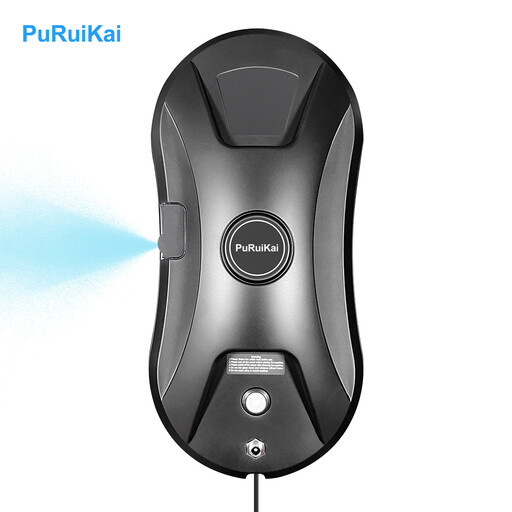
Why this suits this profile: Its spec sheet lists 5,600 Pa suction and a water spray designed for smooth glass surfaces. A sensible choice for starting out with a robot window cleaner that focuses on the essentials.
The advertised power comes with a spray function, but the device is still intended for smooth surfaces. A useful detail to stop you using it on uneven surfaces.
Advertised suction of 5,600 Pa and intelligent water spray.
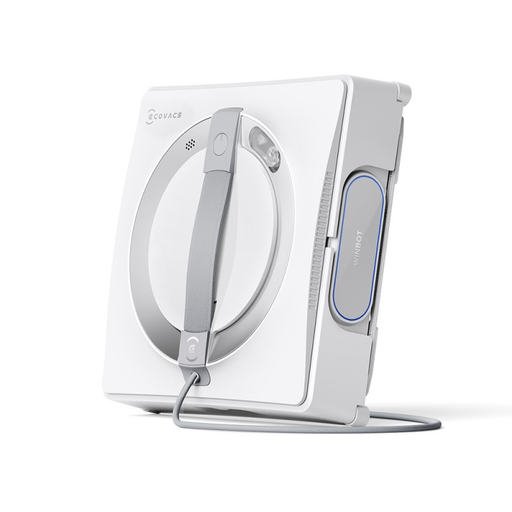
Why this suits this profile: The product page highlights a multi-function station, two power modes, 5,500 Pa suction and a three-nozzle spray. It’s aimed at homes with large glass surfaces.
The instructions clearly distinguish between mains operation and battery backup. The safety tether is still mandatory, even in front of a high window.
Advertised 6-in-1 station, multiple cleaning modes and a 12-level protection system as stated by the brand.
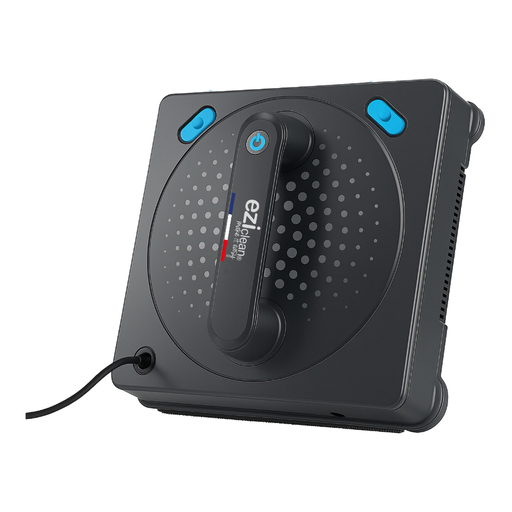
Why this suits this profile: Its vibrating pad, automatic sprayer and backup battery advertised for 20 minutes make it a model suited to regular cleaning of smooth glazing.
The product page requires the use of distilled water and reminds you to attach the safety tether and check the backup charge before each use.
Vibrating pad, automatic spray and Bluetooth or infrared control, according to the product page.
We’ve put together a full, real-time selection of products that meet these demanding criteria and European safety standards.
Before starting a robot window cleaner:
On a patio door, start with an easily accessible area to check the robot’s movement, edge coverage and moisture level. Even with automatic navigation, a robot window cleaner is still a device that needs supervision.
It’s best to stay nearby, especially when it’s used on an exterior or high window. The safety tether must be attached before starting. Power cut and loss-of-grip protection reduce some risks, but they don’t replace supervision or the instructions in the manual.
It depends on the model. Some accept clean water or a dedicated solution, while others require distilled water only. Check the manual before adding any detergent: the wrong liquid can leave streaks or block the nozzles.
The running cost mainly covers electricity, replacement pads and, for models with a spray system, the water or authorised solution. Pads need regular cleaning to maintain both grip and cleaning quality.