
Livraison le jour même ou le lendemain

Qualité garantie

Débloquez vos offres de bienvenue: Livraison GRATUITE | Jusqu'à -80 % | 30 jours d'essai gratuits à JoyPlus
Téléchargez l'application
Let's be honest: cleaning windows is a chore. Especially when dealing with large bay windows, sunrooms, or inaccessible panes. It's a repetitive, time-consuming, and sometimes even risky task. The robot window cleaner has emerged as the game-changing solution for getting spotless glass without the effort. But faced with a jungle of models making tempting marketing claims, how do you navigate the options and avoid a bad purchase?
Our mission at the editorial desk: to help you see things more clearly. Let's break down the pitfalls to avoid and the criteria that truly matter when choosing a device that lives up to your expectations.
Brand messaging can be sugar-coated. To avoid falling into the trap and prevent disappointment, here are three essential points to watch out for.
cordless window cleaning robot models that run on battery for full cycles are the exception, often at the cost of compromises in battery life or power.You don't need to be an engineer to make the right choice. Focus on these few technical points that make all the difference in performance and safety.
As we've seen, most models are corded. Check the length of the power cord and extension cable to ensure you can reach all your windows without hassle. The non-negotiable features are a backup battery (UPS) and a sturdy safety tether. The latter is essential for any high-rise window cleaning to prevent an accidental fall. Some newer, more flexible models offer battery operation, often via a multifunctional cleaning station that also serves as a charging base.
The coverage of the glass surface depends entirely on its navigation system. Intelligent path planning technologies (like ECOVACS's WIN-SLAM system on some ECOVACS window cleaning robot models) ensure a methodical and complete clean, mapping the window without missing spots. The robot's shape also matters: square or rectangular models are inherently more effective at reaching corners.
Suction power, measured in Pascals (Pa), is crucial. Powerful suction (over 2800 Pa) ensures a perfect grip on the surface, even vertically or upside down. But it also firmly presses the microfiber pads against the glass, which is decisive for a deep clean. The best automatic window cleaner models also integrate a spray system, ideally with multiple nozzles, to evenly moisten the surface just before the pads pass over.
Instead of a soulless catalogue, here are our targeted recommendations for different needs, based on the criteria we've just reviewed.
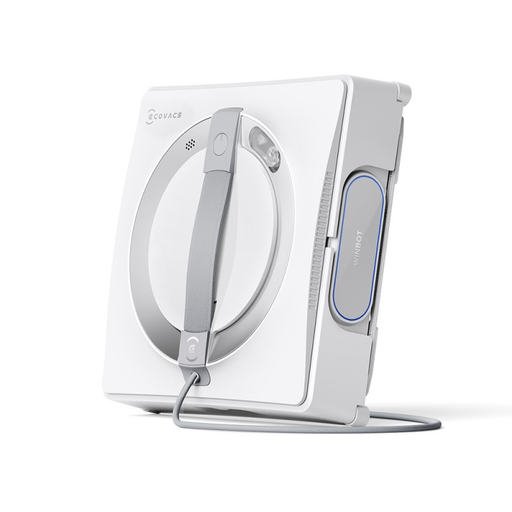
The Editor's Verdict: For those juggling large glass surfaces and wanting a turnkey solution, this model and its all-in-one station check all the boxes. The station acts as a carrying case, charger, and anchor point, which radically simplifies its use.
It sidesteps the 'all-corded' trap with its dual power mode: on battery (up to a claimed 110 minutes) for areas without an outlet, and plugged in for unlimited runtime.
The 6-in-1 multifunctional cleaning station and its wide-angle, three-nozzle spray technology for effective coverage and dirt dissolution.
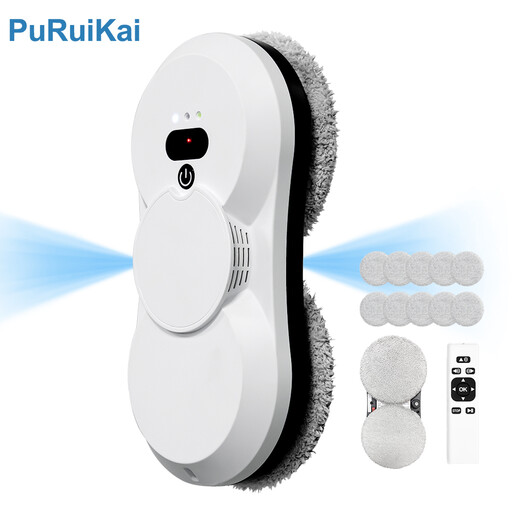
The Editor's Verdict: Perfect for getting an effective first robot window cleaner without breaking the bank. It includes the essential features for the regular maintenance of windows in a standard-sized apartment or house.
No false promises here. It owns being a corded model with a 30-minute backup battery and a safety tether. An honest and reassuring approach.
Its excellent performance-to-price ratio. It features 2800Pa x 2 suction, automatic water spray, and path planning—very solid features for its price point.
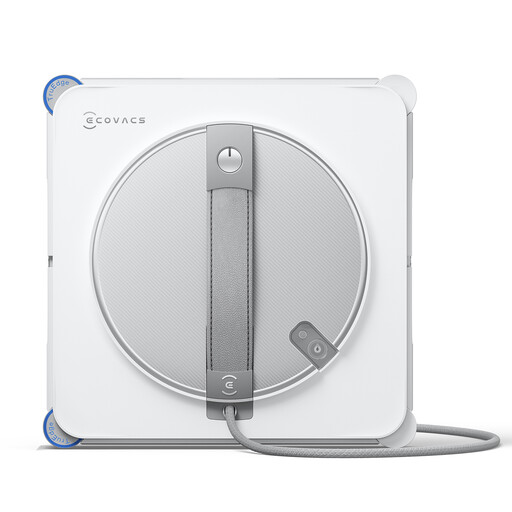
The Editor's Verdict: For anyone driven crazy by the slightest streak in a corner. This `smart window cleaner` is designed to tackle the historic weak spot of many robots: edges and corners.
It shatters the 'forgotten corners' pitfall thanks to its square shape and edge-cleaning technology, designed to scrub right up against window frames.
The TruEdge corner-cleaning technology, combined with WIN-SLAM 4.0 navigation and a wide-angle, three-nozzle spray, delivers ultra-comprehensive cleaning coverage.
Discover our full selection of products that meet our selection criteria and current safety standards.
1. Can a robot window cleaner fall? With a quality model, the risk is minimal. They are equipped with dual protection: powerful suction that holds them to the glass and a backup battery that takes over in case of a power outage. In addition, the provided safety tether is the essential seatbelt: once properly attached, it makes a fall virtually impossible.
2. Do I need to clean the windows before using the robot? For a major spring cleaning on very grimy windows, a preliminary manual wipe-down to remove the worst of it (pollen, droppings, etc.) is a good idea. This will make the robot even more effective for the finishing touches and routine maintenance. For weekly upkeep, the robot is more than sufficient on its own.
3. What is the lifespan of the microfiber pads? The microfiber pads are reusable. After each cycle, simply toss them in the washing machine (without fabric softener). Their lifespan depends on your frequency of use, but a set of pads can easily last several months. Our tip: always have a spare set on hand so you can alternate while the other is drying.