If you want your floors vacuumed while you’re away, choose a programmable robot vacuum, provided its routes are clear and you can keep it maintained. A stick vacuum is better suited to quick, on-the-spot clean-ups, while a cylinder vacuum is a good choice for longer manual cleaning sessions, particularly if carpets and different floor types are a priority. A robot won’t eliminate the need for these other cleaning sessions: UFC-Que Choisir points out that its performance varies depending on the floor.
Which type of vacuum cleaner is right for you?
Households out during the day with clear floors
A robot vacuum lets you schedule cleaning while you’re out. You’ll need to keep the areas you want cleaned accessible, and take care of emptying and maintaining the appliance. UFC-Que Choisir also points out that performance depends on the type of flooring.
People who prefer quick, on-the-spot cleaning
If you want to vacuum a specific area whenever needed, a rechargeable stick vacuum’s manoeuvrability may matter more than scheduling. UFC-Que Choisir describes it mainly as a handy appliance for quick clean-ups, so you’ll need to be there to use it.
Households prioritising carpets and thorough cleaning sessions
If you want to stay in control of cleaning across several floor types, a cylinder vacuum can be your main appliance or complement a robot. However, you’ll need to move it around and manage its cable during each session.
How do robot, stick and cylinder vacuums compare?
Robot vacuum
Choose this if: you want regular cleaning to happen while you’re out, and the robot can move around the rooms in question.
Bear in mind: you’ll still need to clear some routes and maintain the appliance; performance will vary across different floors.
Rechargeable stick vacuum
Choose this if: you’ll be at home to tackle small clean-ups and want an easy-to-handle appliance.
Bear in mind: it won’t clean while you’re away, and run time depends on the power setting.
Cylinder vacuum
Choose this if: manual cleaning sessions across several floor types matter more to you than scheduled cleaning.
Bear in mind: you’ll need to be at home, manoeuvre the appliance and its cable, then put it away.
To choose between these appliances, start with the key question: do your floors need to be vacuumed while you’re out, or can you clean them yourself? Then consider your floor types and the maintenance tasks you’re happy to take on.
| Criterion |
What to check |
Best suited to |
| Cleaning while you’re away |
For the robot you’re considering, check its scheduling options and whether it can access the areas you want cleaned. |
If I’m out when my floors need cleaning, I want to be able to start a cleaning run without handling the appliance. Around 33% of consumers would prioritise this kind of automated cleaning. |
| Floor types and hard-to-reach areas |
Compare the exact model’s performance on your floors and carpets; also check thresholds, edges and corners. |
If I have carpets or several floor types, I prioritise performance in the areas that take the most manual effort to clean. Around 27% of consumers would make this their priority. |
| Emptying and maintenance |
Check how to access the dust container, brushes and filters, and what you’ll still need to do if there’s a docking station. |
If I find the jobs between cleaning runs a hassle, I want to know which ones I’ll still need to do myself. Around 20% of consumers would make maintenance their main criterion. |
| Quick clean-ups |
For a stick vacuum, consider how it feels to hold and its run time on the power setting you’ll need. |
When I need to vacuum a small area straight away, I’d rather do it myself than wait for a scheduled cleaning run. Around 20% of consumers would put this need first. |
UFC-Que Choisir highlights how robot vacuum performance varies across floor types, and describes stick vacuums as easy-to-handle appliances mainly for quick clean-ups. These criteria don’t predict how a particular model will perform in your home.
What to look out for before you buy
-
Assuming “automated” means “no maintenance”
A robot can clean on its own, but the dust container, brushes, filter, sensors and wheels still need attention. Rowenta’s care advice explains what’s involved; a self-emptying station only takes care of some of it.
Compare how you empty the dust container, access the brushes and maintain the filters, with or without a station.
-
Assuming obstacle avoidance will handle every route
Features advertised for a range, such as mapping or obstacle avoidance on the Roborock Q10, don’t tell you how a different model will navigate your cables, belongings, thresholds and carpets.
Identify obstacles in your home, measure your thresholds and check the specifications for the exact model. Clear routes before the first cleaning runs.
-
Comparing stick vacuums on maximum run time alone
Run time changes depending on the setting you choose. In its tests published in 2025, UFC-Que Choisir found an average of around ten minutes at maximum power; this test result doesn’t represent every model.
Compare run times for each mode, taking into account your carpets, floor area and any spots that need a higher power setting.
-
Forgetting about parts and consumables
Maintaining a vacuum cleaner over time depends in part on being able to access parts, brushes and filters that fit the model you choose.
For a product covered in France, check the details of its repairability index, along with information about parts and consumables. ADEME includes corded, cordless and robot vacuum cleaners among the appliances covered by this index.
Brands to consider by appliance type
These brands offer points of comparison across the three types of vacuum cleaner; the features mentioned apply only to the ranges and versions specified.
Roborock
Worth considering if a robot’s mapping and ability to move around your home are important to your decision.
- Roborock’s Q10 series features LiDAR navigation and obstacle-avoidance functions.
- These features, as stated for the series, don’t guarantee it will cross every threshold or handle every cable or carpet.
Rowenta
A useful reference point when looking at the regular maintenance required by a robot vacuum.
- Rowenta’s care advice explains which parts need attention, including the dust container, brushes, filter, sensors and wheels.
- Scheduling a robot doesn’t eliminate these tasks; check how easy they are to access on the model you’re considering.
Dyson
Worth considering for quick clean-ups with a cordless stick vacuum, rather than vacuuming while you’re away.
- Depending on the model, Dyson describes features such as anti-tangle brushes and automatic adjustment to floor type.
- Check the features of the version you choose and its run time on the setting that suits your needs.
Miele
Worth considering for a cylinder vacuum used in manual cleaning sessions, particularly across large areas of hard flooring.
- Miele’s range in France includes bagged cylinder vacuums for different needs, including hard floors.
- Choose a brush that suits your floors, and consider how you’ll handle the appliance, bags and filters.
Robot vacuums for scheduled floor care
These Joybuy models are robot vacuums designed for scheduled cleaning runs. To compare how well they’ll suit your home, consider your carpets, thresholds, items left on the floor and the maintenance still needed after each run. They don’t represent the stick or cylinder options covered above.
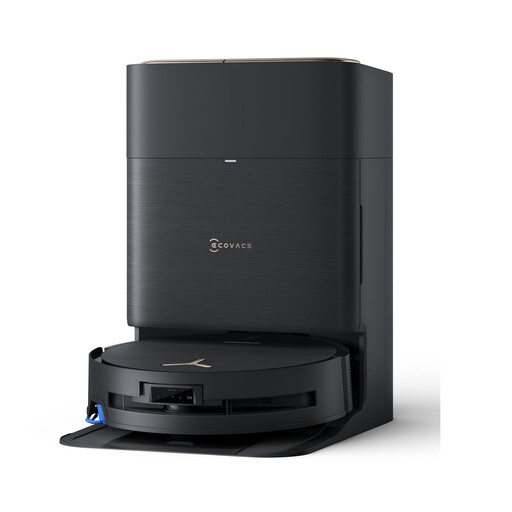 Image unavailable
ECOVACS DEEBOT X9 PRO Omni robot vacuum and mop
For scheduled cleaning while you’re out, with a return-to-base station that takes care of some of the maintenance.
The product listing states a suction power of 16 600 Pa, TrueMapping 2.0 navigation and a station that empties the dust container and washes and dries the mop. This stated figure alone doesn’t tell you how well it will perform on your carpets.
You’ll still need to maintain the brushes and filters and manage the water tanks; check your thresholds and clear cables from its routes.
View on Joybuy
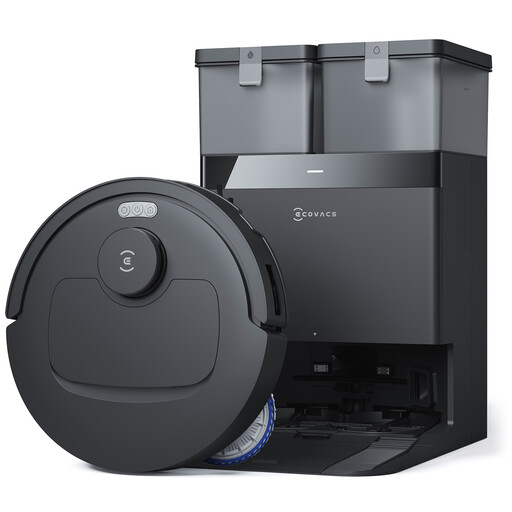 Image unavailable
ECOVACS Deebot T30C OMNI Gen2, black robot vacuum and mop
For scheduling cleaning runs while you’re out, if you have enough space for its station.
The product listing states a suction power of 25 000 Pa, TrueMapping 2.0 mapping and a station that handles tasks including emptying and cleaning the mop pads. Compare the exact model’s performance on your carpets rather than assuming its stated suction power is a measure of how well it will clean.
You’ll still need to fill and empty the water tanks and maintain the brushes and filters. Check your thresholds and cables, too.
View on Joybuy
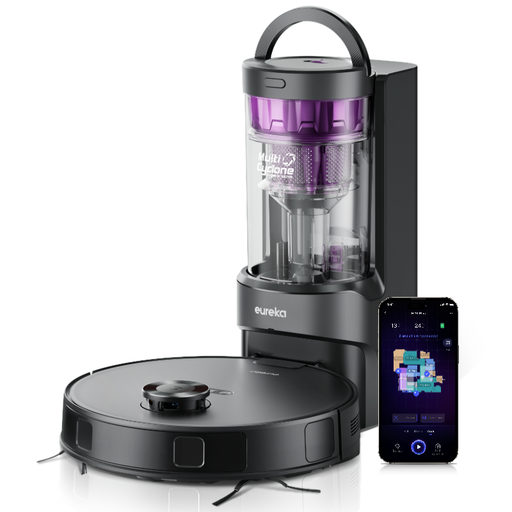 Image unavailable
Eureka E20 Plus, black robot vacuum cleaner
For scheduling cleaning while you’re out and reducing how often you need to empty the dust container thanks to its station.
The product listing states a suction power of 8 000 Pa, DuoDetect AI navigation and a 2 L station dust bag. It claims up to 180 minutes of run time, but that figure alone isn’t enough to predict how much of your floor it will cover.
The instructions say to remove cables, small objects and lightweight rugs with tassels. Also check your thresholds and remember to maintain the brushes and filters.
View on Joybuy
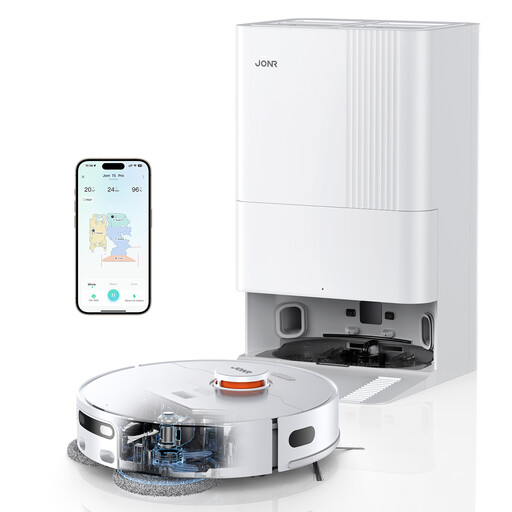 Image unavailable
JONR T5 Pro robot vacuum and mop with station
For scheduling cleaning runs and letting the station handle some post-run tasks, while still setting aside time for maintenance.
The product listing states a suction power of 8 150 Pa, laser navigation and a station that empties the dust container and washes and dries the mop. Its stated suction power alone isn’t enough to judge how well it will clean carpets.
You’ll still need to empty the dirty water and check the brushes and sensors. Check your thresholds and clear routes obstructed by cables.
View on Joybuy
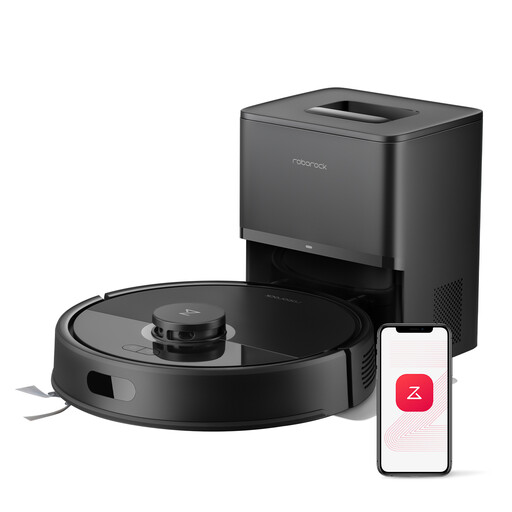 Image unavailable
roborock Q7 L5+, black robot vacuum and mop
For scheduled cleaning runs with a station that automatically empties the robot’s dust container.
The product listing states a suction power of 8 000 Pa, LiDAR navigation and a dual anti-tangle system. To choose a model for your carpets and hard floors, look for performance results on this exact model.
Check whether it can cross your thresholds, clear cables from its routes and find out what maintenance is required for its mopping function.
View on Joybuy
Frequently asked questions
Can a robot vacuum replace manual cleaning completely?
Don’t rely on a robot for every cleaning task: UFC-Que Choisir says its performance varies depending on the type of floor and isn’t always convincing. If carpets, edges or deep cleans are important in your home, plan to tackle them manually with a suitable appliance as well.
Should I clear cables before starting a robot vacuum?
Clear cables and small objects from its routes before starting the robot, especially during the first few cleaning runs. Even if obstacle avoidance is advertised, check what it covers on the model you’ve chosen and see how it moves around your home.
What maintenance does a robot with a station still need?
A station can reduce how often you need to empty the dust container, but it doesn’t eliminate the need to maintain the robot. Rowenta recommends looking after the brushes, filter, sensors and wheels; depending on the station’s functions, you may also need to take care of its water tanks.
Can a repairability index help me choose a vacuum cleaner in France?
Yes. It can help you compare products covered by the index: ADEME says corded, cordless and robot vacuum cleaners are among the appliances included. Check the details of the index for the product you’re interested in, then look into any parts and consumables you may need.


