Homes with separate rooms and areas
If you want to schedule cleaning by room or avoid certain areas, look for mapping and configurable zones. The settings described by iRobot and Rowenta apply to their compatible models, not to every robot vacuum.


For everyday vacuuming, choose a robot with mapping if you want to schedule cleaning by room or mark areas as off-limits. A self-emptying dock is a better choice if you want to empty the dustbin less often. Before you buy, compare the model’s test results with your floor types and check which obstacles it can avoid, what connectivity it needs and which parts require maintenance. A handheld vacuum can still come in useful for areas where the robot doesn’t meet your expectations.
If you want to schedule cleaning by room or avoid certain areas, look for mapping and configurable zones. The settings described by iRobot and Rowenta apply to their compatible models, not to every robot vacuum.
Cables, shoes and toys on the floor can make cleaning without supervision more challenging. Check which objects the model you’re considering is designed to avoid: iRobot lists some for the Roomba Combo j7, but that doesn’t tell you how other robot vacuums will behave.
A self-emptying dock can mean you need to empty the dustbin less often. However, you’ll need to make room for it and maintain the robot and its compatible consumables; a dock doesn’t make the appliance maintenance-free.
Start by thinking about which areas of your home you want to clean automatically, then consider obstacles and any maintenance you’ll still need to do. For cleaning performance, UFC-Que Choisir assesses floors, edges and corners separately, so check the test results for the exact model you’re interested in.
| Criteria | What to check | Who it matters to |
|---|---|---|
| Rooms and routes | Whether the exact model saves maps, cleans by room and lets you mark areas as off-limits; and what you need to do to access these settings. | If I want to clean the kitchen without starting a cycle throughout the whole home, controlling cleaning by area becomes my priority; around 33% of consumers prioritise this control over rooms and zones. |
| Obstacles | Which objects the model is explicitly designed to avoid, and whether it can cross thresholds. | When there are cables or toys on the floor, I want to reduce the number of interrupted cycles without assuming the robot will avoid everything; around 27% of consumers put obstacle handling at the top of their list. |
| Emptying and maintenance | The dock’s functions, the space it needs, and the product codes for compatible consumables and wear parts. | If regularly emptying the dustbin puts me off using the robot, I’ll check what the dock actually takes care of; around 20% of consumers prioritise emptying the bin less often over other criteria. |
| Cleaning performance on different floors | Test results for the model on the floor types you have most of, as well as along edges and in corners. | If I have rugs or care about how clean the edges of my rooms are, I want to know whether I’ll still need to vacuum manually; around 20% of consumers prioritise performance on their floors. |
A robot’s scheduling features don’t tell you how well it cleans rugs or reaches edges. UFC-Que Choisir’s testing protocol assesses rugs, tiles, wooden floors, edges and corners separately.
Look for an independent test of the exact model on the surfaces that matter in your home, and consider using a manual vacuum as well if needed.
The settings available through an app depend on which phones and networks the model supports. iRobot’s support information says that some of its robot vacuums require a 2.4 GHz Wi-Fi connection.
Check the robot’s manual against your phone and router before relying on app-based scheduling.
A dock can empty the robot’s dustbin, but it takes up space and doesn’t remove the need to maintain the brushes and other parts of the model.
Check what tasks you’ll still need to do, where the dock will go and the product codes for compatible consumables.
Searching by model, as you can with Rowenta, can help you find compatible product codes. It doesn’t guarantee that a particular part will remain available for as long as you need it.
Make a note of the robot’s full model number and ask the manufacturer or retailer about essential parts, how long they’re expected to be available and how to order them.
Worth considering for connected cleaning settings and, on some models, obstacle avoidance and self-emptying.
Worth a look if finding parts by model number and setting up zones are among your priorities.
Consider it if the robot’s height or its advertised obstacle-avoidance features matter in your home.
A brand to consider if you want to identify compatible accessories before you buy.
Worth a look, but check the connection requirements and accessories for the DEEBOT you’re considering.
These robots are designed for everyday automated vacuuming. The product names include models with a dock and a connected model without confirmed self-emptying; choose according to the settings and maintenance tasks that matter to you.
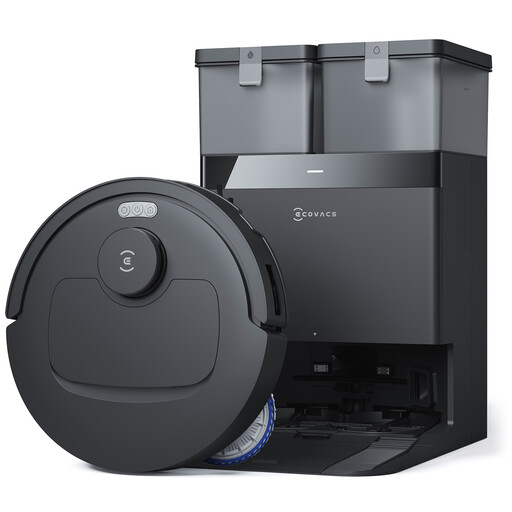 Image unavailable
Worth considering if you want everyday vacuuming alongside a dock that takes care of mopping-related tasks.
The product listing states 25 000 Pa suction, an OMNI dock and mop pad washing at 75 °C; these figures don’t indicate how well it will clean your floors.
Check the room-by-room settings, connection requirements, space needed for the dock and test results for your floor types.
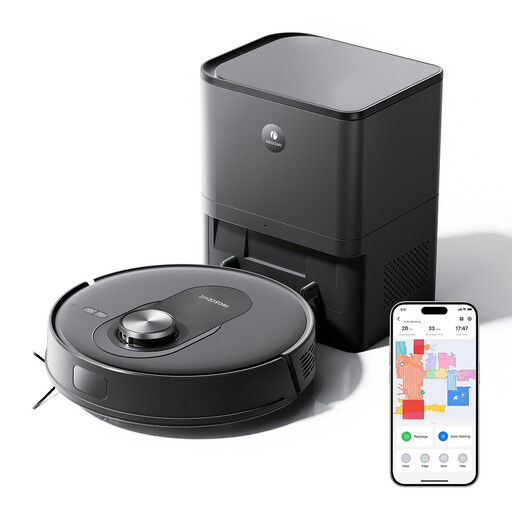 Image unavailable
Worth considering if you want to combine home mapping with automatic dustbin emptying.
The product listing mentions LiDAR navigation, 8 000 Pa suction and a stated runtime of 200 min.
Check the room-by-room features, Wi-Fi compatibility and cleaning results on your floors before choosing this model.
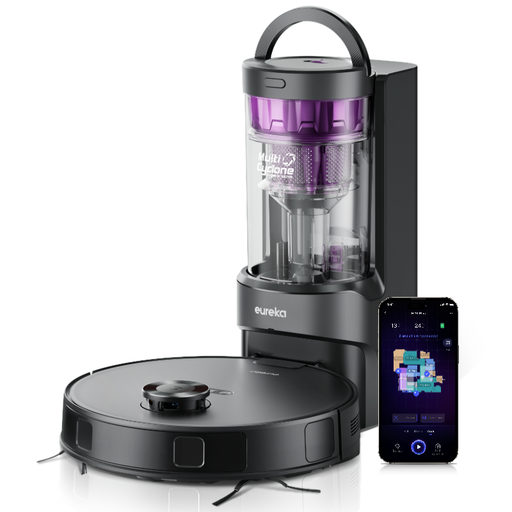 Image unavailable
Worth considering if you’re looking for a robot with a dock and want to empty the dustbin manually less often.
The product listing mentions DuoDetect AI navigation, 3D obstacle avoidance and a stated runtime of 180 min.
Check which objects the avoidance feature actually covers, as well as the test results for your floors; the stated suction power and time between emptying the bin should be confirmed for this model number.
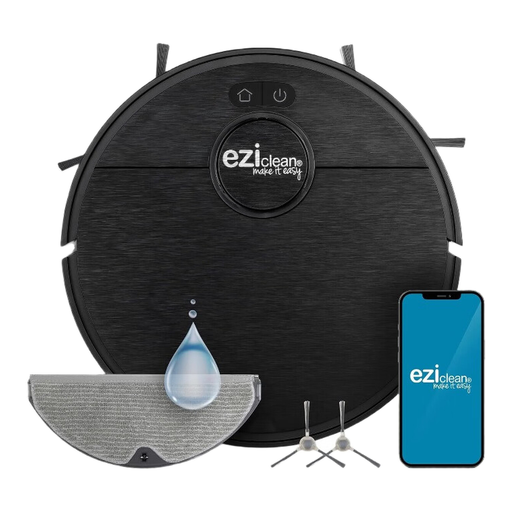 Image unavailable
Worth considering if you want to schedule cleaning and are happy to empty the dustbin manually.
The product listing describes a connected model. Before relying on room-by-room cleaning, check whether its mapping and configurable zones suit the way you’ll use it.
Also check the connection requirements and cleaning results on your floors.
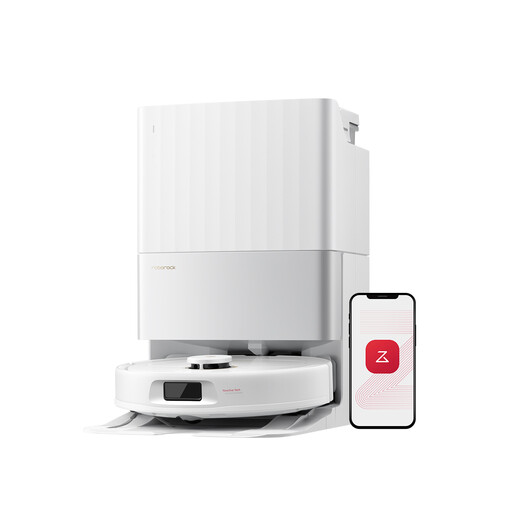 Image unavailable
Worth considering if your priority is having the dock take care of some maintenance tasks.
The product listing states 12 000 Pa suction, FlexiArm mop pads, a dual anti-tangle system and hot-air drying; these features don’t demonstrate cleaning performance.
Check the scheduling options, room-by-room settings and the space needed for the dock for this model number.
Not necessarily to start a simple cleaning cycle, but some settings on connected robot vacuums are controlled through an app. iRobot’s support information says that some app features become available once the robot is connected to Wi-Fi. Check the manual for the model to see which features work without a phone, which mobile operating system it requires and which Wi-Fi frequency it supports.
A robot can handle everyday cleaning, but it won’t automatically replace a regular vacuum cleaner on every floor or for every finishing detail. UFC-Que Choisir tests rugs, hard floors, edges and corners, among other things. Check the results for the exact model before deciding whether to keep a regular vacuum cleaner as well.
Make a note of its full model number, then check with the manufacturer or retailer for compatible parts and how long they’re expected to be available. For parts essential to using a product, Article L111-4 of the French Consumer Code requires the manufacturer or importer to inform the professional seller whether they are available; seeing a part in a catalogue doesn’t guarantee it will be available in the future.
Review the permissions it requests, its privacy information and the conditions for using the features you’re interested in. The CNIL highlights privacy concerns around connected devices; check the information for the specific app and model rather than assuming all brands handle your data in the same way.