
Livraison le jour même ou le lendemain

Qualité garantie

Débloquez vos offres de bienvenue: Livraison GRATUITE | Jusqu'à -80 % | 30 jours d'essai gratuits à JoyPlus
Téléchargez l'application
A robot vacuum and mop with a station can make repetitive household chores easier, but not all models offer the same level of automation. Between suction figures, intelligent navigation claims and multifunction stations, it is easy to pay for a feature that does not really suit your home.
Before comparing the options, there are three pitfalls worth bearing in mind:
Suction power, measured in Pa, provides an initial way to compare models. However, it is not the only factor: the design of the main brush and side brushes also plays an important role. In homes with pets, anti-tangle technology can help prevent hair building up around the brush shaft.
A powerful robot vacuum can be particularly useful on carpets and uneven floors. For everyday use, noise levels, dustbin capacity and how often the brushes need cleaning are just as important. Models advertised at 8 000 Pa, 12 000 Pa or more should therefore be assessed alongside their battery life and filtration system.
LiDAR navigation maps rooms using a laser sensor. It makes room-by-room cleaning, selecting specific rooms and resuming a cycle after recharging easier. Other devices combine laser technology, a camera and depth sensors to identify furniture and objects left on the floor.
Obstacle detection does not eliminate every risk of getting caught or stuck. It is always best to pick up cables, small toys and clothing before starting a cycle. Also check the height of thresholds the robot can cross: technical specifications often mention a limit of around 2 cm, but the actual result depends on the shape of the threshold and the flooring.
Depending on the model, the base may provide one or more of the following functions:
A self-cleaning station reduces the number of manual tasks, but it also takes up more space. Remember to check the price of bags, filters, cleaning solutions and spare parts. Only use maintenance products approved by the manufacturer: some devices, such as the Roborock Qrevo S5V, specify that their dedicated solution must be used to protect the pumps and seals.
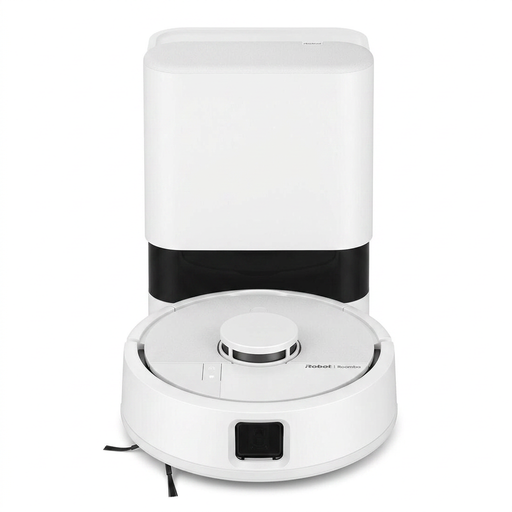
Why this choice suits this profile : Its compact design, mobile app and AutoEmpty base make it a good fit for flats and for anyone looking for their first station-equipped robot without stretching their budget.
The station empties the dustbin automatically, and the robot resumes cleaning after recharging. You will still need to replace consumables and clean the sensors regularly.
LiDAR navigation, carpet detection, room-by-room scheduling and compatibility with 2.4 or 5 GHz Wi-Fi.
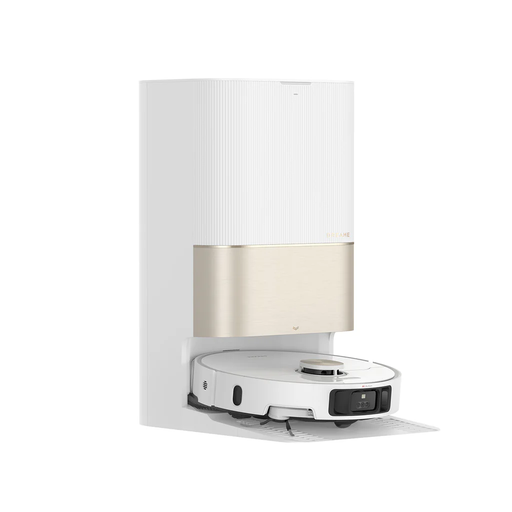
Why this choice suits this profile : Its highly comprehensive station and mopping functions are designed for larger homes and for users who want to minimise manual intervention.
The base handles emptying, hot-water washing at up to 70 °C and hot-air drying. However, it needs a clear space and careful handling after a high-temperature cycle.
Advertised suction of 12 000 Pa, 6 400 mAh battery, mop pad washing and an active self-cleaning station.
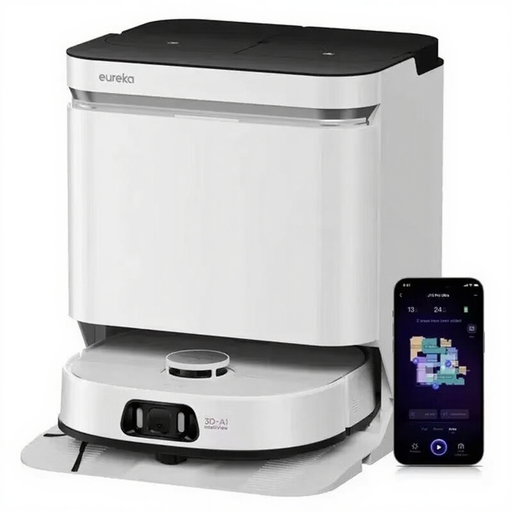
Why this choice suits this profile : Homes with pets or heavy footfall can benefit from its anti-tangle brush and station, designed to automate several stages of maintenance.
Anti-tangle technology and obstacle detection address common problems caused by hair and cluttered rooms. However, the advertised performance should still be considered in relation to the type of flooring and the amount of dirt.
Advertised suction of 16 200 Pa, dual anti-tangle system, intelligent navigation and base washing with hot water at up to 75 °C, plus automated mop washing and drying.
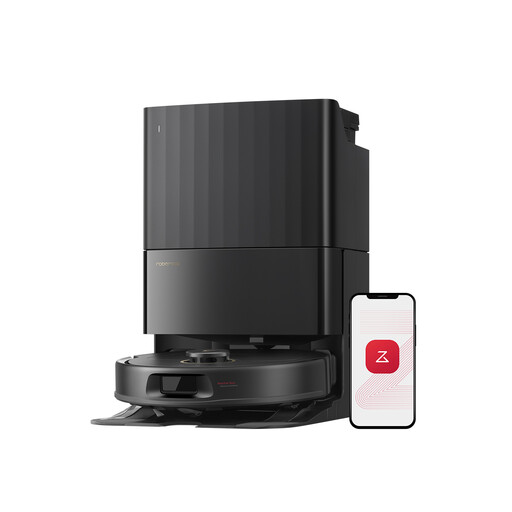
Why this choice suits this profile : In a home with a mix of wooden floors, tiled floors and carpets, mapping, no-go zones and mop lifting make it possible to adapt each cycle to the room.
Automatic mop lifting helps limit contact with carpets. For deep-pile carpets, however, the manufacturer still recommends setting no-go zones in the app.
Advertised suction of 12 000 Pa, dual anti-tangle system, intelligent navigation and hot-air drying.
We have brought together a comprehensive, real-time updated selection of products that meet these exacting criteria and European safety standards.
Before the first cycle, place the base on a hard, completely level floor near a power socket. The instructions for many models recommend around 50 cm of clear space at the sides and 1.5 m in front of the station. Avoid staircases, heat sources and areas exposed to direct sunlight.
To maintain your device’s performance:
The purchase price is only part of the overall cost. You also need to budget for filters, brushes, mop pads, any bags and cleaning solution. A bagless station can reduce the cost of consumables, while a bagged model can sometimes make handling dust more convenient.
Its lifespan depends on the battery, how often it runs and how well it is maintained. Cleaning the brushes, avoiding unsuitable liquids and using the original base can help reduce wear. The battery is a consumable component that should be monitored after several years of use.
A full preparation is not essential, but take the time to remove cables, small objects and liquids. Even with good navigation and effective obstacle detection, these items can hinder movement or damage moving parts.