
Livraison le jour même ou le lendemain

Qualité garantie

Débloquez vos offres de bienvenue: Livraison GRATUITE | Jusqu'à -80 % | 30 jours d'essai gratuits à JoyPlus
Téléchargez l'application
A spotless floor without lifting a finger? The promise is tempting. Manufacturers have caught on, outdoing each other with ever more sophisticated robot vacuums and mops with stations. But be warned: behind the marketing of total autonomy often lie costly disappointments. A device that shines on the spec sheet can quickly become a daily headache.
To avoid buyer's remorse, you need to learn how to decode marketing claims and spot the seemingly good ideas that fall flat. Here are the most common pitfalls to avoid:
To make the right choice, you must look beyond the spec sheet and focus on the features that will genuinely make your life easier.
To find the robot vacuum and mop with an auto-empty station that won't let you down, focus on three essential points. Your robot's true autonomy and cleaning quality depend on them.
The concept of a docking and cleaning station has evolved significantly. Entry-level models merely empty the robot's dust collector. The most advanced systems push autonomy much further:
A truly autonomous robot vacuum should have a station that handles all these tasks. Your involvement will then be limited to refilling the clean water tank and emptying the dirty water tank every few weeks.
If you have pets, the war on hair is a decisive factor. High suction power (over 5,000 Pa) is necessary but not sufficient. The design of the main brush is just as, if not more, important. Opt for models with all-rubber brushes, which drastically reduce hair and fur tangles. Some anti-tangle technologies even integrate small blades to cut hair before it can block the brush—a game-changing feature for a robot vacuum for pet hair to be truly effective.
LiDAR navigation (Light Detection and Ranging) has become the gold standard. It allows the robot to create a precise map of your home, even in the dark, optimise its cleaning paths, and manage multiple floors.
However, most round robots struggle to clean properly along walls and in corners. To overcome this shortcoming, manufacturers have developed innovative solutions:
This ability to perform precise edge cleaning is what separates an "almost clean" floor from a spotless one.
Every home has different needs. Here are models that excel in their category and meet specific expectations, all while avoiding the pitfalls we've mentioned.
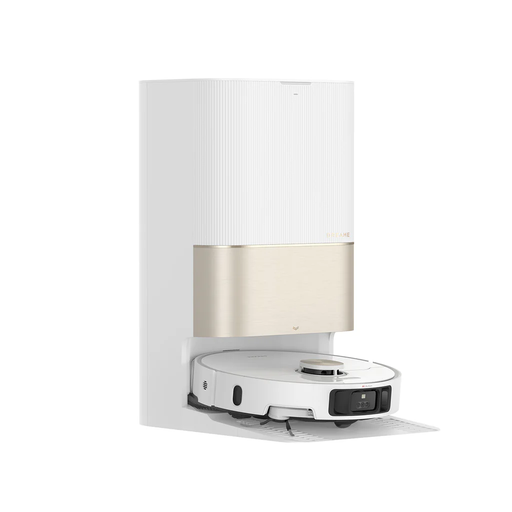
Why it stands out : For those who want the ultimate in automation. This model is packed with cutting-edge technologies for near-zero maintenance and maximum autonomy.
It avoids the "fake" autonomous station trap. Its base washes the mops with hot water (70 °C), dries them with hot air, and manages the water tanks. Human intervention is reduced to the bare minimum.
Its two extendable robotic arms ensure an impeccable clean along edges and in corners, where conventional round models give up.
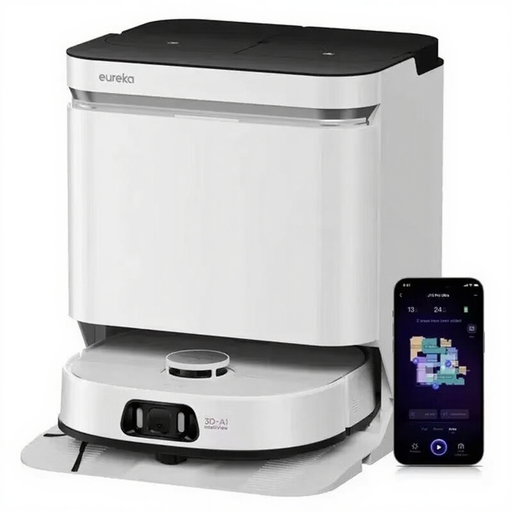
Why it stands out : Specially designed for pet owners, it combines overpowering suction with a unique brush technology for unwavering effectiveness against stubborn hair and dirt.
It tackles the trap of raw power without real-world effectiveness. Its FlexiRazor technology prevents hair and fur from wrapping around the brush—a plague that cripples the performance of standard models.
The combination of a colossal 16,200 Pa suction power and its anti-tangle technology makes it the ultimate weapon for pet owners.
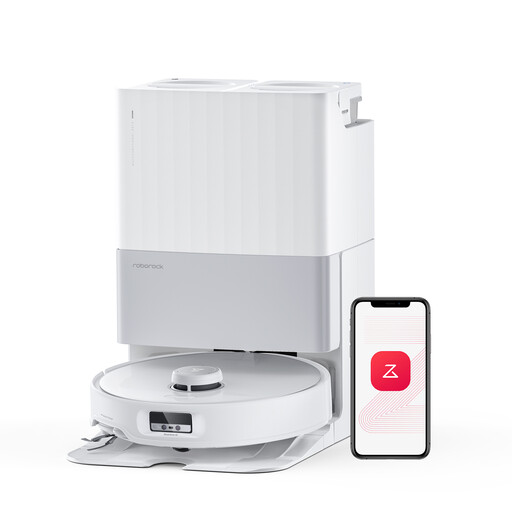
Why it stands out : Perfect for houses and large apartments, it combines massive battery life, reliable multi-floor mapping, and formidable edge cleaning to leave no corner untouched.
It solves the problem of poorly cleaned edges. While many robots leave a strip of dust along walls, its FlexiArm extendable arm deploys to hunt down dirt in the tightest corners.
Its record-breaking battery life (up to 4 hours advertised) allows it to clean very large areas in a single run, without returning to its base to recharge.
We have selected a full range of products that meet our demanding selection criteria and are fully compliant with European standards.
On average, a good model can last from 3 to 5 years, but its longevity depends on its quality and maintenance. The battery is usually the first component to show signs of weakness, often after 2 to 4 years of use. The motors and sensors are much more durable. Regular maintenance (cleaning brushes, filters, and sensors) is the key to maximising its lifespan.
Quite the opposite! The purpose of a modern station is to make your life as easy as possible. Your tasks will be limited to:
Absolutely. This is one of the major advantages of LiDAR technology. Unlike robots that use cameras (vSLAM navigation), LiDAR does not need light to map and move around. It uses a laser to measure distances, allowing it to clean with the same precision day or night.