
Livraison le jour même ou le lendemain

Qualité garantie

Débloquez vos offres de bienvenue: Livraison GRATUITE | Jusqu'à -80 % | 30 jours d'essai gratuits à JoyPlus
Téléchargez l'application
A robot vacuum and mop can save you from a fair share of floor-cleaning chores, whether on hard floors, carpets or areas where pet hair tends to accumulate. But spec sheets often highlight an impressive number or a flashy feature. To avoid buying a machine that's either overkill — or not up to the job — for your needs, it's worth looking at the whole system: suction, mopping, navigation, docking station and maintenance.
A high figure in pascals, or Pa, represents the suction power quoted by the manufacturer. On its own, it can't predict real-world performance in your home. The brush design, the seal of the airflow path, the type of flooring and how the robot handles hair all play a crucial role too.
If you have rugs or carpets, check for automatic carpet detection, a suitable cleaning mode and, if possible, a system that can lift the mop pad. A robot that keeps dampening your carpet isn't really suited to combined use, unless its settings are precise enough.
A robot vacuum with a docking station can empty the dustbin, wash the mop pads and dry them. That doesn't mean you'll never have to lift a finger again: you'll still need to empty the dirty water tank, clean the filters and remove hair tangled around the brushes.
The wash temperatures quoted, such as 70 °C or 75 °C, refer to the station's capabilities. They are not a general hygiene guarantee. Follow the manufacturer's recommendations and avoid touching residual water just after a hot cycle.
An all-in-one docking station needs a clear, stable and easily accessible spot. Some models recommend around 50 cm of clearance on each side and 1.5 m in front to allow the robot to return to its base properly. Also remember to measure the height under your furniture: a unit close to 10 cm tall won't fit under every sofa.
To choose a robot vacuum for pet hair, go for a main brush designed to reduce tangles, an anti-tangle side brush and an easily accessible filter. The quoted suction power can help you compare spec sheets, but it needs to be weighed against battery life and the different cleaning modes.
The models featured below quote 8,000 Pa, 10,000 Pa, 16,200 Pa or 25,000 Pa, depending on the model. These figures aren't directly comparable without knowing the test conditions used.
A robot vacuum with LiDAR navigation maps your home using a laser sensor. Depending on the model and the accompanying app, this technology makes it easy to clean room by room, set up no-go zones and manage multiple floors.
Also check compatibility with your home network. Many devices only work on 2.4 GHz Wi-Fi. If your router broadcasts a combined network, you may need to temporarily separate the bands during setup.
A robot vacuum with auto-empty reduces daily handling, but the type of collection is worth a look: disposable bag, bagless bin or a specific tank. Also consider the price and availability of filters, brushes, mop pads, bags and cleaning solutions.
A station that can wash and dry the mop pads takes automation even further. However, it takes up more space and uses more energy than a simple charging base. In a large house, battery life, the ability to resume cleaning after recharging and multi-floor mapping also become important factors.
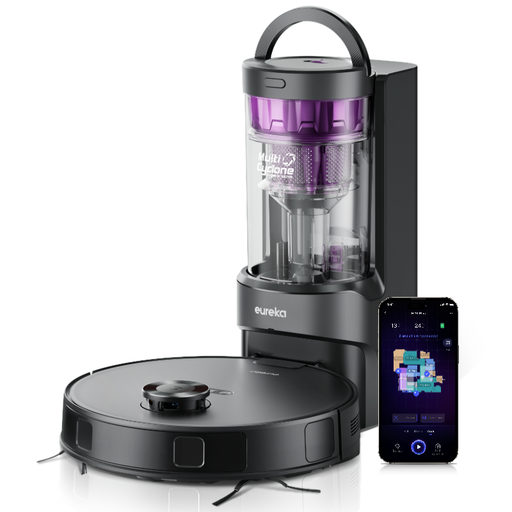
Why this choice suits this profile: With its bagless station, 2 L dustbin and claimed 180-minute battery life, this model is a good fit for a flat or house where you want straightforward automation.
When the robot detects a rug, it automatically lifts the mop pad by up to 10 mm, reducing the risk of wetting textile floor coverings.
Claimed suction of 8,000 Pa, 3D obstacle detection, app control and voice command compatibility.
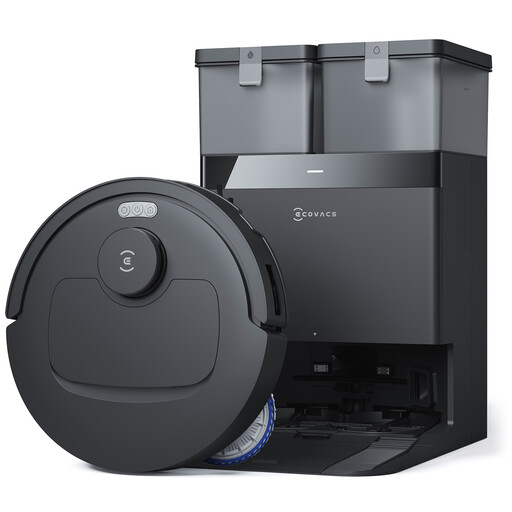
Why this choice suits this profile: The OMNI station handles emptying, washing the mop pads at 75 °C, hot-air drying and refilling the water tank. A great choice for those who want to minimise hands-on maintenance.
The automated pad management and ZeroTangle 3.0 anti-tangle structure handle hair and pet fur, though periodic maintenance is still needed.
Claimed suction of 25,000 Pa, TrueMapping 2.0, multi-floor management and the ECOVACS Home app.
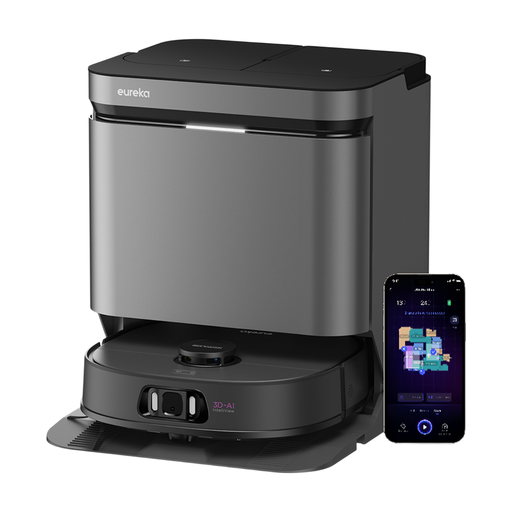
Why this choice suits this profile: Its obstacle detection, edge cleaning and the autonomous functions of its station are particularly well suited to busy homes, families and pet owners.
The FlexiRazor anti-tangle technology, along with the lifting of the brush and mop pad, reduces the risk of blockages during frequent use.
Claimed power of 16,200 Pa, LDS sensor, RGB camera, mop washing at 75 °C and a 3 L dustbin in the station.
We've put together a comprehensive, real-time updated selection of products that meet these demanding criteria and European safety standards.
Allow for a few steps: place the station against a wall, charge the robot, install the app, connect it to Wi-Fi, then run the mapping. Before you start, remove cables, small objects and fringes that could get in the way of the wheels or brushes.
It all depends on how often you use it, how well you maintain it, the battery and the availability of spare parts. Clean the sensors, filters, main brush and charging contacts regularly. Replace consumables when they're worn out, rather than waiting until hair eventually jams the mechanism.
Yes, provided the model can distinguish between surfaces and offers mop pad lifting or the ability to set no-go zones. If your home has several rugs, check the lift height, carpet detection and the settings available in the app before you buy.