
Livraison le jour même ou le lendemain

Qualité garantie

Débloquez vos offres de bienvenue: Livraison GRATUITE | Jusqu'à -80 % | 30 jours d'essai gratuits à JoyPlus
Téléchargez l'application
A robot vacuum and mop can cut down on the time you spend cleaning hard floors, rugs and carpets by hand. But product specifications often focus on impressive suction power or AI features, without always addressing the realities of everyday use: maintaining the docking station, carpet compatibility, how much space it takes up or the cost of consumables.
Before choosing a robot vacuum and mop with a docking station, take a moment to consider these three common pitfalls.
A suction rating of 8 000, 16 000 or 30 000 Pa isn’t enough to predict how well a robot will perform in your home. Brush design, airflow, how well it cleans along skirting boards and how it handles hair all play an important part too. So, assess a powerful robot vacuum in the context of your floors, rather than relying on one figure alone.
A robot vacuum with automatic emptying transfers dust into a bag or built-in container. Some models also wash the mop pads, add detergent, refill the clean water tank and dry the mops. This means less hands-on maintenance, but not none at all: you’ll still need to empty the dirty water, clean the filters and check the brushes.
A robot mop can struggle with thick rugs, cables, toys and door thresholds. Features such as mop-pad lifting, carpet detection and systematic navigation are particularly useful in family homes and homes with pets.
If you live with a dog or cat, look for a removable main brush, an anti-tangle system and adjustable suction. Technologies such as ZeroTangle, Anti-Wrap and similar systems can help limit the build-up of human and pet hair, but you’ll still need to remove trapped fibres regularly.
It’s also worth checking the capacity of both the dustbin and the docking station. A large container means less frequent emptying, while a bagless station can reduce the need to buy consumables. However, make sure filters, brushes, bags and mop pads are available in France.
A robot vacuum with hot-water mop washing can clean the mop pads at 70 °C, 75 °C or 80 °C, depending on the model. This temperature applies to the station’s cleaning cycle; it doesn’t mean the robot mops your floors with water that’s constantly kept at that temperature. Hot-air drying reduces residual moisture, but you’ll still need to rinse the dirty water tank regularly.
For carpets and rugs, look for mop pads that lift by at least a few millimetres, as well as a ‘no-go zone’ feature in the app. Some models claim to lift their mop pads by 10 to 15 mm. Check the product specifications, as performance can vary depending on the setup.
A robot vacuum with LiDAR navigation maps rooms using a laser sensor. It can generally handle multiple floors, no-go zones and scheduled routes. Models with a camera or obstacle recognition system can identify more objects, but remember to check the privacy settings and how images are processed.
A connected robot vacuum also depends on the quality of its app, Wi-Fi compatibility—which may be limited to a 2.4 GHz network—and how often it receives updates. Before setting it up, make sure you have a flat surface for the station, clear space in front of it and an easily accessible plug socket.
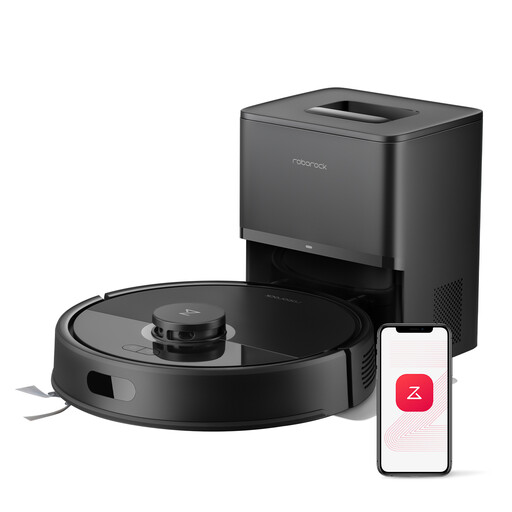
Why it suits this type of user : It combines 8 000 Pa suction, an automatic-emptying station and LiDAR navigation, all controlled through an app.
Systematic mapping prevents random routes, while the station reduces the need for manual emptying—all in a relatively simple design.
8 000 Pa suction, dual anti-tangle system, app control and carpet compatibility.
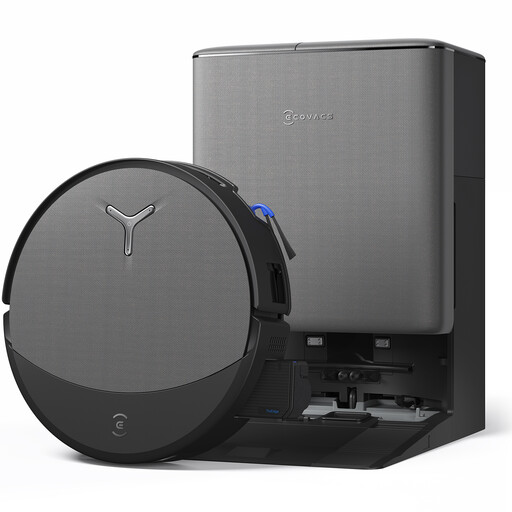
Why it suits this type of user : Its OMNI station and advanced navigation features are designed for larger homes and anyone who wants to automate floor care as much as possible.
The station washes the mop pads automatically, so you don’t have to clean them after every cycle.
Up to 30 000 Pa suction, OZMO ROLLER 3.0 mopping, ZeroTangle 4.0 system and TruePass 4WD transmission.
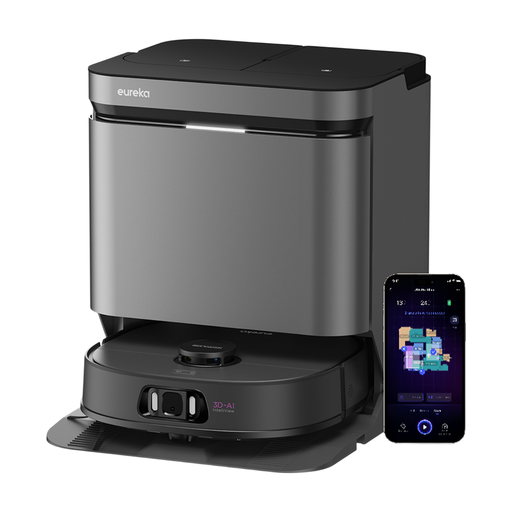
Why it suits this type of user : It’s a good fit for homes with pets, frequent foot traffic and a variety of messes, thanks to its liquid detection and lifting brush.
Its anti-tangle technology and 75 °C washing help tackle the build-up of pet hair and the frequent maintenance mop pads can require.
16 200 Pa stated suction, LDS navigation, liftable brush and mop pad, self-cleaning station and 3 L dustbin.
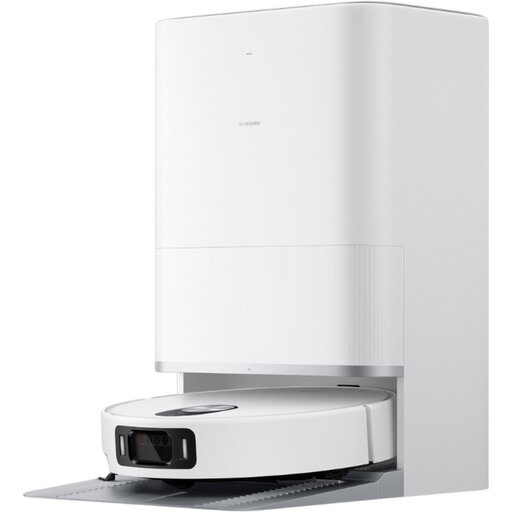
Why it suits this type of user : Its laser navigation, carpet recognition and voice control make it a good option for homes with different types of flooring.
Mop-pad lifting on carpets and LiDAR mapping reduce the risk of wetting carpets or making unnecessary repeat passes.
20 000 Pa stated suction, mop-pad washing at 80 °C, hot-air drying, 5 200 mAh battery and Xiaomi Home app.
We’ve put together a complete, regularly updated list of products that meet these strict selection criteria and comply with European safety regulations.
Yes. Pick up cables, small objects and fringed fabrics, then place the station on a stable floor. Run an initial mapping cycle and set no-go zones around pet bowls, stairs or places where you don’t want water to be used.
It depends on the price of bags, filters, brushes, mop pads and recommended detergent. A bagless station can reduce some costs, while a model with washing and drying has more parts to maintain. Before ordering, check that accessories are available and compare their prices.
Its lifespan depends on how often you use it, how well you maintain it and the environment it operates in. Clean the sensors, remove hair from the brush regularly, dry washable parts and follow the charging instructions. It’s also worth considering the statutory guarantee of conformity that applies in France and the European Union when you buy.