
Livraison le jour même ou le lendemain

Qualité garantie

Débloquez vos offres de bienvenue: Livraison GRATUITE | Jusqu'à -80 % | 30 jours d'essai gratuits à JoyPlus
Téléchargez l'application
A robot vacuum and mop can make daily cleaning much easier, but not all models are designed for the same purpose. A flat with wooden floors and few obstacles won’t have the same needs as a house with carpets, children and pets.
Before comparing prices or getting drawn in by the numbers on the box, focus on three often-overlooked criteria: navigation, moisture management and station maintenance. These are what will make the real difference day to day.
The values quoted in Pa represent maximum suction pressure. However, they aren’t enough to judge a device’s real-world effectiveness. The brush design, anti-tangle system, airflow and quality of contact with the floor all matter just as much.
A very powerful robot can be useful for carpets and pet hair. On the flip side, it may also be noisier and use more energy. Check for multiple suction levels and an automatic mode that can detect carpets.
The mopping function is primarily intended for regular maintenance of hard floors. It won’t necessarily replace manual cleaning when a stain is set in. If your home has wooden flooring or a water-sensitive surface, adjusting the water flow and having automatic mop lifting become especially important.
A robot floor mop should also avoid soaking carpets. Mop lifting, carpet detection and the ability to set no-go zones in the app all help prevent unwelcome surprises.
An all-in-one station automates many tasks, but it doesn’t let you off the hook when it comes to emptying the dirty water tank, refilling the clean water tank, cleaning the filters and checking the brushes. Even a self-cleaning robot vacuum that can wash and dry its own pads still requires a minimum of upkeep.
Hot air drying reduces residual moisture in the pads and helps prevent unpleasant odours. However, it’s still essential to follow the manufacturer’s recommendations and clean the bins and sensors regularly.
A robot vacuum with LiDAR navigation uses a laser system to map rooms and plan its movements. This technology really comes into its own in large spaces, homes with multiple rooms or houses where several maps need to be stored.
Obstacle detection via camera, structured light or additional sensors can help the robot avoid cables, toys and small objects. No system is infallible, so it’s best to remove fragile items and wires before starting a cleaning cycle.
Things to check:
To choose a robot vacuum for pet hair, look for a removable main brush, an anti-tangle design and a side brush that minimises hair build-up. The figures quoted — 8,000, 16,200 or 25,000 Pa, for example — are still just spec sheet data and don’t guarantee the same results on all floor types.
A model intended for both carpets and hard floors should offer several modes: vacuum only, mop only and combined operation. Automatic suction boost on carpets also saves you from having to adjust settings manually.
A robot vacuum with an automatic emptying station transfers dust to a bag or larger-capacity bin. Bagless models avoid the need to buy consumables, while stations with a bag generally contain dust better during emptying.
For the mopping function, check whether the station offers:
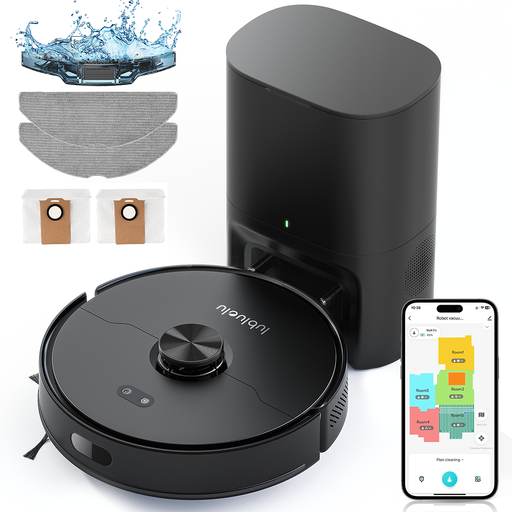
Why this suits this profile: It combines vacuuming, sweeping and mopping with laser navigation, a full-featured app and the ability to store five maps. A reassuring choice for a first connected purchase.
The water flow can be adjusted from the app and the mop pad can be removed for carpets. This stops you applying the same level of moisture to all floor types.
Rated suction of 4,000 Pa, LiDAR navigation, stated noise level of 55 dB in standard mode and the ability to save up to five maps.
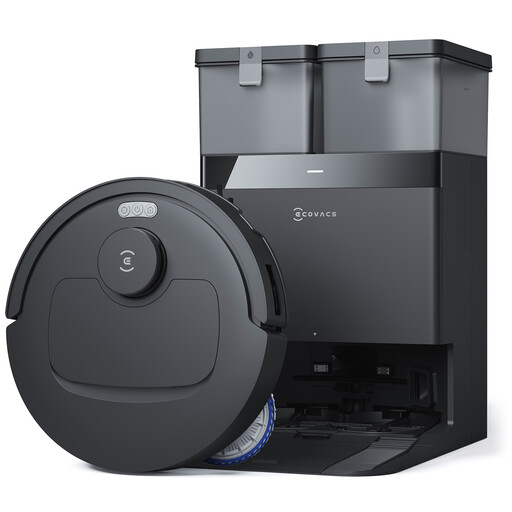
Why this suits this profile: Its OMNI station centralises emptying, hot water washing, drying and detergent dosing. That means fewer manual tasks between cleaning cycles.
Carpet detection and mop lifting minimise contact with rugs. The 45 °C drying also reduces lingering moisture in the pads.
Rated power of 25,000 Pa, pad washing at 75 °C, hot air drying, TrueMapping 2.0 navigation and multi-storey support.
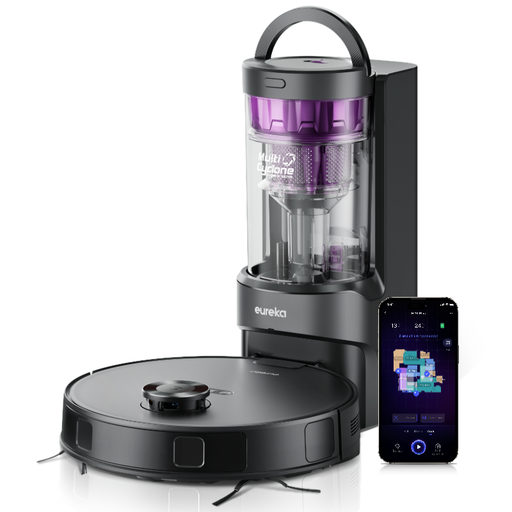
Why this suits this profile: Its large bagless bin and rated battery life of up to 180 minutes make it suitable for large spaces and homes with pets.
The anti-tangle brush and 3D obstacle avoidance are designed for hair, toys and dimly lit rooms.
Rated suction of 8,000 Pa, 2-litre dustbin, bagless station, app, voice control and mop lifting by 10 mm.
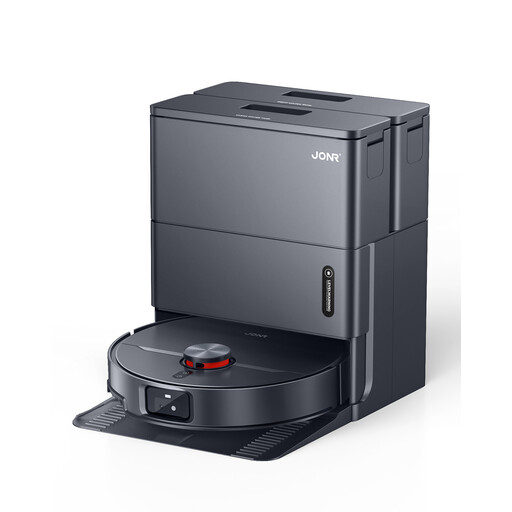
Why this suits this profile: It combines vacuuming, mopping, automatic pad cleaning and drying. A setup suited to those who want to minimise hands-on work after each run.
Washing at 75 °C and drying at 45 °C are built into the station. The anti-tangle system also reduces how often you need to check the brush.
Rated suction of 20 kPa, extendable arms for cleaning edges and corners, AI obstacle avoidance and an all-in-one station.
Place the station against a wall, on a flat, clear floor. To help the robot return automatically, some manufacturers recommend leaving about 50 cm on each side and 1.5 m in front of the base. Before the first mapping run, tidy away cables, small objects and liquids.
To keep running costs down:
A robot vacuum and mop should never be used to pick up liquids, hot ash, sharp objects or flammable substances. During maintenance, also keep the device and its station out of reach of children and pets.
We’ve put together a full, real-time updated selection of products that meet these demanding criteria as well as European safety standards.
Yes. Remove cables, small toys, liquids, clothes and fragile objects. This preparation reduces the risk of the robot getting stuck and helps it create a more accurate map.
It depends on how often you run it, the electricity consumption, and the cost of filters, pads, detergent and station bags where needed. A bagless model cuts down on consumables but means you have to empty the bin manually.
This depends on how often you use it, how well you maintain it and the availability of spare parts. Regularly cleaning the brushes, sensors and filters, preventing any water from getting into the motor and using the original station all help extend the device’s life. Before buying, also check the warranty terms and the quality of after-sales support.