
Livraison le jour même ou le lendemain

Qualité garantie

Débloquez vos offres de bienvenue: Livraison GRATUITE | Jusqu'à -80 % | 30 jours d'essai gratuits à JoyPlus
Téléchargez l'application
A robot vacuum and mop can simplify your daily cleaning routine, but not all models perform equally depending on your home’s layout. Hard floors, thick carpets, pet hair, door thresholds or large areas: an impressive spec sheet doesn’t always guarantee results that live up to expectations.
Before you place an order, three common mistakes keep cropping up:
To choose a robot vacuum for pet hair, look closely at the main brush, the anti-tangle system and the dustbin capacity. A stated suction of 8,000 Pa, 12,000 Pa or more gives you a rough idea, but real-world performance also depends on the flooring, the amount of dust and the mode you select.
On carpets and rugs, also check:
A robot vacuum for carpets and hard floors needs to adapt its behaviour to each surface. Without mop-lifting or no-go zones in the app, moisture could end up on your carpet.
The mopping function isn’t just about having a water tank. The most automated models can wash the pads, dry them with hot air, empty the dustbin and sometimes refill the clean water tank themselves.
A self-cleaning robot vacuum reduces the amount of hands-on work, but it doesn’t eliminate maintenance entirely. You still need to keep an eye on the water tanks, filters, sensors and ducts. Stations that use hot water require extra care: the Dreame X40 Ultra Complete, for example, claims to wash mop pads at up to 70 °C, while some Eureka models reach 75 °C. Avoid touching the tank just after a hot cycle and always follow the instructions in the manual.
A robot vacuum with LiDAR mapping can model your rooms and let you start cleaning in a specific area. This is especially handy in a home with several bedrooms, hallways or multiple floors. That said, this technology doesn’t mean you can skip picking up cables, small objects and clothes left on the floor.
Before ordering, check the following points:
A connected robot vacuum usually lets you schedule cleaning times, select a specific room and set up no-go zones from the app. However, results still depend on your home’s layout and the quality of your Wi-Fi network.
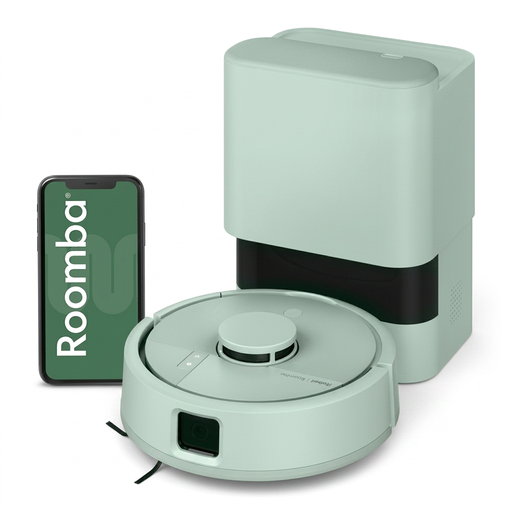
Why this suits this profile: with its compact 24.5 cm size and dual vacuum and mop function, it’s a good choice for a first device aimed at regular maintenance of hard floors, with carpets and rugs.
The AutoEmpty base automatically empties the dustbin, while ClearView LiDAR mapping prevents reliance on random navigation.
Roomba Home app, Wi-Fi 2.4 or 5 GHz, carpet detection, automatic resume after recharging and stair detection.
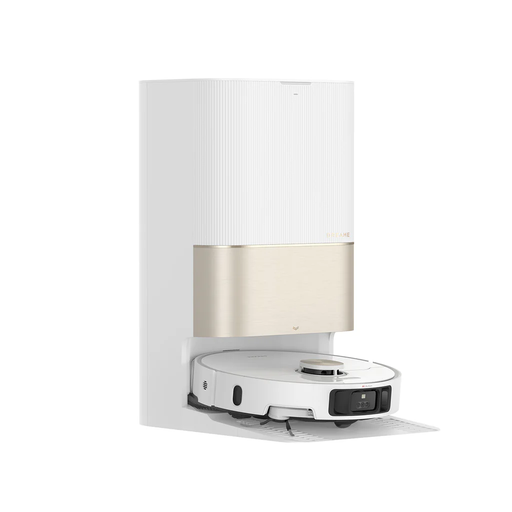
Why this suits this profile: its multi-function station and automated mopping features are aimed at households that want to minimise hands-on work between cleaning cycles.
The station handles emptying, hot-water mop washing and hot-air drying – a real bonus for cutting down on manual tasks.
Stated suction of 12,000 Pa, 6,400 mAh battery, pad lifting and Wi-Fi 2.4 GHz/Bluetooth 4.2 connectivity.
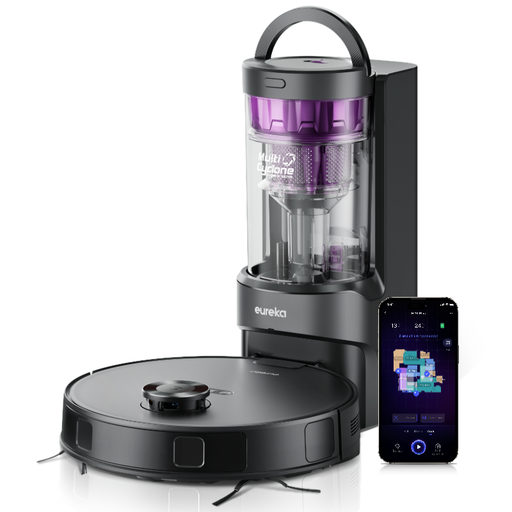
Why this suits this profile: pet owners and families with carpets will appreciate its extended battery life, anti-tangle brush and obstacle management.
The automatic mop lifting, stated at 10 mm, limits contact with carpets. The DuoDetect AI system is designed to spot obstacles.
Stated power of 8,000 Pa, battery life up to 180 minutes, 2-litre dustbin and app control.
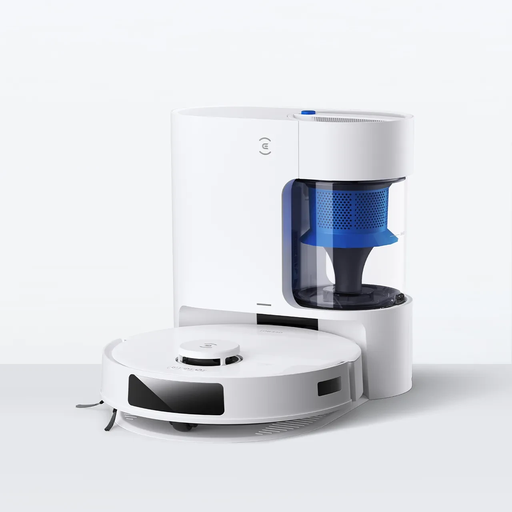
Why this suits this profile: its stated battery life of up to 300 minutes and TrueMapping 2.0 navigation can suit a large home or several rooms cleaned in sequence.
Structured navigation and automatic return to the base reduce random movement and interruptions during long cleaning sessions.
Stated suction of 8,000 Pa, 5,200 mAh battery, bagless 0.4-litre dustbin and ECOVACS HOME app.
We’ve put together a comprehensive, real-time selection of products that meet these demanding criteria and European safety standards.
Set aside a stable, flat and dry spot for the station. The clearance needed varies by model: some require around 50 cm on each side and 1.5 m in front. Also remember to measure the height available under your furniture and the width of doorways.
The cost of ownership doesn’t stop at the purchase price. Budget for consumables such as bags, filters, brushes, pads and cleaning solution. A bagless station can reduce recurring purchases, but you’ll need to empty its bin by hand. Clean the sensors, charging contacts and brush regularly. Also avoid vacuuming up liquids, hot ash, sharp objects or damp dust.
For a purchase in the UK, check compatibility with a 220-240 V supply, the availability of an English manual, the presence of safety information and the identification of an EU-established responsible party where required. A model advertised as 110 V, like some variants intended for other markets, should not be bought without confirmation of its compatibility.
It automates everyday maintenance, especially on hard floors and low-pile carpets. A traditional vacuum cleaner is still essential for stairs, furniture, skirting boards, upholstery and localised dirt.
The lifespan depends on the battery, how often you run it and how well you maintain it. Filters and brushes are wear-and-tear items. Before buying, check the availability of spare parts and the manufacturer’s recommendations.
No. It can empty the dustbin, wash or dry the pads, but you still need to keep an eye on water levels, clean certain components and replace consumables depending on usage.