
Livraison le jour même ou le lendemain

Qualité garantie

Débloquez vos offres de bienvenue: Livraison GRATUITE | Jusqu'à -80 % | 30 jours d'essai gratuits à JoyPlus
Téléchargez l'application
A robot vacuum and mop vacuums up dust, picks up crumbs and mops your floors every day, without you having to lift a finger. But manufacturers’ claims alone are not enough to determine whether a model will really suit your home. From advertised suction power and self-emptying stations to connected apps, certain details can turn an appealing purchase into an appliance that is ultimately awkward to use.
Here are the criteria to consider before choosing a robot vacuum and mop, along with a selection of models suited to different needs in France.
A figure such as 10,000 Pa refers to the advertised suction pressure, but it is not enough to assess cleaning performance. The brush design, filter, dustbin capacity and how the robot handles hair and pet fur also play a decisive role.
A robot may be effective on pet hair and carpets, yet become a nuisance to use if its brush regularly gets clogged. Check for an anti-tangle system, how easy the brush is to remove and the price of replacement parts.
Most robot mops use a water tank together with a cloth or rotating mop. They are convenient for everyday maintenance of tiles, vinyl and certain hard floors, but they do not always remove old stains or sticky residue.
The water flow should be adjustable. On wooden flooring, too much water can encourage moisture to penetrate the joints or damage a finish that is not suitable for wet cleaning. Check the manufacturer’s recommendations and set no-mop zones for rugs and carpets.
A robot vacuum with a self-emptying station reduces the amount of hands-on work, but it still needs maintaining. The bag or collection bin must be emptied, filters cleaned and sensors dusted. On bagless stations, particularly those with cyclone separation, the filters must be rinsed and allowed to dry completely before being put back.
The station’s position also matters. Leave plenty of clear space around it and avoid placing it on a rug if the instructions recommend installing it on a hard floor.
In a home with pets, choose a brush designed to limit the build-up of hair and a filter that is easy to access. A dustbin holding several hundred millilitres reduces the need for frequent emptying, while a high-capacity station is better suited to families or homes with several pets.
Suction power figures are only comparable when the measuring conditions are identical. Higher power can also mean more noise and reduce battery life, depending on the selected mode.
LiDAR navigation enables the robot to map its surroundings using a laser sensor. It makes it easier to create maps, clean room by room and set virtual walls. However, cables, small objects, spilled liquids and low obstacles should still be removed before every cleaning session.
App control allows you to schedule cleaning sessions, select a room or adjust the water flow. Check Wi-Fi compatibility: some appliances only work on the 2.4 GHz band. A remote control can also be useful if not everyone at home wants to use an app.
An advertised battery life of 140 to 180 minutes may be suitable for a flat or medium-sized house. Actual usage time depends on the suction mode, floor type and number of obstacles encountered. Automatic return to the base and cleaning resumption help prevent lengthy interruptions.
For wooden flooring and hard floors, pay particular attention to the water-flow setting, compatibility with sealed surfaces and the option to disable mopping on rugs and carpets.
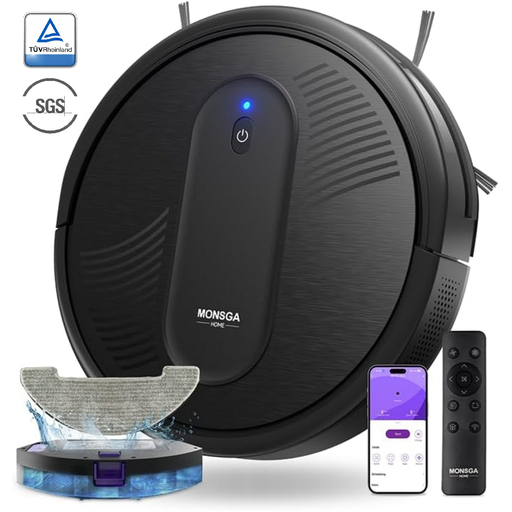
Why it suits this type of user : at 8.1 cm high, this model can fit under low furniture, while the remote control makes it easy to get started, particularly in a flat with low-clearance furnishings.
The 200 ml water tank offers three moisture levels, helping to reduce the risk of soaking a compatible hard floor.
Advertised suction power of 4,000 Pa, with automatic, spot, edge-cleaning and manual modes, plus app control and voice control.
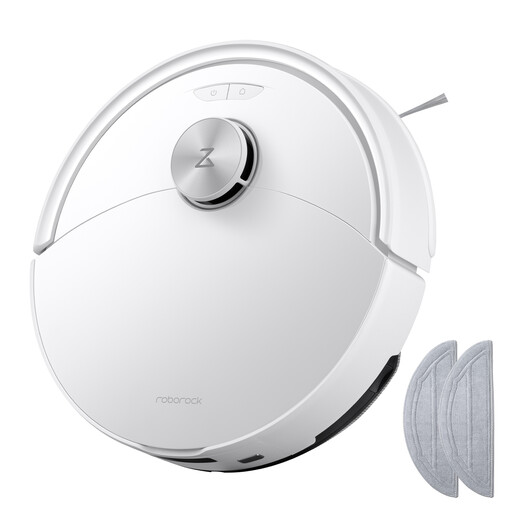
Why it suits this type of user : this model is designed for households looking for a complete robot vacuum and mop system, with high advertised suction power.
The mop lift helps prevent carpeted areas from being mopped, provided the settings are configured correctly.
Advertised HyperForce suction of 10,000 Pa, a dual anti-tangle system and suitability for both carpets and hard floors.
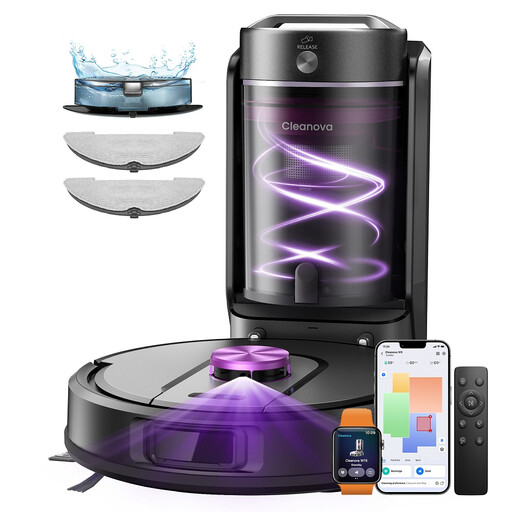
Why it suits this type of user : its bagless station and multi-map management make it suitable for a home with many rooms and frequent cleaning sessions.
The station’s 4 l bin reduces the need for frequent emptying. However, the cyclone filters must be rinsed and dried thoroughly.
Advertised suction power of 10,000 Pa, an advertised battery life of 180 minutes, LiDAR navigation and support for five maps.
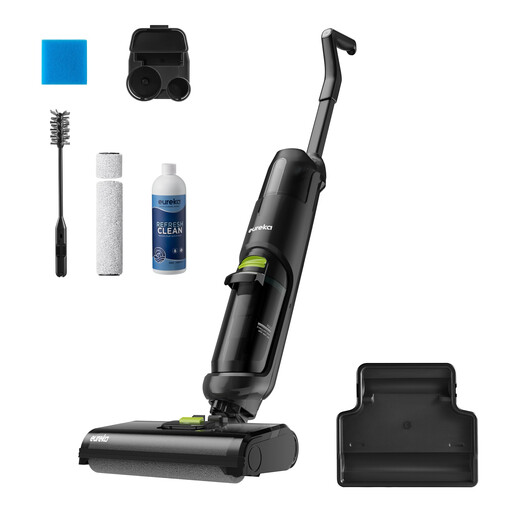
Why it suits this type of user : this cordless wet and dry vacuum cleaner is ideal for anyone who wants to deal with a splash or sticky spill straight away.
Its two tanks keep clean and dirty water separate. The self-cleaning cycle also reduces direct contact with the roller.
Up to 30 minutes of advertised battery life, assisted movement and compatibility with several sealed hard-floor types.
We have put together a complete, real-time updated list of products that meet these demanding selection criteria and European safety standards.
Before the first cleaning session, remove cables, toys, fragile objects and spilled liquids. Place the station on a flat floor, leaving the clear space specified in the instructions. If your model has LiDAR navigation, make sure the sensor on top is not obstructed and check that the robot can slide comfortably underneath your furniture.
On hard floors, choose a moderate water-flow setting and use only the solution recommended by the manufacturer. For stubborn stains, a manual floor cleaner or a product suitable for tiles can take over. Products intended for wooden flooring must be compatible with the wood’s finish and used in accordance with the instructions on the label.
Yes, provided the flooring is sealed or explicitly compatible with wet cleaning. Set the water flow to its lowest level and keep the mop clean. Avoid wet cleaning on untreated wooden flooring or surfaces that are particularly sensitive to water. The manufacturer’s instructions should always be treated as the definitive guide.
You need to factor in electricity, filters, brushes, cleaning cloths and, depending on the model, collection bags. A bagless station can reduce the cost of consumables, but its filters require regular cleaning. Before buying, compare the price and availability of replacement parts.
This depends on how often it is used, how well it is maintained and the condition of the battery. Empty the bins, clean the sensors, remove hair from the brush and dry washable components thoroughly before putting them back. You should also follow the safety instructions and warranty conditions specific to your chosen model.