
Livraison le jour même ou le lendemain

Qualité garantie

Débloquez vos offres de bienvenue: Livraison GRATUITE | Jusqu'à -80 % | 30 jours d'essai gratuits à JoyPlus
Téléchargez l'application
A perpetually spotless floor, without lifting a finger? It's a tempting promise. That's exactly what robot vacuum and mop combos offer, and they're becoming more sophisticated by the day. But when faced with a jungle of models, confusing spec sheets, and marketing hype, it's difficult to navigate. No, record-breaking suction power doesn't guarantee a perfect clean. And yes, an "all-in-one" station can quickly become a headache to maintain.
As a product expert for Joybuy, I'm here to help you see things more clearly. This guide gets straight to the point: breaking down the key decision factors and helping you avoid the common pitfalls to prevent buyer's remorse.
The world of robot cleaners is a veritable minefield. Here are three essential points to watch out for to ensure you don't regret your purchase.
The Pascal (Pa) Race: The Illusion of Brute Force.High suction power, measured in Pascals (Pa), is the number one marketing claim. While a high number can be reassuring, it isn't everything. A robot boasting 10,000 Pa but equipped with a poorly designed brush will be less effective on pet hair than an 8,000 Pa model with a high-performance anti-tangle system. True effectiveness is a well-balanced combination of suction, brush architecture, and the airtightness of the air circuit.
"AI" That's Only Smart in Name. Many models boast "artificial intelligence" for obstacle detection. In reality, many systems are limited to simple infrared sensors, incapable of detecting small objects, cables, or worse, the "gifts" from your pets. The result? A robot that gets stuck every five minutes or ignores entire areas is anything but autonomous.
The "100% Automatic" Station That Creates More Work. A self-emptying and cleaning station is a real bonus for autonomy, undeniably. However, automation has its limits. Mop washing, hot-air drying, and dust emptying are very convenient, but let's be realistic: you'll still need to fill the clean water tank, empty the dirty water tank, and clean the base itself to avoid bad odours and mould.
For a truly effective clean and optimal user convenience, here are the three technical points you should never overlook.
It's the mopping function that transforms a simple vacuum into a true household helper. The technology has evolved significantly:
A good robot is, first and foremost, a robot that doesn't get lost and doesn't bump into everything.
Pet owners or those with long hair? This point is non-negotiable. Forget traditional bristle brushes that turn into nests of hair. The ideal solution? A dual rubber main brush. This anti-tangle design is the only viable solution to limit the chore of cleaning the brush and ensure powerful suction on pet hair and long human hair.
Rather than an endless list, we've selected three models that excel in their category, based on the key criteria we've just covered.
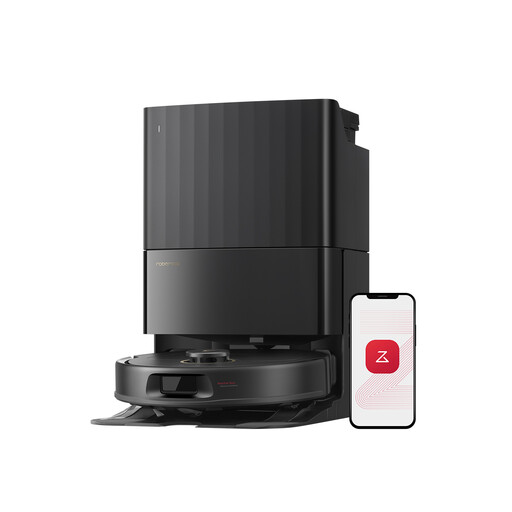
Why this one? It combines powerful suction (12,000 Pa) with a formidable dual rubber brush for tackling pet fur and hair. Its all-in-one station handles mop washing and hot-air drying, reducing daily maintenance.
Its Double Anti-Tangle system directly addresses the problem of hair and fur, sidestepping the trap of ineffective brute force. Its LiDAR navigation, paired with Reactive AI detection, ensures true autonomy.
Its rotating mops with an extendable FlexiArm for impeccable edge cleaning, and hot-air drying for flawless hygiene.
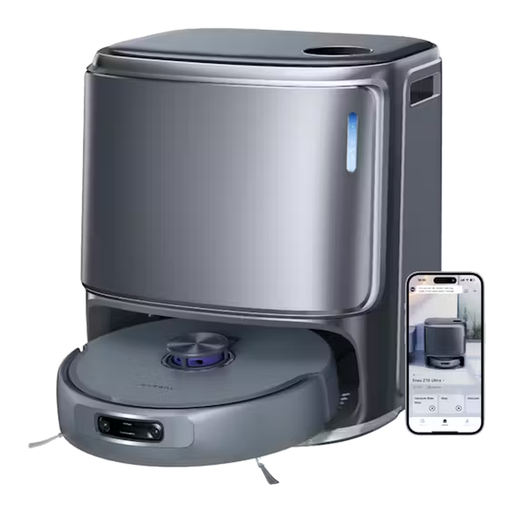
Why this one? For those who want the best of the best. It packs a colossal 18,000 Pa of suction power, dual-camera obstacle detection, and an edge-cleaning solution that the manufacturer claims achieves 0 mm coverage.
It shatters the "gimmicky AI" pitfall with its NarMind Pro system, which uses cameras and a dedicated processor to identify over 200 types of objects. Its triangular mops are designed to scrub, not just skim the surface.
State-of-the-art edge-cleaning technology and an all-in-one station with hot-water washing and separation of dry and wet waste.
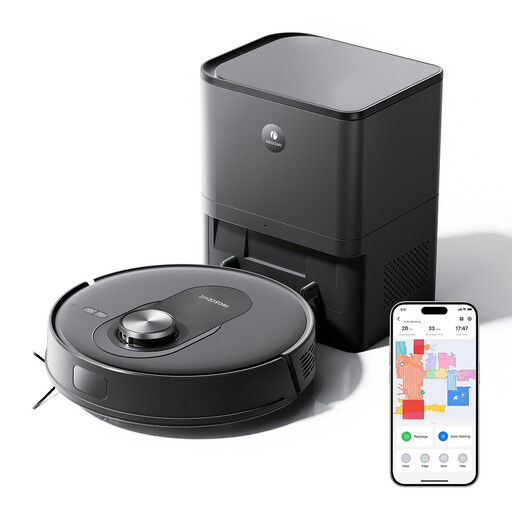
Why this one? This is an excellent entry ticket into the world of automation. It includes a self-empty station that gives you up to 60 days of peace of mind, precise LiDAR navigation, and 5,000 Pa of power—more than enough for hard floors and low-pile carpets.
It doesn't overpromise. It focuses on the essentials and does them well: effective suction, reliable LiDAR navigation, and a functional self-empty station, without superfluous gadgets.
The auto-empty station for reduced maintenance and precise LiDAR mapping for customised cleaning.
Discover our full selection of models that meet our performance criteria and European safety standards.
For day-to-day maintenance, the answer is an unequivocal yes. A good mopping robot will keep your floors clean by vacuuming up dust and hair and cleaning small daily spills. However, think of it as the marathon runner of cleanliness that keeps your home impeccable, not the firefighter who puts out major fires (or cleans up spilled jam jars).
It all depends on your usage frequency and floor types, but here's a good starting point:
Yes, and that's one of its biggest advantages. Unlike camera-based systems (vSLAM), LiDAR uses a laser to map its environment and therefore doesn't need light to operate. Your robot can do its job at night or in a windowless room with the same precision.