
Livraison le jour même ou le lendemain

Qualité garantie

Débloquez vos offres de bienvenue: Livraison GRATUITE | Jusqu'à -80 % | 30 jours d'essai gratuits à JoyPlus
Téléchargez l'application
A robot vacuum and mop can make daily cleaning less of a chore, but product descriptions do not always tell you everything. High suction power, sophisticated navigation or a sizeable dock do not necessarily guarantee that the appliance will suit your home.
Before you buy, there are three potential pitfalls to consider:
A robot vacuum with LiDAR navigation uses a laser sensor to measure its surroundings and create a map of your home. This allows it to move methodically, both during the day and in poorly lit rooms. However, this technology is not infallible: cables, low objects, thresholds and reflective surfaces can disrupt navigation.
If your home has more than one level, check whether the robot offers multi-floor mapping. Several models can save up to five maps, name rooms, set virtual walls and create no-go zones. This can save a great deal of time, as you do not need to configure the robot again on each floor.
The advertised suction power in Pa provides a technical reference, but figures are only genuinely comparable under identical conditions. When choosing a robot vacuum for pet hair, also look at:
A robot vacuum for carpets and hard floors should be able to adjust its suction to the surface being cleaned. On wooden or laminate flooring, the water-flow setting is just as important to avoid leaving behind too much moisture. Mopping is intended for everyday maintenance; it does not replace manual cleaning of ingrained stains.
An automatic emptying station means you do not have to empty the dustbin as often, but it takes up more space and requires regular maintenance. Models with a bag require compatible consumables to be purchased. Bagless versions avoid this recurring expense, but their filters must be emptied, rinsed if permitted by the manufacturer, and then dried thoroughly.
Advertised battery life varies depending on the selected mode, power level and floor type. The ability to recharge and then automatically resume cleaning is particularly useful in larger homes. As for the station, install it in a clear area with space to the sides and in front, as recommended by the manufacturer.
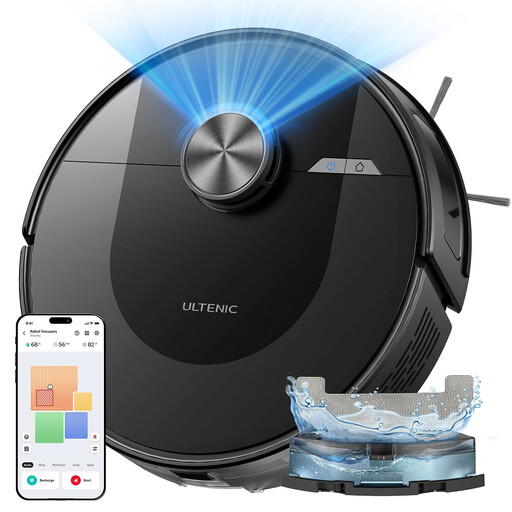
Why this choice suits this type of user: Its LiDAR navigation, five saveable maps and app or voice control make it an accessible option for a first connected setup, across different floor types.
The 5 000 Pa rating is not the only consideration: the robot also offers three mopping levels and automatically resumes cleaning after recharging.
LiDAR, five maps, ten no-go zones, automatic carpet detection and up to 150 minutes of advertised battery life.
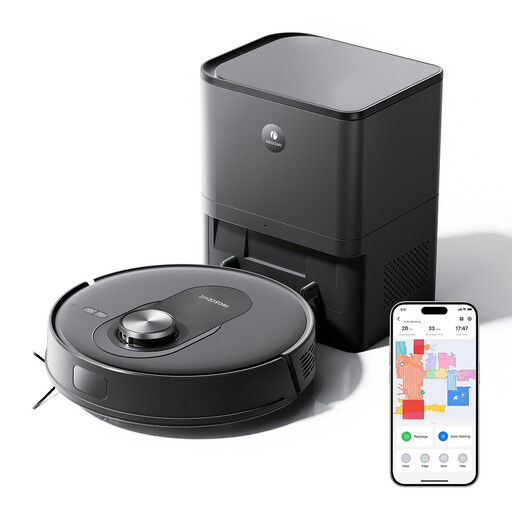
Why this choice suits this type of user: It combines vacuuming, mopping, mapping and automatic collection for households looking to minimise daily handling.
The 3 litre station automates emptying, but it must be placed on a flat floor and maintained according to the manufacturer’s instructions.
Advertised suction power of 8 000 Pa, up to 200 minutes of battery life, mapping for five levels and control via the app or voice assistants.
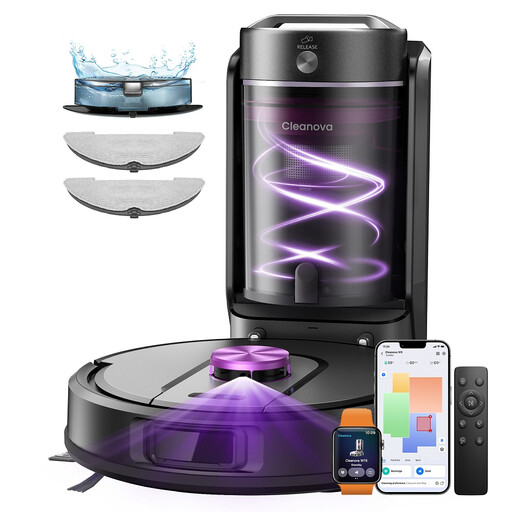
Why this choice suits this type of user: Its 4 litre station bin, mopping settings and support for five maps make it well suited to larger areas and homes with pets.
The bagless station avoids the need to buy dedicated bags, but its multi-cyclone filters must be cleaned and dried completely before being put back in place.
Advertised suction power of 10 000 Pa, up to 180 minutes of battery life, fifteen no-go zones and compatibility with Alexa, Google Assistant and Siri.

Why this choice suits this type of user: Its multiple maps, 9.8 cm height and configurable no-go zones make it easier to use in a home spread across several areas.
The product information specifies three suction levels and three water-flow settings. However, you need to create no-mopping zones to protect carpets.
Advertised suction power of 8 000 Pa, five maps, fifteen no-go zones, up to 150 minutes of battery life and automatic resumption after recharging.
We have put together a complete, real-time updated selection of products that meet these demanding selection criteria and European safety standards.
A robot vacuum and mop is designed for indoor use. It must not be used outdoors, in an immersed area or on a floor covered with standing water. Before starting it, remove any cables, small objects and liquids that may be on the floor.
To automate garden maintenance, it is better to choose a wire-free robotic mower. The ECOVACS GOAT O800 RTK Care Kit combines automatic mapping, LiDAR-assisted navigation and RTK technology for lawns advertised at up to 800 m². The Segway Navimow i215 LiDAR is presented as suitable for areas of up to 1 500 m² and gradients of up to 45%, thanks to a combination of LiDAR and vision. These figures correspond to the specifications provided for each product: always check the actual gradient, obstacles and network coverage before buying.
Yes, some models offer a carpet mode or automatically increase suction power. However, the mop should not pass over carpets unless otherwise stated by the manufacturer. When the app allows it, create a no-mopping zone.
It depends on the battery and how often the robot is used, as well as the condition of the brushes and filters. To maintain good performance, empty the dustbin, clean the sensors and regularly remove hair wrapped around the rollers. Filters should only be put back once they are completely dry.
It reduces the number of times you need to empty the bin manually, but some models use bags that need replacing. A bagless station limits the cost of consumables, while still requiring its filters to be cleaned regularly. Before making your decision, compare the price of accessories, their availability and the recommended maintenance tasks.