
Livraison le jour même ou le lendemain

Qualité garantie

Débloquez vos offres de bienvenue: Livraison GRATUITE | Jusqu'à -80 % | 30 jours d'essai gratuits à JoyPlus
Téléchargez l'application
A spotless floor, without lifting a finger. That's the enticing promise of self-cleaning robot vacuums and mops. But behind this idyllic vision lies a complex reality: a market saturated with models featuring obscure spec sheets and sometimes aggressive marketing. Navigating it is a real challenge, and the wrong choice often leads to disappointment: a device that ultimately demands more attention than it's supposed to save.
Our mission is to help you cut through the noise. This guide breaks down the pitfalls to avoid and highlights the criteria that truly matter for choosing a device that lives up to your expectations, especially if you live in a large house or with pets.
Before you fall for a spec sheet loaded with promises, watch out for the blind spots that can turn the dream of automation into a daily chore.
To avoid making a mistake, focus on these three pillars. They are what guarantee lasting effectiveness and virtually zero maintenance.
A station worthy of the name does more than just empty dust. It must offer a complete cycle:
A robot vacuum with a truly comprehensive emptying and washing station is the only way to guarantee a 100% "hands-free" experience.
If you have pets, this criterion is non-negotiable. Performance isn't just measured in Pascals, even with an impressive 16,200 Pa robot vacuum. The secret is combining that power with a smart brush. An anti-tangle technology, using integrated combs or small blades, detangles and cuts hair and fur before they can wrap around the brush. This is the detail that makes all the difference for a truly effective robot vacuum specifically for pet hair.
Modern navigation systems, which combine LiDAR sensors and AI-powered cameras, map your home with formidable precision and slalom around obstacles. But for a truly impeccable clean, check that the robot has a dedicated technology for edges. The most advanced models deploy side mops that hug the baseboards and scrub into corners, achieving nearly 100% coverage.
Every home has its needs, and every user has their robot. Here is our selection, designed for different profiles but always based on our criteria for performance and ease of use.
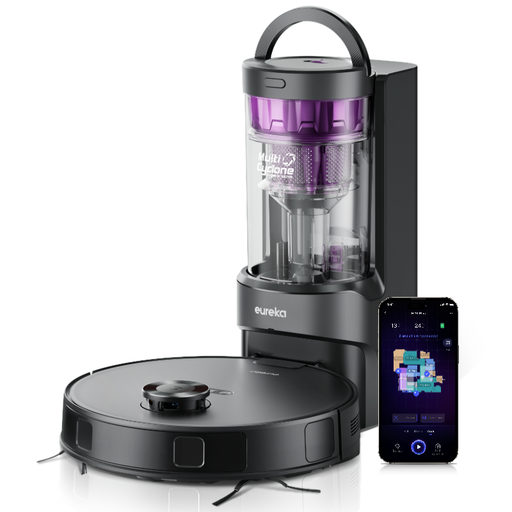
Why it stands out: This is the ultimate balanced solution for homes with pets and mixed flooring (tile, hardwood, carpet). Its bagless station is both economical and practical, while the automatic mop-lifting intelligently manages the transition from hard floors to carpets.
It checks the right boxes: a real station that empties dust and a powerful 8,000 Pa suction effective on pet hair. Its mopping pad automatically lifts 10 mm, preventing it from soaking carpets—a common flaw in less sophisticated models.
Bagless station is both economical and more eco-friendly. High-performance DuoDetect AI navigation for avoiding obstacles, even in low light.
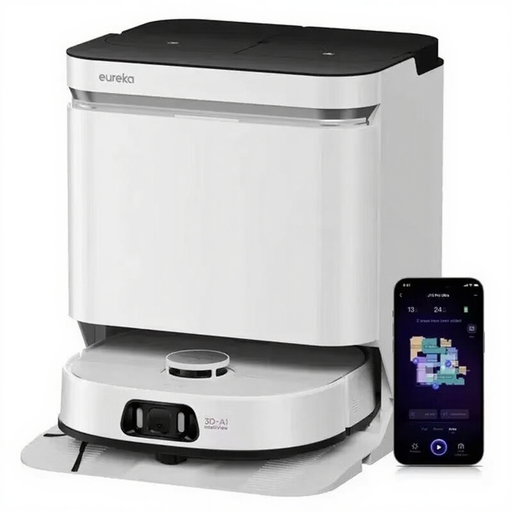
Why it stands out: For those who want near-total automation. This model is a powerhouse of cutting-edge technologies: record-breaking suction power, smart mopping, edge cleaning, and an anti-tangle system. Human intervention is reduced to an absolute minimum.
It sidesteps the three major pitfalls: its station washes the pads with hot water (75°C) and then dries them; its FlexiRazor technology neutralises hair and fur; and its extendable ScrubExtend mops ensure a perfect finish along walls.
Colossal suction power of 16,200 Pa, ideal for thick carpets. IntelliView AI obstacle detection for surgically precise navigation.
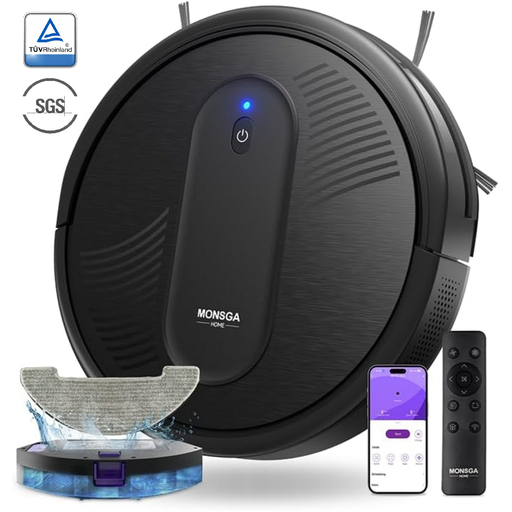
Why it stands out: An accessible entry point to experience the joys of 3-in-1 automated cleaning (vacuuming, sweeping, mopping). Perfect for apartments and smaller spaces, it offers the essentials of automation without the cost and bulk of a full station.
This model focuses on the essentials. By forgoing a complex station, it avoids the trap of unfulfilled "self-cleaning" promises and concentrates on reliable vacuuming and mopping for its price category.
Ultra-slim profile (8.1 cm) to glide under the lowest furniture. Flexible control: app, remote, or voice commands.
Explore our full selection of products that meet our demanding selection criteria and current safety standards.
The lifespan depends on use and maintenance, but here are some benchmarks. The battery, the main wear-and-tear component, generally lasts 2 to 4 years before its runtime diminishes (it is often replaceable). The motors and sensors are designed to last much longer. Rigorous maintenance (cleaning brushes, replacing filters and pads according to the brand's recommendations) is the key to extending its life and maintaining its original performance.
No, installation is a breeze. You just need to find a spot for it on a flat floor against a wall, leaving the space recommended by the manufacturer (often 0.5 m on each side and 1.5 m in front) so it can manoeuvre easily. A nearby electrical outlet is essential. The rarer models that connect directly to a water line are more complex to install. The vast majority operate with removable clean and dirty water tanks, which are very easy to handle day-to-day.
Far from being a gimmick, such high power makes a real difference on high-pile carpets and rugs, where it can deep-clean dirt, pet hair, and allergens. While moderate power is sufficient for hard floors, this power reserve ensures formidable effectiveness in all circumstances, such as vacuuming heavier debris or dislodging dust from between floorboards. It's the guarantee of a no-compromise clean.