
Livraison le jour même ou le lendemain

Qualité garantie

Débloquez vos offres de bienvenue: Livraison GRATUITE | Jusqu'à -80 % | 30 jours d'essai gratuits à JoyPlus
Téléchargez l'application
A robot vacuum and mop removes dust, picks up pet hair and mops the floor according to the programmes set in its app. However, not all models offer the same performance. A home with deep-pile rugs, a flat where pets live or a multi-storey house will each have different requirements.
Before you get your bank card out, three common mistakes are worth avoiding.
High suction power is useful for tackling fine dust, crumbs and pet hair, particularly on carpets and rugs. However, advertised figures should be compared carefully: manufacturers do not always specify the conditions under which they were measured.
If your home has fitted carpet or rugs, check that it includes the following:
On wood flooring, tiles or PVC, the water flow and pressure applied by the mop are also key factors. Excessive moisture can leave marks or seep into vulnerable grout lines. Always check the manufacturer’s recommendations regarding surfaces suitable for mopping.
Laser navigation such as LDS or LiDAR enables the robot to map rooms and plan its routes. Obstacle detection complements this system by identifying furniture, cables, shoes and toys in its path.
For a family home, look in particular for:
A camera can improve object recognition, but it also raises privacy concerns. Before connecting a robot vacuum, take the time to review information about the data collected, the permissions requested by the app and how images are processed.
Advertised battery life varies depending on the mode used, the selected power level and the type of flooring. In a small flat, average battery life may be sufficient. In a large house, automatic return to the station and cleaning resumption are much more convenient.
A robot vacuum with an emptying station means you do not have to empty the dustbin after every cleaning session. Some models go further, washing and drying the mop pads, automatically refilling the water tank or dispensing cleaning solution. However, these features increase the unit’s footprint, price and the amount of consumables you need to buy.
Measure the space available around the base and check that the robot can fit under your furniture. Installed on a stable, dry and unobstructed floor, the station will be easier to use every day.
The models below are suitable for three different uses. The specifications mentioned come from the product listings available at the time of writing. Check them before ordering, particularly to make sure they are compatible with your Wi-Fi network and the flooring in your home.
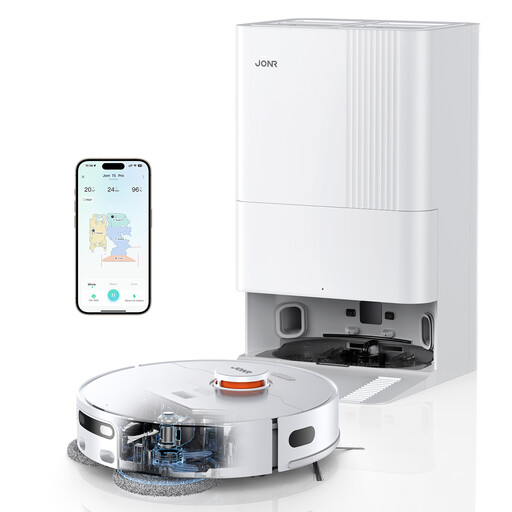
Why this model suits this profile : This robot vacuum and mop combines advertised suction of up to 8 150 Pa, laser navigation and app control. It is suitable for anyone who wants to automate everyday floor care without investing in a particularly sophisticated station.
The product listing mentions automatic return to the station for emptying, mop-pad cleaning and hot-air drying. You will still need to empty the dirty-water tank and keep an eye on the condition of the brushes.
Laser navigation, obstacle recognition, anti-tangle side brush and all-in-one station, according to the product listing.
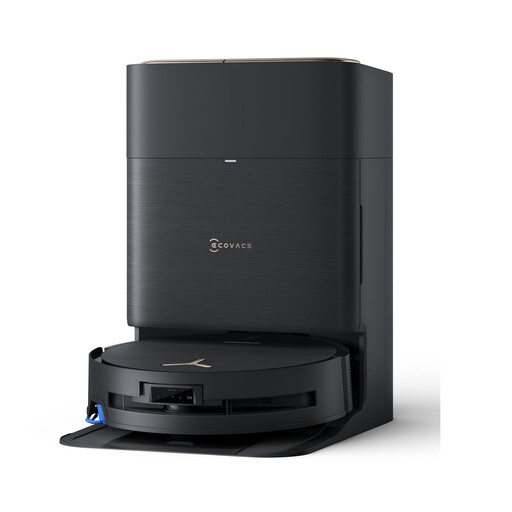
Why this model suits this profile : Its OMNI station handles emptying, hot-water washing and hot-air drying. The product listing also states 16 600 Pa, TrueMapping 2.0 mapping and a roller mop.
The advertised lift system for the mop, main brush and side brush should make it easier to handle rugs and larger debris. Nevertheless, check the height of your rugs.
Station with washing at 75 °C and drying at 45 °C, 4 L clean-water tank and control via the ECOVACS Home app.
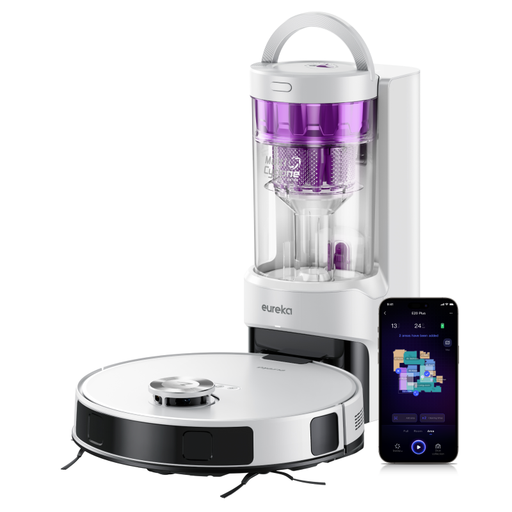
Why this model suits this profile : This robot vacuum with mop is advertised with 10 000 Pa suction, up to 180 minutes of battery life and a 2 L dustbin. It is aimed at households with pets, rugs and frequent cleaning needs.
The listing states that it detects rugs and lifts the mop by 10 mm, while the brush is described as anti-tangle. These features are useful for dealing with pet hair, provided they suit the layout of your home.
LDS LiDAR mapping, no-go zones, advertised voice control and a bagless station with a large collection bin, according to the product listing.
We have selected a comprehensive, up-to-date range of products that meet these selection criteria as well as European safety requirements.
Install the base against a wall on a flat, dry floor, leaving enough space in front and at the sides. Then start an initial mapping cycle after removing cables, small objects and textiles that could block the robot.
To maintain its performance:
A connected robot vacuum also relies on your home network. Some models work only with 2.4 GHz Wi-Fi. Check this before installation and set no-go zones around food and water bowls, cables and stairs.
It can handle everyday floor care, but a conventional vacuum cleaner is still essential for stairs, furniture, skirting boards, the car and hard-to-reach corners. Liquids, sharp objects and flammable materials must not be vacuumed by a robot unless the manufacturer explicitly states otherwise.
It depends on the battery, how often the robot is used, maintenance and the availability of spare parts. Before buying, check the warranty period, the price of filters, brushes and mop pads, as well as the battery replacement procedure. Regular maintenance helps limit premature wear, but it cannot guarantee a specific lifespan.
In addition to the purchase price, you may need to budget for electricity, filters, brushes, mop pads, station bags and compatible cleaning solution. A bagless model may reduce some costs, while a more advanced station may require more consumables. Compare the price and availability of spare parts, not just the advertised price.