
Livraison le jour même ou le lendemain

Qualité garantie

Débloquez vos offres de bienvenue: Livraison GRATUITE | Jusqu'à -80 % | 30 jours d'essai gratuits à JoyPlus
Téléchargez l'application
A floor that cleans itself is the ultimate dream. The robot vacuum and mop promises to make this utopia a reality. The problem: the market is a jungle of models with indecipherable spec sheets and often-exaggerated marketing promises. Finding your way through it is a real headache, and buyer's remorse is always a risk.
As the Head of Product Recommendations at Joybuy, my job is to navigate this landscape for you. The goal? To help you find the device that truly fits your needs. Before you take the plunge, let's break down the 3 common pitfalls that can turn a good investment into a regret.
1. The Suction Power (Pascals) Mirage: The race for more Pascals (Pa) is the number one marketing tactic. However, an impressive number is no guarantee of an effective clean. Without a well-designed brush and an efficient anti-tangle system, this power is wasted, especially on pet hair that wraps around and jams the mechanism.
2. The "Smart" Navigation Illusion: Many entry-level models rely on random or gyroscopic navigation. The result: the robot bumps into everything, misses entire areas, and takes forever to clean. A truly high-performance connected robot vacuum must be able to map your home with precision.
3. The Gimmicky "Mopping" Function: Some devices simply drag a damp cloth around, which often just smears fine dirt without actually washing the floor. A real robot floor mop needs an active system (rotating brushes, vibrations, pressure) to scrub and lift stains.
To avoid unpleasant surprises, focus on the features that are true game-changers in daily use.
Your robot's ability to move logically is paramount.
A robot vacuum and mop must do more than just wet the floor.
Roborock or Ecovacs, also apply downward pressure on the floor for greater effectiveness.For a truly "hands-free" experience, the docking station is as important as the robot itself. A robot vacuum with a self-empty station is a game-changer.
self-cleaning vacuum.Rather than an exhaustive list, here are a few options that stand out by addressing specific needs and avoiding common pitfalls.
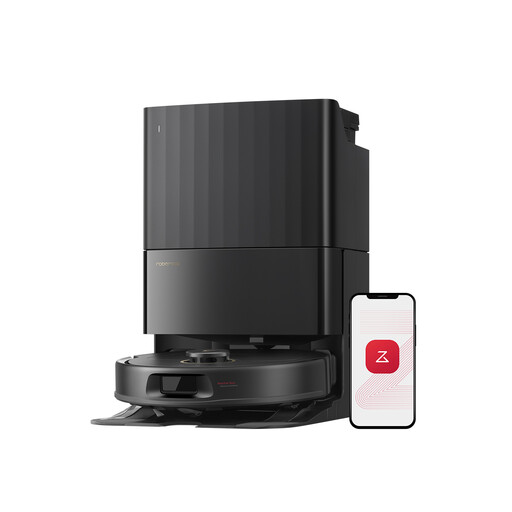
Why it stands out: The war on pet hair is a constant challenge. This model tackles it with high suction power (12,000 Pa) and, most importantly, a dual rubber brush system designed to minimise hair and fur tangles.
It avoids the raw power trap by pairing it with a smart brush design. It also sidesteps the "gimmick mop" pitfall with its dual rotating mops (FlexiArm) and a station that washes them with hot water and dries them.
Dual-brush anti-tangle system and a fully automated dock (washing, drying, emptying, refilling) for minimal maintenance.
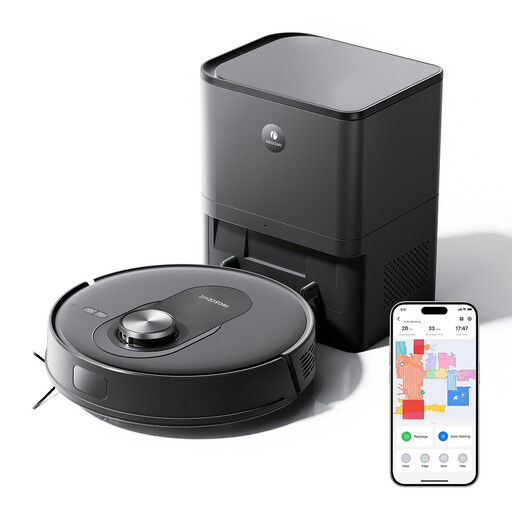
Why it stands out: Large homes require substantial battery life and multi-floor management. This model offers up to 200 minutes of runtime and the ability to save up to 5 different maps, perfect for homes with multiple levels.
It solves the problem of "lost" navigation in large spaces with its precise LiDAR and multi-map management. Its self-empty station, which can hold up to 60 days of dust, drastically reduces maintenance frequency.
Long battery life (200 min), multi-floor mapping, and a large-capacity auto-empty station for extended peace of mind.
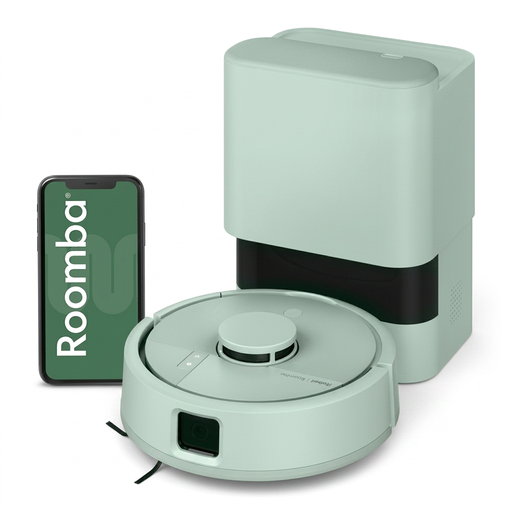
Why it stands out: In a furnished apartment, size matters. With a compact design of only 24.5 cm in diameter, this `Roomba` model squeezes into places others can't: between chair legs, under low furniture, and more.
It bypasses the problem of bulky robots that get stuck or neglect hard-to-reach areas. Its 360° LiDAR navigation ensures complete and intelligent coverage, even in complex layouts.
Ultra-compact design for maximum agility in tight spaces, combined with precise LiDAR navigation and an auto-empty station.
We have compiled a complete, up-to-date list of products that meet our strict selection criteria and all applicable regulations.
For daily maintenance, absolutely. A high-performance model with rotating mops and good suction power will keep your floors at a high level of cleanliness, especially for dust, hair, and pet fur. However, for very stubborn, old stains or major spills, occasional manual intervention will still be necessary.
The lifespan of a robot vacuum is typically between 3 and 6 years, depending on build quality and maintenance. The lithium-ion battery is a consumable part, and its capacity will diminish over time. Expect a noticeable drop in performance after 2 to 4 years of regular use. Most major brands (Roborock, Roomba, Ecovacs) offer replacement batteries.
No, in fact, its simplicity is its main advantage. Maintenance is limited to changing the dust bag every 4 to 8 weeks, emptying the dirty water tank, and refilling the clean water tank once or twice a week (depending on usage). A quick wipe of the robot's charging contacts and sensors once a month is also recommended to ensure optimal performance.