Joybuy Insights

Robot Vacuum and Mop Buyer's Guide: Avoid Pitfalls, Choose Right

By the Joybuy team, our high-tech experts – Published August 28, 2026

A perpetually spotless floor, without lifting a finger? The promise is tempting. A robot vacuum and mop can indeed save you precious time by hunting down dust, pet hair, and daily stains. But be warned: the market is flooded with models whose marketing claims are often disconnected from reality. Navigating the jungle of technical specifications can feel like an uphill battle.

Before you take the plunge, here are the three classic traps that turn the dream into a disappointment and your brand-new robot into a fancy doorstop within a few weeks.

  1. The Suction Power Mirage: Don't be mesmerized by the thousands of Pascals (Pa) advertised on the box. Without a well-designed main brush and effective filtration, an overly powerful motor will just blow dust around or clog up at the first sign of pet hair.
  2. "Smart" Navigation That Gets Lost: Entry-level models with random or gyroscopic navigation inevitably end up missing entire areas, bumping into furniture, or getting hopelessly stranded under a sofa. The result: an incomplete cleaning and constant manual interventions that defeat the whole purpose of automation.
  3. The Mopping Function That's Just for Show: Many robots are content with dragging a barely damp cloth, which just smears dirt around instead of cleaning it. Truly effective mopping requires active pressure on the floor, controlled water flow, and an essential feature: the ability to lift the mop when it approaches a carpet.

To make the right choice, focus on the features that truly matter day-to-day—the ones that separate a gimmick from a genuine ally.

The Technical Criteria to Check Before Buying

For a robot vacuum and mop to become an indispensable ally, three technical criteria must be scrutinized. Its real-world effectiveness and autonomy depend on them.

1. The Navigation System: The Key to Autonomy

Navigation technology is arguably THE number one criterion. It's the robot's brain, the component that dictates its overall efficiency.

  • LiDAR (Light Detection and Ranging) Navigation: This is THE state-of-the-art technology, and for good reason. A rotating laser maps your home with surgical precision, even in the dark. A LiDAR robot vacuum cleans methodically, optimizes its routes, gracefully avoids obstacles, and can manage multi-floor maps. From the app, you can then define no-go zones (around the cat's food bowls, for example) or launch a targeted cleaning in a single room.
  • Camera-Based Navigation (vSLAM): Less precise than LiDAR, especially in low light, it remains a decent option for homes with a simple layout.
  • Gyroscopic or Random Navigation: Avoid at all costs for areas larger than 40 m? (approx. 430 sq ft) or apartments with multiple rooms. Their erratic movements are a guarantee of missed spots and poor efficiency.

2. Cleaning Performance: Beyond Pascals

Suction power, measured in Pascals (Pa), is a useful indicator, but it must be analyzed in context.

  • Suction Power: On hard floors, 2500 Pa can suffice. But if you have carpets or pets, don't aim for anything less than 4000 Pa. A feature that automatically boosts power on carpets is a real bonus.
  • Brush Design: Insist on a main brush made of rubber or with an anti-tangle design, especially if you're looking for a robot vacuum for pet hair. This is key to preventing hair from blocking it, ensuring consistent performance and minimal maintenance.
  • Mopping System: Prioritize models with vibrating or rotating mops that actively scrub the floor. Electronic water flow control and automatic mop lifting on carpets are the two features that separate a true floor cleaning robot from a gimmick.

3. Battery Life and Maintenance: Towards Hands-Free Upkeep

The goal is to save time, not spend your time maintaining the robot.

  • Battery Life: Aim for at least 150 minutes of runtime to cover a 100 m? (approx. 1075 sq ft) area in a single charge. The ability to automatically return to its base to recharge and then resume cleaning where it left off is a standard feature on any good model.
  • Self-Empty Station: A robot vacuum with a self-empty station is a true game-changer. At the end of each cycle, the robot automatically transfers its dustbin contents into a bag or container in the station. The result: weeks of peace of mind before you need to intervene.

Top Model Recommendations

Rather than an endless list, we've matched user profiles with devices that meet specific needs.
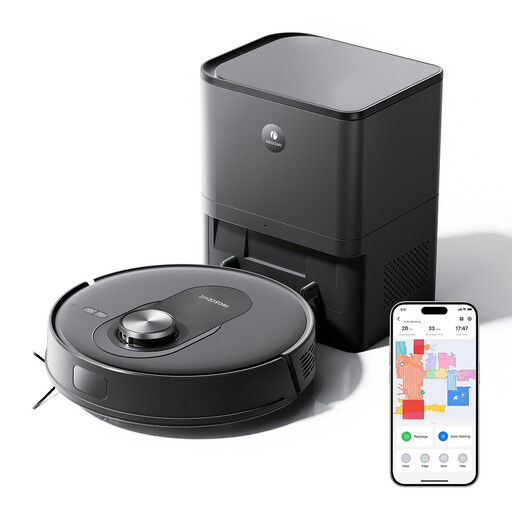
THE IDEAL CHOICE FOR: FAMILIES AND BUSY PEOPLE
Q8-Max Robot Vacuum Cleaner With Mop and Self-Empty Station

Q8-Max Robot Vacuum Cleaner With Mop and Self-Empty Station

Why it's the right choice for them: Designed for maximum autonomy, this model combines powerful suction, precise navigation, and a station that handles dust disposal. You can schedule cleanings and forget about it for nearly two months—a luxury for packed schedules.

How it avoids the pitfalls:

Its 360° LiDAR navigation maps the home with precision, avoiding the trap of a robot that gets lost. The self-empty station, meanwhile, solves the problem of near-daily maintenance.

Key Strengths:

8000 Pa suction power; Up to 200 minutes of runtime; Self-empty station for 60 days of peace of mind.
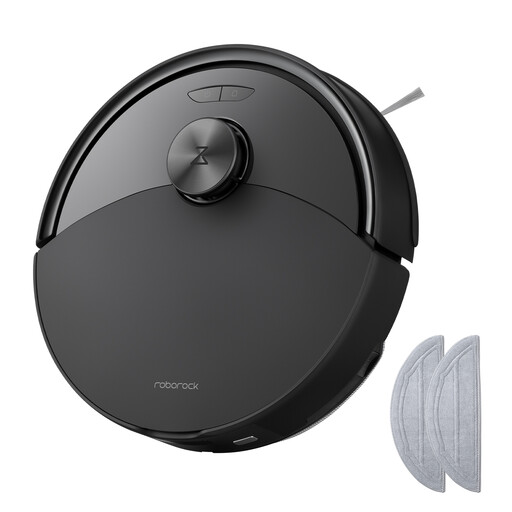
THE IDEAL CHOICE FOR: PET OWNERS
Roborock Q10 S5 Robot Vacuum Cleaner Set

Roborock Q10 S5 Robot Vacuum Cleaner Set (Black)

Why it's the right choice for them: The war on pet hair is a daily battle. This model rises to the challenge with colossal suction power and a dual-brush system specially designed to prevent long hair and fur from getting tangled. Efficiency remains at its peak, cycle after cycle.

How it avoids the pitfalls:

It sidesteps the trap of raw power by pairing its 10,000 Pa with a dual anti-tangle brush. It's this synergy that guarantees impeccable hair pickup, where sheer power alone would not be enough.

Key Strengths:

"Dual Anti-Tangle" brush system; 10,000 Pa HyperForce suction power; Automatic mop lifting on carpets.
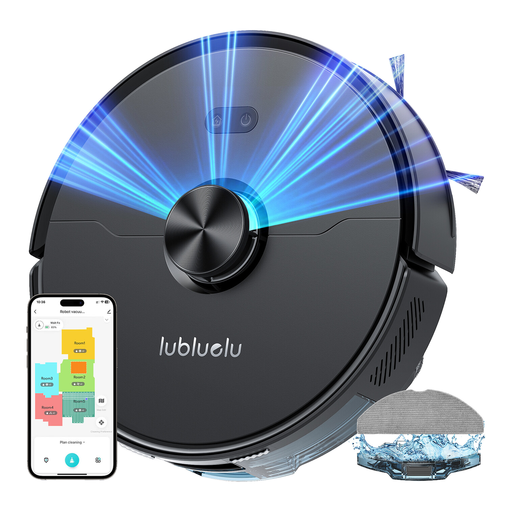
THE IDEAL CHOICE FOR: TECH ENTHUSIASTS AND LARGE HOMES
Lubluelu L15 Ultra 3-in-1 Robot Vacuum and Mop

Lubluelu L15 Ultra 3-in-1 Robot Vacuum and Mop

Why it's the right choice for them: For those who want the most advanced all-in-one solution, this model features an ultra-comprehensive station: it empties dust, manages clean and dirty water, and even dries the mops with hot air. Its multi-floor management makes it perfect for large houses.

How it avoids the pitfalls:

It shatters the "gimmick mopping" trap with its rotating mops and a station that dries them at 45°C (113°F) to prevent mold and odors. Its laser navigation and management of 5 different maps ensure flawless coverage.

Key Strengths:

3-in-1 station with hot air drying; Laser navigation with multi-floor management; Up to 180 minutes of runtime.

Want to Explore Other Options?

We've curated a complete selection of models that meet our demanding specifications and current standards.

Frequently Asked Questions

1. What is the lifespan of a robot vacuum and mop?

The lifespan of a robot vacuum depends on its quality and maintenance. A quality model that is well-maintained will operate optimally for 3 to 5 years. The battery, brushes, and filters are the most common wear-and-tear parts. Choosing a brand that guarantees the availability of spare parts is the best way to extend the life of your investment.

2. Can a robot vacuum really replace my canister vacuum?

For daily upkeep, the answer is a resounding yes. A good robot vacuum and mop is incredibly effective at maintaining an excellent level of cleanliness and managing dust, hair, pet fur, and crumbs. However, it won't replace your canister or stick vacuum for deep cleaning tasks (like ceiling cobwebs, baseboards, or the inside of your car), for which it remains an indispensable supplement.

3. How do I maintain a robot vacuum with a self-empty station?

The maintenance is minimal, but not entirely absent. Here are the few tasks to keep in mind:

  • Change the bag (or empty the bin) in the station every 4 to 8 weeks, depending on your usage.
  • Clean the robot's sensors and charging contacts with a dry cloth once a month to ensure optimal navigation and charging.
  • Inspect the main brush and side brushes every few weeks to remove any hair or threads that may have bypassed the anti-tangle system.
  • Rinse the robot's HEPA filter regularly and replace it as recommended by the manufacturer (usually every 3 to 6 months).