
Livraison le jour même ou le lendemain

Qualité garantie

Débloquez vos offres de bienvenue: Livraison GRATUITE | Jusqu'à -80 % | 30 jours d'essai gratuits à JoyPlus
Téléchargez l'application
The idea of a self-cleaning floor is the stuff of dreams. A robot vacuum and mop, paired with its fully automated station, promises to be a significant time-saver, especially for owners of large homes, busy families, or those living with pets. However, the market is saturated with marketing promises that too often lead to disappointment. A device meant to free up your mental space can quickly become another chore if not chosen wisely.
Before you invest, it's essential to know how to spot the common pitfalls and understand which features truly make a difference. Here are the key points to watch for to make an informed choice you won't regret.
For your future device to live up to its promises, three technical parameters must be examined closely.
The station is the true brain behind the robot's autonomy. It determines how much you'll (still) have to get your hands dirty. A complete station should offer:
The robot's intelligence lies in its ability to map its location and interact with its environment.
For a truly clean floor, the mopping mechanism is paramount.
Rather than a long robot vacuum comparison, here are models that meet specific needs, based on the performance and autonomy criteria we've just covered.
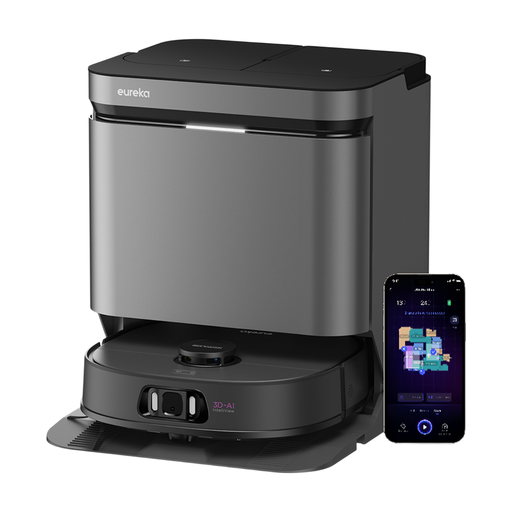
Why it's a match: Ideal for pet owners and anyone concerned with hygiene. Its anti-tangle technology is designed to tackle pet hair, while the hot water washing ensures a deep clean for your floors.
Its station doesn't just empty dust: it washes the mops at 75 °C and dries them, solving the problem of dirty, smelly pads. The IntelliView AI navigation avoids obstacles like pet toys.
The FlexiRazor technology prevents hair from wrapping around the brush. The ScrubExtend function allows the mops to extend to clean right up against baseboards and in corners.
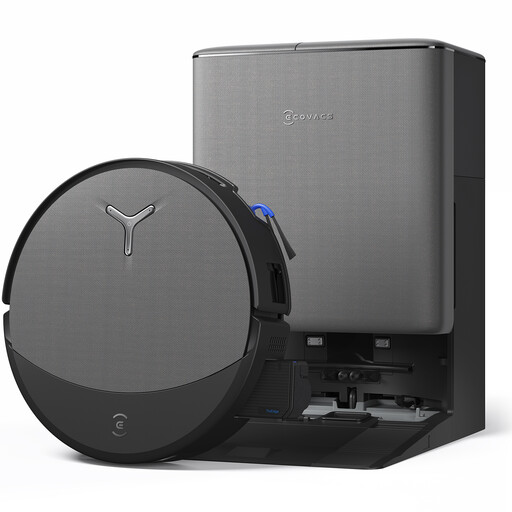
Why it's a match: For those seeking deep technological integration and maximum automation. The OMNI station and advanced navigation make it a device for tech enthusiasts who want a "set it and forget it" solution.
The all-in-one OMNI station handles emptying, washing, and drying, thus sidestepping the trap of incomplete stations. The AIVI 3D 4.0 navigation is designed for highly precise object recognition, preventing it from getting stuck.
The OZMO ROLLER 3.0 rotating mopping system ensures active floor cleaning. The ZeroTangle 4.0 technology is optimised to prevent hair and fur from building up in the brushes.
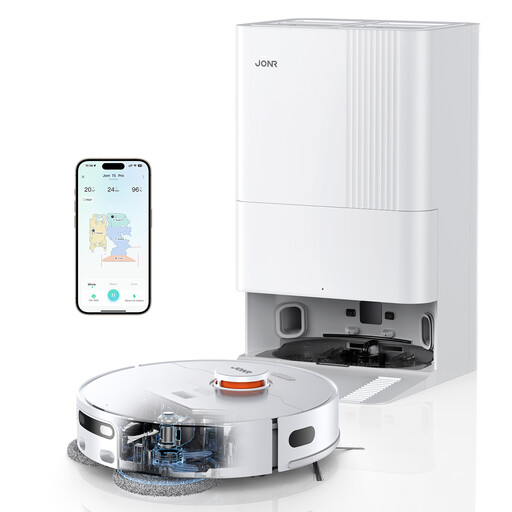
Why it's a match: For those who want the benefits of a complete station without aiming for the absolute top of the line. It offers essential automation features (washing, drying) with reliable laser navigation, making it a very smart compromise.
It includes a station with hot air drying, a feature often missing from mid-range models, which effectively prevents odours. Its laser navigation avoids the erratic movements of low-end robots.
It offers a complete all-in-one station at a more accessible price point. The 8150 Pa suction power and anti-tangle side brush make it effective for daily use.
We've compiled a complete list of products that tick all the boxes of our strict selection criteria.
The longevity of a robot vacuum depends on its build quality, frequency of use, and maintenance. Generally, you can expect a lifespan of 3 to 5 years. Regular maintenance is essential: cleaning sensors, replacing filters and brushes according to the manufacturer's recommendations, and maintaining the station's water tanks. The availability of spare parts (battery, brushes, filters) is also a crucial point for extending its life.
No, installation is usually very simple. It requires a stable, flat location near an electrical outlet, with sufficient clearance around it (often 0.5 m on the sides and 1.5 m in front) so the robot can return unobstructed. The vast majority of stations work with removable clean and dirty water tanks, so they do not require any connection to a water supply or drain.
Yes, provided you choose a suitable model. For a high-performing robot vacuum and mop for pet hair, check three things: high suction power (expressed in Pascals, Pa), a main brush designed to be anti-tangle (often made of solid rubber rather than bristles), and a quality filtration system (like HEPA) to capture fine particles and allergens.