Which criteria should you look at first?
Start with the surfaces and routes the robot needs to handle in your home, then choose the feature that addresses your main concern: fewer chores, mopping hard floors or room-by-room control. Que Choisir assesses suction on different floor types, as well as along edges and in corners. One feature alone won’t tell you how well a robot will clean your whole home.
| Criteria |
What to check |
Who it’s for |
| Flooring and navigation |
Measure your thresholds and rug pile; check these against the model’s limits and test results for your type of flooring. |
If my rugs or thresholds stop the robot from reaching certain rooms, scheduling becomes less useful. Around 36% of consumers would put navigation and suitability for different floor types at the top of their list. |
| Maintenance and docking station |
Check which tasks you’ll still need to do, how much room the dock needs, which consumables are required and whether parts are available for the exact model. |
To avoid frequent emptying without discovering extra maintenance tasks later, I’d also check the brushes, filters and spare parts. Reducing chores and repairability would be priorities for around 29% of consumers. |
| Mopping hard floors |
Make sure your flooring is suitable for wet cleaning, then check how the robot handles rugs, mop pads and water tanks. |
If I had hard floors to clean regularly, I’d look for a robot that can help with mopping, while keeping a manual option for stubborn stains. This feature would come first for around 21% of consumers. |
| Room-by-room control |
Check the mapping features, phone and Wi-Fi compatibility, software updates and data settings. |
If I wanted to run a cycle in just one room or exclude an area, I’d need to check what controls the model actually offers. Around 14% of consumers would make connected control their main requirement. |
Robot vacuums with a docking station to consider on Joybuy
These models pair a robot vacuum with a docking station and are best suited to people who want to empty the bin less often and are also considering mopping. Compare the features listed for each variant, then check that the station will fit in your home and that the way you plan to use it is within its limits.
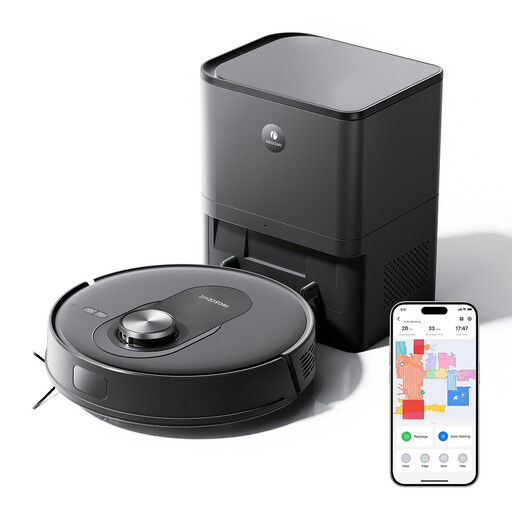 Image unavailable
Q8-Max robot vacuum and mop with auto-empty station
Worth considering if you want to combine auto-emptying with map-based navigation across multiple rooms.
The product name indicates LiDAR navigation, advertised suction of 8 000 Pa and an advertised runtime of 200 min. Check performance on your rugs and thresholds, and make sure your Wi-Fi is compatible before relying on the app settings.
View on Joybuy
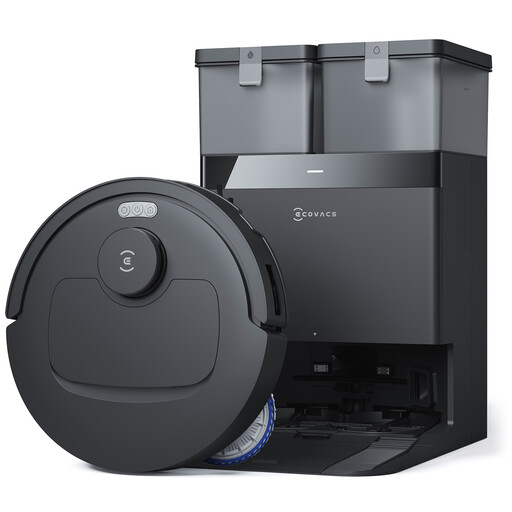 Image unavailable
ECOVACS DEEBOT T30C OMNI Gen2 with OMNI station
Worth considering if mop pad care and auto-emptying are part of your routine on compatible hard floors.
The product name mentions the OZMO Turbo 2.0 system, advertised suction of 25 000 Pa and mop pad washing at 75 °C. Allow space for the station and check the tasks involved in managing the tanks, as well as performance on your flooring.
View on Joybuy
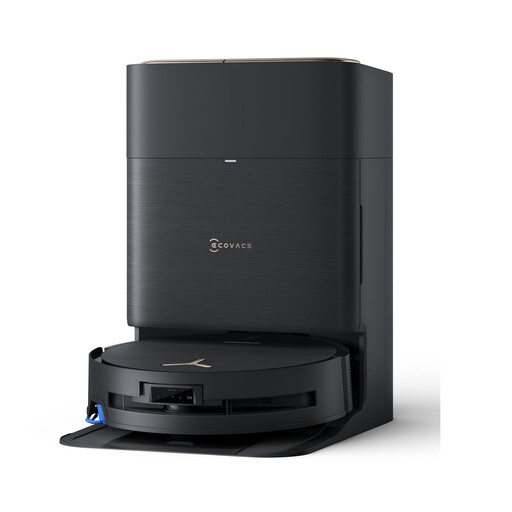 Image unavailable
ECOVACS DEEBOT X9 PRO Omni with OMNI station
Worth considering if you want a robot mop with a station that takes care of some of the maintenance involved in mopping.
The product name indicates an OZMO Roller system, advertised suction of 16 600 Pa, and hot-water washing and hot-air drying in the station. Check how the tanks are managed and whether the robot is suited to your rugs and thresholds.
View on Joybuy
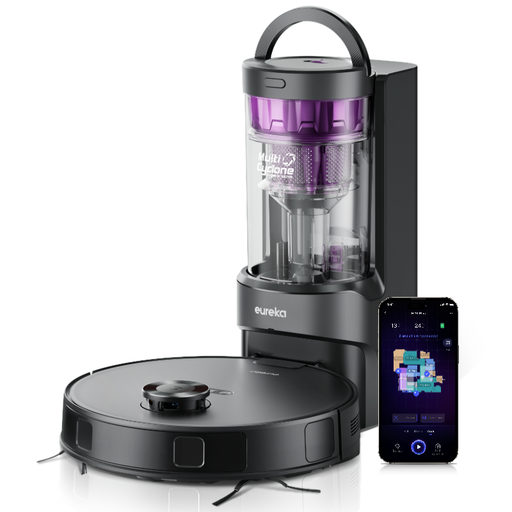 Image unavailable
Eureka E20 Plus with auto-empty station
Worth considering if you want to empty the bin less often while comparing how well the robot navigates around obstacles.
The product name mentions 3D obstacle avoidance, advertised suction of 8 000 Pa and an advertised runtime of 180 min. If you use its mopping function, check separately how it behaves on your rugs; obstacle detection doesn’t mean it’s suitable for rugs of every pile height.
View on Joybuy
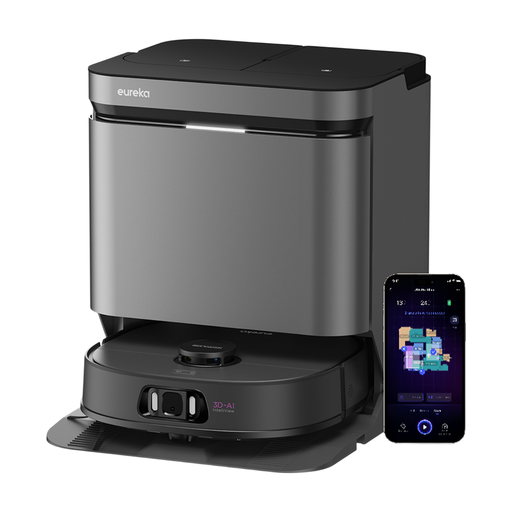 Image unavailable
Eureka J15 Pro Ultra with self-cleaning station
Worth considering if you want the robot to handle some of the mop pad cleaning as well as regular vacuuming.
The product name indicates advertised suction of 16 200 Pa, hot-water cleaning at 75 °C and a brush-lifting feature. Check which floor types are compatible, how much room the station needs and what maintenance tasks you’ll still have to do.
View on Joybuy
Frequently asked questions
Can a robot vacuum replace a standard vacuum cleaner and a mop?
Not always. It can make regular cleaning easier, but you’ll still need a manual option for stairs, awkward areas and stubborn stains. Que Choisir finds that vacuuming results vary depending on the floor type and reports mixed results for mopping.
How can I tell whether a robot will get over my rugs and thresholds?
Measure them and compare the results with the limits listed for the exact model. For example, Rowenta says the X-Plorer Série 20 can handle rugs and carpets up to 15 mm thick. This model-specific claim doesn’t apply to other robots or every threshold.
Does an auto-empty station mean I don’t need to maintain the robot?
No. It can transfer dust from the robot’s bin to the station, but you’ll still need to maintain the brushes and filters, as well as the mop pads and tanks on relevant models. Check the manual for the tasks involved and the space required.
What should I check before using a robot vacuum app?
Check that your phone and Wi-Fi are compatible, which features work without an internet connection, how updates are handled and what data settings the model offers. France’s data protection authority, the CNIL, points out that connected devices can generate data stored online and that it needs to be kept secure.
What labels and rights should I check when buying in France?
Check the repairability index if it applies to the vacuum cleaner you’re considering, then look into the availability of parts for that model. In France, the Directorate General for Competition Policy, Consumer Affairs and Fraud Control reminds shoppers that the legal guarantee of conformity is mandatory for goods sold by a professional to a consumer. It covers cases where the goods supplied do not conform, under the conditions set out by law.


