Studio flat dwellers with no dedicated space
If there’s little free wall space, measure not only the dock, but also the clearance the robot needs to return to it. iRobot’s set-up guidance shows why this space can influence your choice.


In a small home, start by considering how much room the dock needs and how much clearance the robot requires to return to it. Then think about which maintenance tasks you’re happy to handle. A compact self-emptying dock can help save space, but it may not wash the mop pads. A full-service dock automates more tasks, but takes up more room and still needs looking after. If a large dock won’t fit, compare a robot with a simple charging dock with a stick vacuum, which you’ll need to clean manually.
If there’s little free wall space, measure not only the dock, but also the clearance the robot needs to return to it. iRobot’s set-up guidance shows why this space can influence your choice.
A dock that empties dust or washes mop pads can mean you need to step in less often. However, you’ll still need easy access to its tanks and components for maintenance, as iRobot’s support guidance for its washing docks points out.
If you can’t keep the area around a dock clear at all times, it’s worth comparing a cordless stick vacuum with a robot. You can use it whenever you need to, but every clean is still a manual job.
Worth considering: if you want to empty the dust less often while keeping the dock’s footprint small.
Bear in mind: automatic emptying doesn’t mean the mop pads are washed or dried. Check the features of the specific model.
Worth considering: if you can set aside an accessible area and want to cut down on several hands-on tasks between cleans.
Bear in mind: the dock and its tanks take up space and need maintenance, even when emptying and washing are automated.
Worth considering: if you want to schedule cleans without installing an emptying or washing dock.
Bear in mind: you’ll still need to empty the dust bin and, for a mopping robot, look after the mop pad and water yourself.
Worth considering: if you can’t keep the area around a robot dock clear, or if you mainly clean specific areas as and when needed.
Bear in mind: it won’t clean by itself. Also check where you’ll store it and the stated battery life of the model you choose.
To choose between these options, start with the space available, then consider which task you actually want to automate.
| Criterion | What to check | What shoppers say |
|---|---|---|
| Space and access to the dock | Measure the width, depth and height, then check the clearance required in the instructions and access to the bins. | If the dock blocks the way in my studio flat, its dimensions alone aren’t enough to make a decision. Around 33% of shoppers would make having an accessible location their priority. |
| Maintenance still required | Check emptying, washing, drying and dock maintenance separately. | Between cleans, I mainly want to cut down on hands-on tasks without assuming they’ll all disappear. Around 27% of shoppers would prioritise reducing these tasks. |
| Movement around the home and floor types | Check the clearance under furniture, thresholds and how the robot is said to handle carpets, especially while mopping. | In a furnished room, I need to know where the robot can go and which areas shouldn’t be mopped. Around 27% of shoppers would put ease of movement first. |
| Cleaning when you need it | Compare the space needed to keep a dock accessible with the storage requirements and battery life of a stick vacuum. | If I mainly clean specific areas, being able to grab a device straight away matters more than scheduling cleans. Around 13% of shoppers would put this flexibility first. |
A dock might fit against a wall, but the robot may not have enough room to return to it. iRobot support recommends leaving at least 1.2 m of clear space in front of its AutoEmpty docks, for example. This measurement doesn’t apply to every brand.
Mark out the space for the dock on the floor and check the clearance specified in the instructions for the model you’re considering.
Automatic mop-pad washing still leaves you with tanks and a dock to clean. For the Roomba Plus 400 Combo, iRobot support recommends cleaning the washing dock after around 50 mop-pad washes.
Before choosing, check how the bins open and what maintenance the manual recommends.
Depending on the model, allow time to look after the bins and replace any bags, filters or mop pads it uses.
Mapping doesn’t change the clearance under furniture or the width of a passage. Carpets and areas you don’t want mopped also need special consideration.
Measure the passageways and check the specific model’s no-go or no-mop zone features.
Vacuum cleaners have parts that wear out. The French Ministry for Ecological Transition describes the repairability index as a way to assess whether an appliance’s lifespan can be extended.
Compare the repairability index for the model in question when it’s displayed. If you have an old appliance, find out about repair options or electrical equipment collection points.
The Auto-Empty C10 is a practical example of a compact self-emptying dock. eufy Support gives the dock’s dimensions as 275 × 191 × 211,8 mm and its dust bag capacity as 3 L.
The Roomba 115 Combo and Plus 405 Combo let you compare different levels of dock automation.
The French product pages for the Q10 X5 and Qrevo S show the difference between a robot without an emptying dock and a model with a multifunction dock.
The V8 Absolute is a manual option to compare if keeping an accessible robot dock would take up too much space.
These robot vacuum cleaners are designed to clean automatically in a small home, with different docks and features depending on the model. Before setting aside a space, compare the instructions for each model with the space available around its dock.
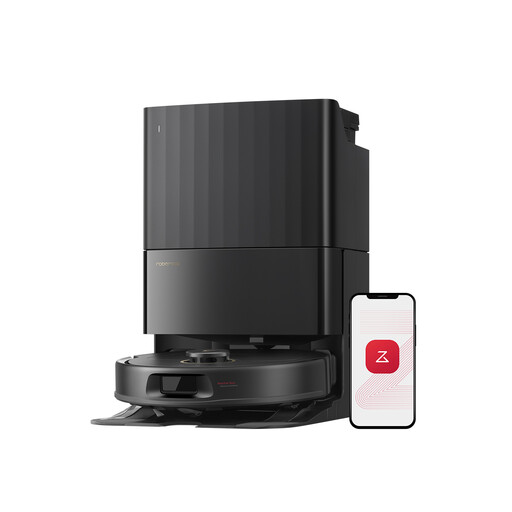 Image unavailable
Worth considering if you want to automate cleaning while keeping a mopping function. The product name lists 12 000 Pa suction, FlexiArm mop pads and hot-air drying. Check the instructions for the dock’s exact features and the space needed to install it.
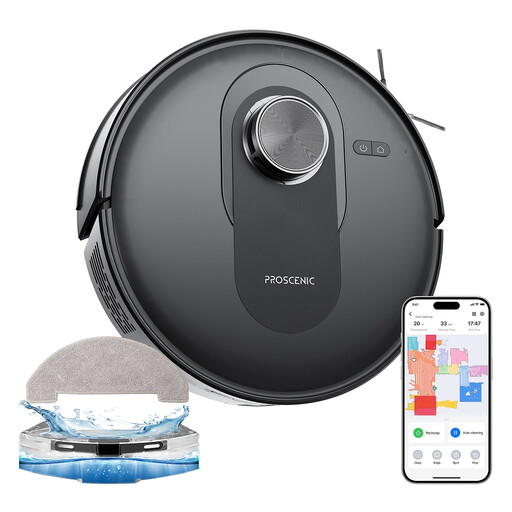 Image unavailable
Worth comparing for regular cleaning in a furnished room. The product name mentions LiDAR navigation, a mopping function and 6 000 Pa suction. Check the dock’s dimensions and what you’ll need to do manually to maintain the bin and mop pad.
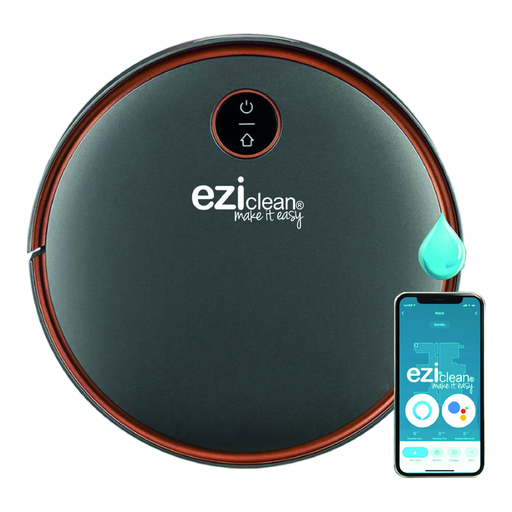 Image unavailable
Worth considering if movement around the room and returning to the dock are key priorities. The listing for this model specifies at least 0.5 m of clearance on each side of the dock and 1.5 m in front. Measure this area before deciding where to put it.
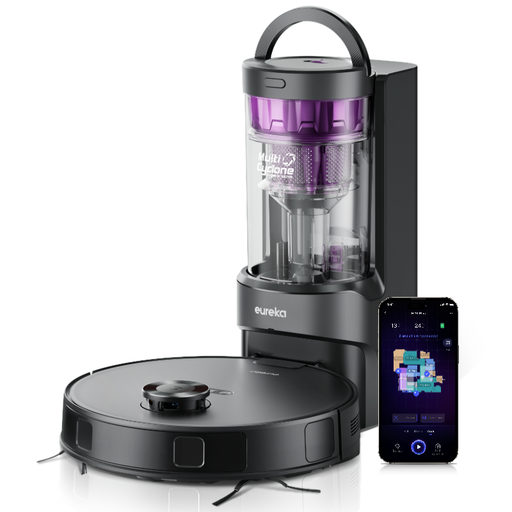 Image unavailable
Worth comparing if emptying dust less often matters more than keeping the dock as compact as possible. The product name lists 8 000 Pa suction and 3D obstacle avoidance. Its listing requires 0.5 m of clearance on each side of the dock and 1.5 m in front.
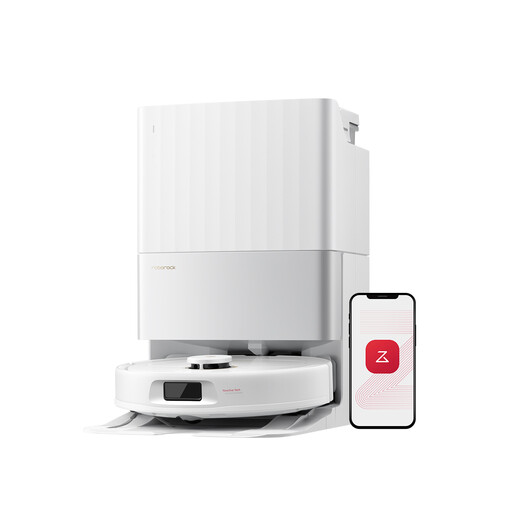 Image unavailable
Worth considering if you want to cut down on several maintenance tasks between cleans. The product name lists 12 000 Pa suction and hot-air drying. Its listing requires 0.5 m of clearance on each side of the dock and 1.5 m in front. Check the instructions for access to the tanks and any maintenance still required.
Measure the dock, the space needed to access it for maintenance and the clearance required for the robot to return, as stated in the instructions. iRobot support recommends at least 0.5 m on each side and 1.2 m in front of its AutoEmpty docks. Check the instructions for any other dock.
No. The tanks and dock still need attention. For the Roomba Plus 400 Combo, iRobot support recommends cleaning the washing dock after around 50 mop-pad washes.
Yes, if you want automatic cleaning without having to set aside space for an emptying or washing dock. However, check that there’s room to access the charging dock and find out what manual tasks are required for the bin, water and mop pad on the model you choose.
Compare the repairability index for the specific model, if one is displayed, rather than assuming the same rating applies to an entire range. The French Ministry for Ecological Transition describes the index as information that helps shoppers consider how to extend an appliance’s lifespan.
Depending on the options available, electrical equipment can be taken to a collection point, a recycling centre or a retailer, as outlined by the French Ministry for Ecological Transition. If the appliance can still be used, consider repair or reuse before getting rid of it.