
Livraison le jour même ou le lendemain

Qualité garantie

Débloquez vos offres de bienvenue: Livraison GRATUITE | Jusqu'à -80 % | 30 jours d'essai gratuits à JoyPlus
Téléchargez l'application
A robot vacuum cleaner can make daily cleaning easier, but not every model is suited to the same requirements. Between promises of suction power, mopping functions and multi-function stations, it’s easy to pay for features you’ll never actually need.
Before you reach for your card, make sure you check compatibility with your flooring, whether you have pets, the layout of your rooms and how much time you’re willing to spend on maintenance.
A high Pa figure – such as 8,000, 16,200 or 25,000 Pa – refers to the suction power claimed by the manufacturer. It isn’t enough to measure real-world effectiveness on carpets, in corners or against pet hair. The main brush, roller design, automatic power adjustment and airflow all play a crucial role too.
For a home with carpets and hard floors, go for a powerful robot vacuum cleaner that has carpet detection and automatic suction adjustment. Bear in mind, though, that higher power can mean more noise and greater electricity consumption.
A robot vacuum and mop with a water tank can remove light marks and handle routine maintenance on hard floors. However, a simple damp cloth won’t always replace manual cleaning when it comes to stubborn stains. Check the water tank capacity, the water flow adjustment and whether the mop pads can be lifted when going over carpets.
Stations that can wash the mop pads in hot water, dry them with warm air and empty the dustbin automatically reduce the amount of hands-on work. On the flip side, they take up more space and you’ll still need to empty the dirty water tank.
An all-in-one station needs to be placed on a flat, dry, clear surface. Depending on the model, allow enough room in front and to the sides so the robot can return to it and you can easily access the bins. Cables, small toys, socks and carpet fringes can also cause blockages, even with advanced navigation.
In a home with pets, choose an anti-tangle brush and a sufficiently large dustbin. A robot vacuum cleaner for pet hair needs regular inspection: hair and fur will eventually wrap around the rollers and wheels.
The claimed battery life – typically between 120 and 180 minutes – varies depending on the mode used, the power selected and the layout of your home. A model that can automatically return to its base to recharge can then resume its cycle. However, check how well it handles multiple rooms and different floors if your home has more than one level.
An auto-empty station saves you from emptying the robot’s dustbin too often. It doesn’t eliminate maintenance altogether, though: filters, brushes, sensors, the clean water tank and the dirty water tank all need to stay clean.
A robot vacuum cleaner with LiDAR navigation uses a laser sensor to map rooms and optimise its movements. This technology is particularly useful in homes with several rooms, corridors or areas cluttered with furniture. Some models combine LiDAR with a camera or dedicated obstacle-detection sensors.
Mapping should allow you to set up no-go zones, virtual walls and room-by-room schedules. For a connected robot vacuum cleaner, also check the Wi-Fi compatibility – often limited to 2.4 GHz networks – and which features are actually available in the app.
A robot vacuum cleaner with a mop is mainly suitable for tiles, compatible hard floors and vinyl flooring. If your home has carpets, it’s best to choose a model that can lift its mop pad. The models shown below claim different lifting heights: compare these with the thickness of your carpets.
Also check the height of the robot. A model under 10 cm can fit under some low furniture, but you’ll also need to consider the height of the sensor and the footprint of the station.

Why this choice suits this profile: Its simple design makes it a strong candidate for a first purchase and for regular floor maintenance. It offers remote control and several cleaning modes.
The spec lists a maximum suction of 4,500 Pa, a HEPA filter and a 560 ml dustbin. The device doesn’t require a bulky multi-function station.
A claimed battery life of 165 minutes, four modes, Wi-Fi/Bluetooth connectivity and automatic return to base.
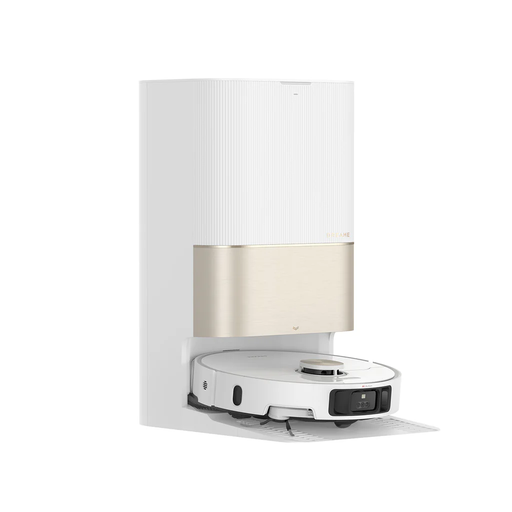
Why this choice suits this profile: It’s aimed at households that want to automate vacuuming and mopping as much as possible.
The station handles emptying, washing the mop pads with water claimed to reach up to 70 °C and drying them with warm air. You will, however, need to set aside a dedicated spot for it.
A claimed suction of 12,000 Pa, a 6,400 mAh battery, 2.4 GHz Wi-Fi and automatic mop pad lifting.
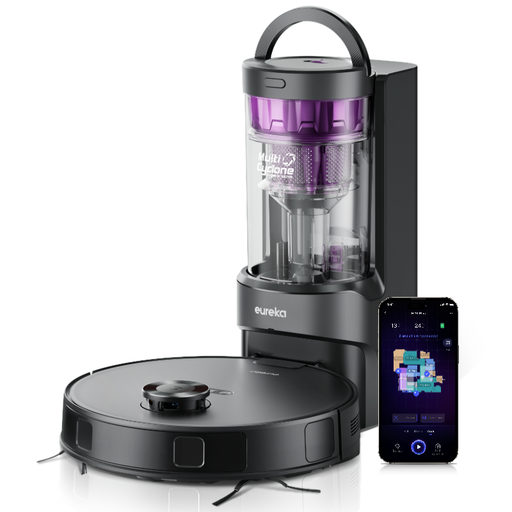
Why this choice suits this profile: Its bagless station and obstacle-detection navigation make it suitable for homes with pets, carpets and high-traffic areas.
The manufacturer claims an anti-tangle brush, carpet detection and a 10 mm mop pad lift. Cables and small objects should still be removed before starting.
A claimed suction of 8,000 Pa, up to 180 minutes of battery life, a 2-litre station bin and control via app or voice command.
We’ve put together a comprehensive, real-time selection of products that meet these demanding criteria, as well as European safety standards.
A self-cleaning model cuts down on repetitive tasks, but you’ll still need to empty the dirty water tank and keep an eye on the condition of consumables. Also check the availability of replacement filters, brushes and mop pads before you buy.
Yes, as long as you choose a model with carpet detection, adjustable suction and, for mopping, a liftable mop pad. Thick, fringed or very soft carpets can, however, make movement more difficult.
It depends on the electricity consumption and the cost of filters, brushes, cloths and any station bags. Bagless models cut down on some consumables, while a station with washing and drying uses more water and electricity.
A robot vacuum cleaner with app control usually lets you schedule cycles, select rooms, view the map and adjust certain settings. Check compatibility with your Wi-Fi network – often 2.4 GHz – as well as the account creation requirements detailed in the manual.