
Livraison le jour même ou le lendemain

Qualité garantie

Débloquez vos offres de bienvenue: Livraison GRATUITE | Jusqu'à -80 % | 30 jours d'essai gratuits à JoyPlus
Téléchargez l'application
A spotless floor without lifting a finger? The promise is tempting. A robot vacuum and mop offers to hunt down dust, pet hair, and daily grime while you enjoy your free time. But there's a catch: the market is a veritable jungle, saturated with models making often confusing marketing claims. Between staggering suction power figures and "smart" features that lack common sense, it's easy to make the wrong choice.
As the head of product selection at Joybuy, my mission is to help you see things more clearly. Together, let's break down the pitfalls to avoid and the criteria that truly matter, so you can choose a device that will change your life—without getting blinded by technical jargon.
Before diving into the spec sheet, let's debunk the most misleading marketing arguments together.
To make the right choice, focus on these three pillars. They are what will make a difference in your daily life.
This is the most critical component. A good navigation system is the key to truly autonomous and intelligent cleaning. The gold standard today is Laser navigation (LiDAR). Its rotating sensor scans your home in 360° to create an ultra-precise map.
Cleaning performance isn't just about a raw power number. It's the chemistry between suction, brush design, and the robot's intelligence that makes all the difference.
A robot should save you time, not waste it. Automation is therefore a crucial point.
Rather than an exhaustive list, here are options that match distinct user profiles, taking into account the criteria we've just discussed.
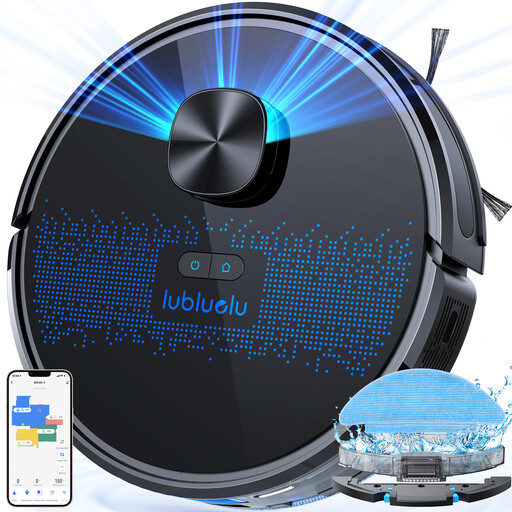
Why it's a match: Perfect for those who want the essentials of modern technology without breaking the bank. It features precise laser navigation and multi-floor mapping, features usually found on much more expensive models.
It sidesteps the pitfall of erratic navigation thanks to its LiDAR system. This ensures methodical and complete cleaning, with no missed spots or repeated bumps into furniture.
Its ability to manage 5 maps (ideal for multi-story homes) and its quiet 55 dB operation are real assets for hassle-free daily use.
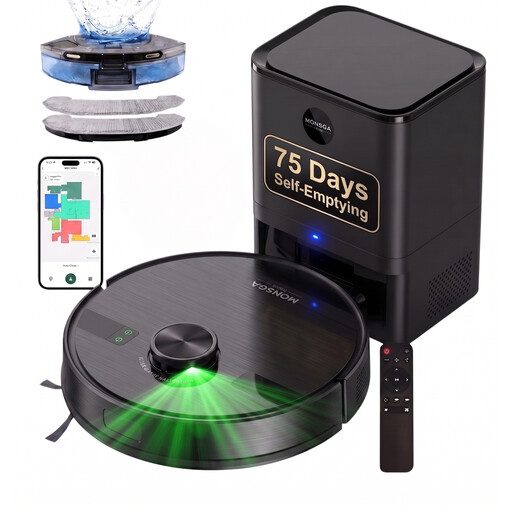
Why it's a match: Built for demanding environments, especially those with pets. Its high suction power and XXL (4L) self-emptying station make it the perfect ally for tackling hair and dirt, day after day, without you needing to intervene.
It doesn't just boast an impressive power figure (9000 Pa). It pairs this with a self-emptying station, which solves the real problem for pet owners: the robot's dustbin filling up at lightning speed.
Its 180-minute runtime and 4-litre station ensure weeks of peace of mind. Its LiDAR navigation guarantees flawless coverage, even in complex homes.
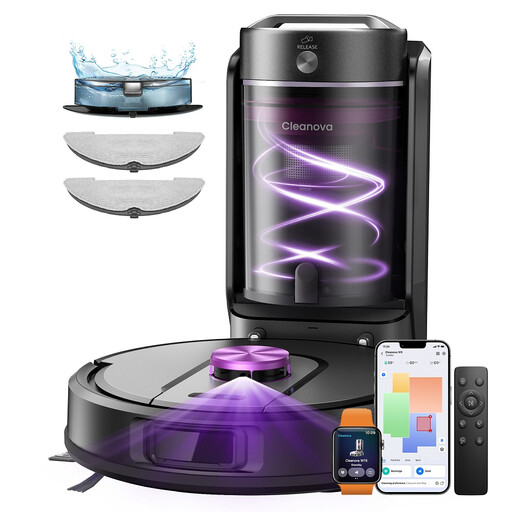
Why it's a match: For those who want a "zero-contact" experience with dust. Its emptying station is not only automatic but also bagless: a more eco-friendly and economical choice in the long run, as there are no consumables to buy.
It overcomes the "gimmicky mopping" pitfall with its "Matrix" cleaning mode. This mode performs a double pass in a grid pattern for a deep clean, a far cry from a simple cloth just gliding over the floor.
The bagless self-emptying station is its standout feature, as it eliminates all recurring costs. Paired with 10,000 Pa of power and laser navigation, it's a formidably effective all-in-one solution.
Our complete selection brings together products that meet our strictest performance and reliability criteria.
1. What is the lifespan of a robot vacuum and mop? Generally, a robot vacuum has a lifespan of 3 to 5 years. Of course, this depends on the build quality, your frequency of use, and how well you maintain it. The most common wear-and-tear parts are the battery (which loses capacity after a few hundred cycles) and the brushes, which should be considered consumables to be replaced regularly.
2. Can a robot vacuum really replace a canister vacuum? For everyday maintenance, yes, absolutely. A good robot is incredibly effective at keeping floors clean on a daily basis, especially on hard floors and low-pile carpets. It excels at vacuuming up the dust, crumbs, and pet hair that accumulate day after day. However, for a deep spring clean (corners, baseboards, ceiling cobwebs) or for cleaning your car, a canister or stick vacuum remains an essential complement.
3. Is maintaining a self-emptying station complicated? No, quite the opposite! Maintenance is a breeze. For models with bags, you simply dispose of the full bag and replace it with a new one every 4 to 12 weeks, depending on your usage. For bagless models, you just empty the station's collector into the bin and clean its filters from time to time (every 1 to 2 months or so) to ensure optimal suction. It's infinitely less hassle than having to empty the robot's small dustbin after every cleaning cycle.