
Livraison le jour même ou le lendemain

Qualité garantie

Débloquez vos offres de bienvenue: Livraison GRATUITE | Jusqu'à -80 % | 30 jours d'essai gratuits à JoyPlus
Téléchargez l'application
The promise of spotless floors with zero effort? It's a tempting one. Yet, the robot vacuum and mop market is saturated with marketing claims that can easily lead to disappointment. Our mission, as editors, is to help you decode the spec sheets to make a truly informed decision. Before you buy, here are the three most common pitfalls and our advice on how to avoid them.
Buying a robot cleaner is a significant investment. Unfortunately, too many users are quickly let down, disappointed by a device that fails to live up to its promises. Here are the traps to be aware of so you don't get caught out.
Many entry-level models boast "smart" or "optimised" navigation. In reality, many rely on basic gyroscopes that result in erratic, almost random navigation. The result: missed spots, a robot that gets stuck under furniture, and an inability to map your home. In contrast, a true robot vacuum with LiDAR navigation (Light Detection and Ranging) uses a laser to scan its environment in 3D. This creates a precise map for methodical and incredibly efficient cleaning, even in the dark.
An impressive Pascal (Pa) number is often the number one marketing pitch. While a powerful robot vacuum is a plus, this figure alone is no guarantee of a flawless clean. The design of the main brush (anti-tangle), the quality of the side brushes, and the efficiency of the filtration system are just as crucial. A robot with moderate power but a well-designed brush will be far more effective (especially if you're looking for a robot vacuum and mop for pet hair) than a powerhouse whose brush gets clogged every five minutes.
A robot vacuum with a dock promises almost total peace of mind. But be warned, not all docks are created equal. The most basic models only empty the robot's dustbin. You're left with the chore of removing, washing, and drying the mop pads by hand. If poorly maintained, they quickly become breeding grounds for bacteria and bad odours, turning your robot from a cleaning ally into a germ-spreader. A truly self-sufficient station must also wash the mops (ideally with hot water) and, crucially, dry them with hot air.
To avoid these disappointments, focus on the few technical features that make a real difference in daily use.
A good robot floor cleaner should adapt to your home, not the other way around.
Navigation is your robot's brain.
The dock is your guarantee of peace of mind. Scrutinise its features?:
Here are a few options that meet these criteria, tailored to different needs and budgets.

Why we recommend it : Perfect for a first-time buyer, it packs technologies usually reserved for more expensive models, like LiDAR navigation and very respectable suction power, all without the extra cost of a complex dock.
It incorporates true LiDAR navigation, thus avoiding the "pseudo-smart" navigation trap for a methodical and complete clean.
Excellent feature-to-price ratio, with precise mapping and support for 5 maps, making it ideal for multi-story homes.
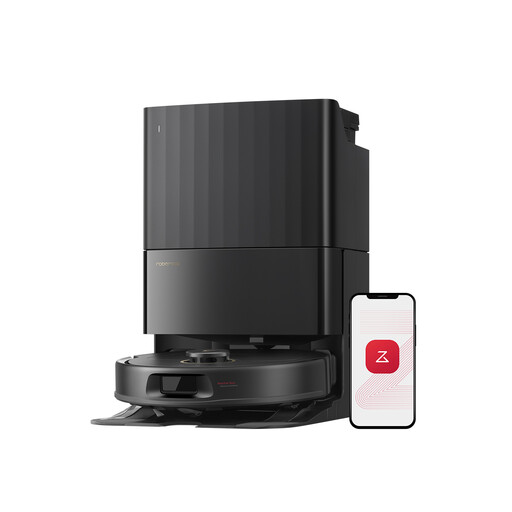
Why we recommend it : Built for demanding homes, it combines high power (12,000 Pa) with a dual anti-tangle brush and a comprehensive dock to tackle pet hair and daily messes with minimal intervention on your part.
Its dock doesn't just empty the dustbin; it washes and dries the mops with hot air, avoiding the "semi-autonomous" dock pitfall and its associated hygiene issues.
High suction power and formidable Double Anti-Tangle brushes for pet hair. Extendable rotating mops (FlexiArm) for a flawless clean along walls.
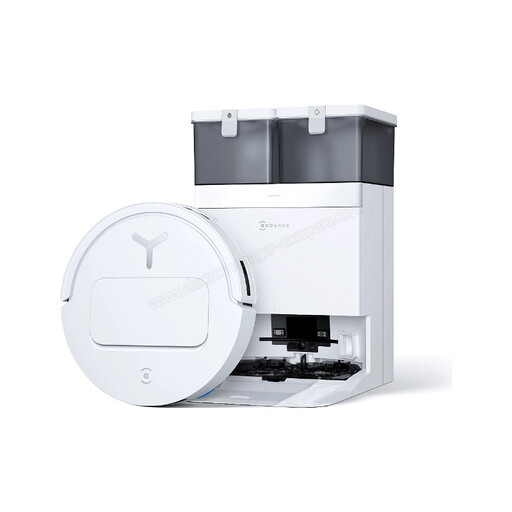
Why we recommend it : For those who refuse to compromise on cleanliness. It packs cutting-edge technologies for a meticulous clean, including along walls and in corners, with impeccable hygiene thanks to hot water washing.
It avoids all three pitfalls at once: advanced AIVI 3D 2.0 navigation, intelligently applied 15,000 Pa power, and a station that washes mops at 75°C for deep disinfection.
TruEdge technology with an extendable side brush for perfect edge cleaning. Mop washing with very hot water for maximum hygiene.
We have curated a complete selection of products that meet our demanding criteria and current safety standards.
Generally, a robot vacuum's lifespan is between 3 and 5 years. This heavily depends on the frequency of use, build quality, and, most importantly, regular maintenance. Periodically replacing consumables (brushes, filters, mop pads) and cleaning the sensors are essential to maximising its longevity. The availability of spare parts, like the battery, is also a factor to consider.
For daily maintenance, the answer is a resounding yes. A good robot mop maintains a consistent level of cleanliness on your floors, which significantly reduces the need for deep manual cleaning. However, for very stubborn stains, large spills, or a major spring clean, a good old-fashioned mop is sometimes still indispensable. Think of it as a fantastic daily assistant, not an absolute replacement.
No, recent models are designed to be incredibly user-friendly. Typically, you just need to download the manufacturer's app on your smartphone, connect the robot to your Wi-Fi network, and run an initial mapping of your home. The app guides you step-by-step. In less than 30 minutes, your robot will be ready for its first cleaning run.