
Livraison le jour même ou le lendemain

Qualité garantie

Débloquez vos offres de bienvenue: Livraison GRATUITE | Jusqu'à -80 % | 30 jours d'essai gratuits à JoyPlus
Téléchargez l'application
The promise of spotless floors without lifting a finger is certainly appealing. The robot vacuum and mop is supposed to turn this dream into a reality. The problem: the market is a real jungle, saturated with models featuring complex spec sheets and opaque marketing jargon. In these conditions, it's difficult to separate promises from real-world effectiveness. As a product expert for Joybuy, my mission is to help you decode this jargon to make a truly informed choice.
Before you take the plunge, let's review the three common pitfalls that can turn a good investment into a costly disappointment:
To avoid these pitfalls, focus on the few technical features that truly make a difference in daily use.
A high-performance self-cleaning robot vacuum must go far beyond simply auto-emptying dust. Look for a station that manages a complete maintenance cycle:
High suction power is important, especially on carpets, but it's far from the whole story. Overall effectiveness depends on the robot's mechanical design:
The first robots used to bump into walls. Today, AI navigation goes far beyond simple laser (LDS). Advanced systems combine RGB cameras and 3D sensors to accurately identify and bypass everyday obstacles (shoes, cables, toys...), preventing the robot from getting stuck. The result: a more detailed map and faster, more logical cleaning cycles.
Rather than an endless list, here is our curated selection for different profiles, based on the essential criteria discussed above.
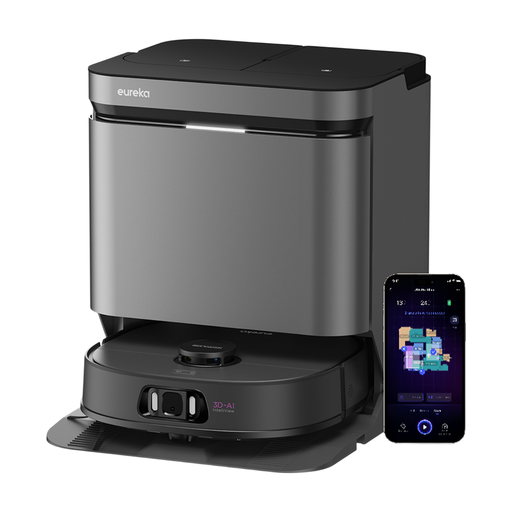
Why it stands out: It combines powerful suction with technology specifically designed to tackle pet hair, so you don't have to constantly intervene.
Its FlexiRazor anti-tangle technology was designed for pet hair. It prevents the brush from getting jammed, the number-one problem with conventional models.
16,200 Pa suction to dislodge hair embedded in carpets. Complete station with 75°C washing and hot-air drying.
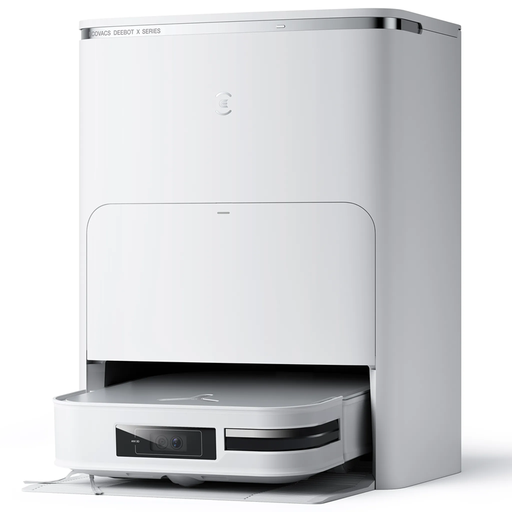
Why it stands out: For those who love cutting-edge tech, its design and innovations deliver remarkable coverage and autonomy.
Its slim, square shape was designed to tackle edge and corner cleaning, the classic weak spot of round robots.
AINA AI Navigation with dual-laser LiDAR for pinpoint obstacle detection. OMNI station with 55°C mop washing and drying.
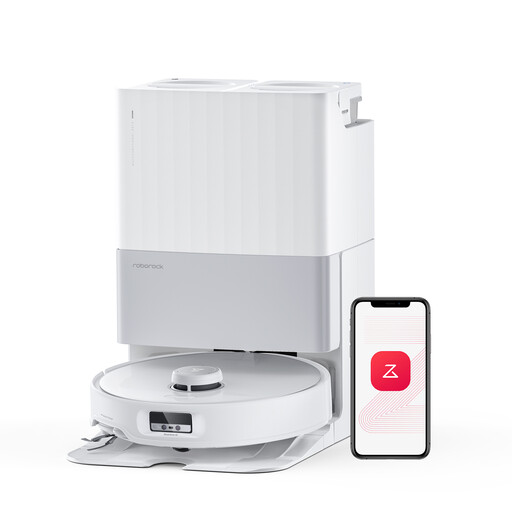
Why it stands out: With its extended battery life and edge cleaning, it's perfect for covering large houses or spacious apartments in a single run.
Its FlexiArm system tackles the edge problem head-on: it extends a side mop to run along baseboards, leaving no area untouched.
Up to 4 hours of runtime for large spaces. Station with 75°C mop washing and a dual anti-tangle system.
Explore our full selection of models that meet our strict selection criteria and current safety standards.
No, everything is designed to make maintenance as simple as possible. It boils down to three tasks: refilling the clean water tank, emptying the dirty water tank (after a few cycles), and changing the station's dust bag (every 7 to 8 weeks on average, depending on your usage). The app will send you a notification to remind you, so no worries.
For everyday maintenance, the answer is an unequivocal yes. Recent models with high suction power (over 8,000 Pa) are incredibly effective on hard floors and short-pile carpets for vacuuming up dust, crumbs, and pet hair. For a deep clean (after renovations, for example) or for using specific attachments (upholstery brushes, crevice tools...), a canister vacuum remains a good supplement.
On average, expect 3 to 5 years, depending on the model's quality and your maintenance routine. The battery and brushes are the main consumables: they are wear-and-tear parts that are easily replaced. Regular maintenance (cleaning sensors, brushes, filters) is the key to making it last as long as possible.