
Livraison le jour même ou le lendemain

Qualité garantie

Débloquez vos offres de bienvenue: Livraison GRATUITE | Jusqu'à -80 % | 30 jours d'essai gratuits à JoyPlus
Téléchargez l'application
The promise of a self-cleaning floor is undeniably appealing. Yet, the robot vacuum and mop market is a jungle of marketing promises where disappointment is common. As the head of product selection at Joybuy, my mission is to help you decode the spec sheets to make an informed choice that truly fits your home and lifestyle. Let's cut through the jargon and focus on what really matters.
Before you start, beware of these two common pitfalls:
To avoid unpleasant surprises, three technical features must be scrutinised. These are what determine the device's real-world performance, far beyond the marketing spiel.
Laser Mapping (LiDAR)The navigation technology is your robot's brain. It's what ensures complete and efficient coverage of your home.
Laser mapping (LiDAR) Navigation: This is THE gold standard. A rotating laser sensor scans the room 360° to create a precise map of your interior, even in complete darkness. It allows the robot to plan optimised routes, save maps for multiple floors, and define no-go zones (for example, the corner with the dog's bowls). This is a non-negotiable feature for spaces over 50 m? (approx. 540 sq ft) or multi-story homes.Carpets and Hard FloorsIf your home alternates between tile, hardwood, and carpets, the robot's versatility is a crucial factor. Two features to watch for are:
Self-Emptying StationThe point of a robot is to free up your time. However, emptying its tiny 300 ml dustbin after each cycle is a chore that negates the benefit of automation. This is where a self-emptying station is a game-changer: after each cycle, the robot returns to its base, which vacuums the dust from its bin into a larger bag or container. You only need to empty the station every 4 to 8 weeks, depending on usage. This option is becoming practically essential for pet owners and large families.
Rather than an endless catalogue, here is a selection of models that meet specific needs, all validated against the performance criteria we've just discussed.
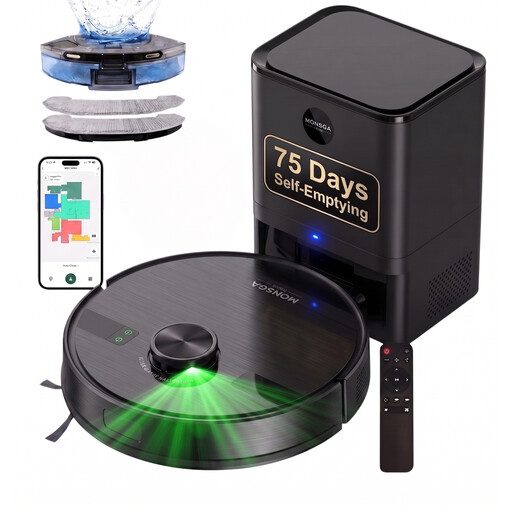
Why it stands out: With its powerful suction and large-capacity (4.0 L) self-emptying station, it's built to handle pet hair and daily messes without needing your constant intervention. Its LiDAR navigation allows it to effectively bypass toys and other obstacles.
It combines high power (9,000 Pa) with precise LiDAR navigation. It's the perfect antidote to the brawn-without-brains trap. Its XXL self-emptying station directly tackles the chore of maintenance.
A 4.0 L automatic self-emptying station for weeks of peace of mind and formidable suction against hair and debris.

Why it stands out: This robot is a powerhouse of useful technologies: fast LiDAR navigation, management of 5 different maps for multi-story homes, and a comprehensive app to customise cleaning (zones, schedules, room order). It offers a perfect balance of performance and control.
Its precise and fast laser mapping (15 minutes advertised) is the exact opposite of the random, inefficient navigation of low-end models. The battery life is detailed by usage mode, giving a realistic view of its capabilities without sugar-coating.
Advanced LiDAR navigation with multi-floor management and deep customisation via the Wi-Fi connected app.
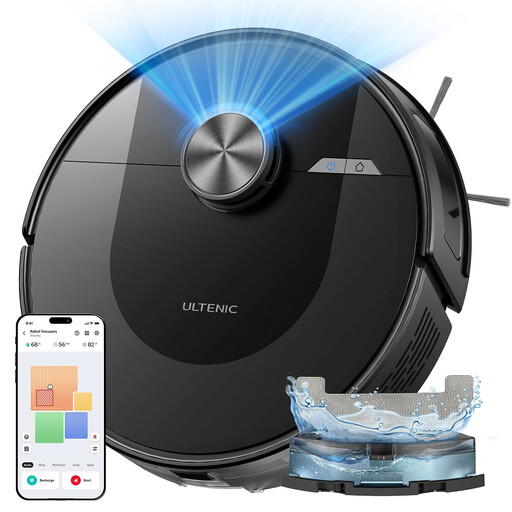
Why it stands out: With a low noise level of 50 dB in quiet mode, it's perfect for discreet cleaning in an apartment, even during a remote work session or the kids' naptime. Most importantly, it doesn't sacrifice essential features for the sake of silence: LiDAR navigation and good battery life are included.
It proves that a quiet robot doesn't have to mean subpar performance. It includes precise LiDAR navigation, whereas many so-called "quiet" models skip this technology to cut costs.
Low-noise operation (50 dB) combined with LiDAR navigation for cleaning that's as effective as it is discreet.
We have compiled a complete and up-to-date selection of products that meet our strict selection criteria and current standards.
On average, a well-maintained robot vacuum has a lifespan of 3 to 5 years. The number one wear-and-tear component is the battery. Replacing it is often possible and can give the device a new lease on life. Regular cleaning of the brushes, filters, and sensors is also crucial to preserve its motor and navigation efficiency.
Quite the opposite, it drastically simplifies maintenance. Instead of emptying the robot's small dustbin after each use, you'll only need to change the bag or empty the station's container every 4 to 8 weeks, depending on your floor area and the presence of pets. The rest of the maintenance is limited to periodically cleaning the brushes and refilling the clean water tank.
For daily maintenance, the answer is an unequivocal yes. A good robot vacuum and mop will keep your floors impeccably clean day-to-day with formidable efficiency, especially on hard floors. It excels at tackling dust, crumbs, and pet hair. However, for a deep spring cleaning (spiderwebs on the ceiling, car interiors, etc.), a canister or stick vacuum will remain an indispensable companion.