
Livraison le jour même ou le lendemain

Qualité garantie

Débloquez vos offres de bienvenue: Livraison GRATUITE | Jusqu'à -80 % | 30 jours d'essai gratuits à JoyPlus
Téléchargez l'application
Vacuuming, then mopping... it's a time-consuming routine, especially in a busy household with children or pets. The robot vacuum and mop promises to free you from this dual chore. However, the market is flooded with marketing promises that often lead to disappointment. As product experts at Joybuy, our mission is to help you decode the spec sheets to make a truly informed choice. Here are the three most common pitfalls and how to avoid them.
Brands love to advertise dizzying suction power figures (measured in Pascals, Pa). While a high number seems reassuring, it's no guarantee of effective cleaning. A robot with 20,000 Pa but a poorly designed brush or chaotic navigation will just push dust around before getting stuck under the sofa. Real-world effectiveness depends on the synergy between power, the main brush design (anti-tangle features, materials), and the robot's ability to methodically cover 100% of the area.
Many entry-level models boast a floor mopping robot function but do little more than drag a barely damp cloth around. This system tends to spread dirt rather than clean it, leaving unsightly streaks on hard floors. True mopping relies on electronic water flow control, applied pressure on the floor, and ideally, a system that actively scrubs the surface, like rotating mops. Without these, the extra investment for the mopping function isn't justified.
A smart robot vacuum without a precise navigation system is a guaranteed source of frustration. Basic models that use a simple gyroscope move around randomly, miss entire areas, and take forever to clean. For optimal efficiency, especially in multi-story homes or those with complex layouts, a robot vacuum with mapping technology like laser (LiDAR) is a non-negotiable feature. It allows the robot to create a precise map of your home, optimise its cleaning path, and let you set up no-go zones.
Before you decide, focus on these three key points that define the real-world performance and convenience of a robot vacuum and mop.
Navigation technology is the brain of your robot.
Don't focus only on Pascals. For homes with pets, a well-designed main brush is crucial.
For a truly "hands-free" experience, the docking station is as important as the robot itself.
We have analysed several devices based on these objective criteria to offer you options suited to different needs and budgets.
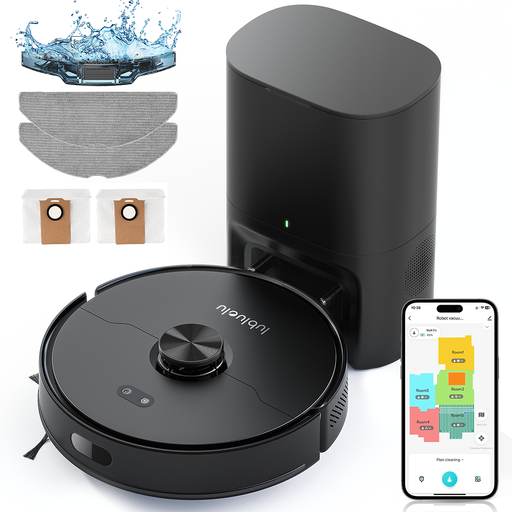
The Profile: Ideal for families in multi-story homes looking for a high-performance 3-in-1 solution (vacuum, sweep, mop) without the cost of a full station. Its quiet operation is a plus for not disturbing children or remote work.
It avoids the "dumb" robot pitfall with its precise LiDAR laser navigation and its ability to save up to 5 maps, making it highly effective in multi-story homes.
Its electronically controlled water tank provides more effective mopping than a simple damp cloth. The 4000 Pa suction power is well-balanced for hard floors and carpets.
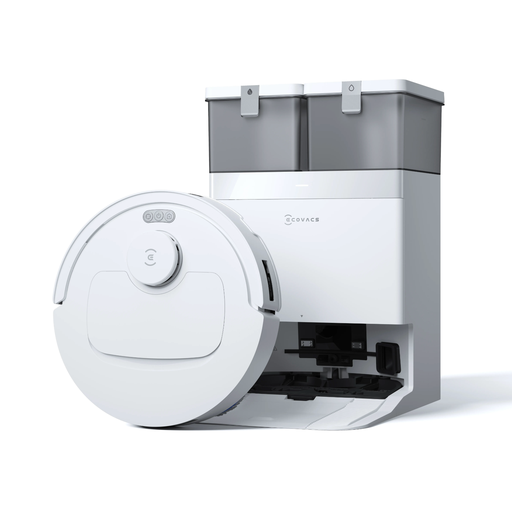
The Profile: Designed for those who want a powerful solution for pet hair and long hair. The all-in-one OMNI station offers near-total autonomy, perfect for a daily, perfectly hygienic clean.
It avoids the raw power pitfall by pairing it with ZeroTangle 3.0 brush technology. It doesn't just suck hard; it actively manages hair and fur to prevent clogs and maintain consistent performance.
The OMNI station washes the mops with 75 °C hot water for impeccable hygiene and dries them with hot air. The TruEdge 2.0 technology ensures precise cleaning of edges and corners.
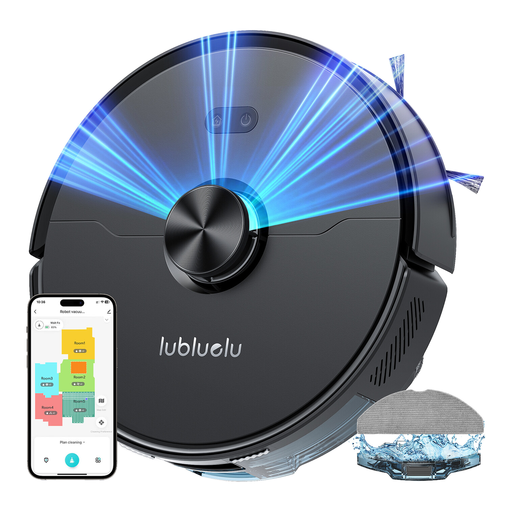
The Profile: For those seeking a premium, fully automated solution. The station manages dust, clean water, dirty water, and mop drying, offering weeks of autonomy for near-zero maintenance.
It avoids the "fake mopping" pitfall by including a comprehensive station that not only refills the tank but also manages dirty water and dries the mops with 45 °C hot air, ensuring a hygienic mop every time.
The battery life (up to 180 minutes) and large tank capacities (4L for clean water, 3L for dust) make it capable of cleaning very large areas (up to 300 m?) without any intervention.
We've compiled a full list of products that meet our strict selection criteria.
The lifespan of a robot vacuum is typically between 3 and 5 years, but it heavily depends on the quality of maintenance. The battery is often the first component to show signs of wear (usually after 2 to 3 years of daily use). Consumables like the side brushes, main brush, and filters need to be replaced periodically (every 3 to 12 months depending on the part and usage) to maintain optimal cleaning performance.
It's not essential, but it's a game-changing convenience. If you have pets, allergies, or simply hate emptying the robot's small dustbin every day, the auto-empty station is an investment that makes perfect sense. It turns a daily chore into a nearly monthly one. For tighter budgets or small apartments where space is at a premium, a model without a station remains a perfectly viable option.
For daily maintenance, absolutely. A good robot vacuum will keep your floors spotless day after day, especially on hard floors and low-pile carpets. However, for the occasional deep clean (hard-to-reach corners, baseboards, cobwebs on the ceiling, car interiors), a canister or stick vacuum will remain an indispensable tool for its versatility and peak power.