
Livraison le jour même ou le lendemain

Qualité garantie

Débloquez vos offres de bienvenue: Livraison GRATUITE | Jusqu'à -80 % | 30 jours d'essai gratuits à JoyPlus
Téléchargez l'application
The idea of delegating floor cleaning to an autonomous device is appealing to more and more households. A robot vacuum and mop promises to free up precious time. However, faced with an overwhelming number of options and sometimes vague marketing claims, it can be hard to know where to start. As a product expert at Joybuy, my mission is to help you see things more clearly and identify the criteria that truly make a difference.
Before you take the plunge, watch out for these three common pitfalls:
To avoid buyer's remorse, focus on the features that have a direct impact on your daily life. Here are the three key points to check before you decide.
The robot's ability to map its surroundings is the most critical factor. It's what allows it to cover your entire home methodically without missing a thing.
The station is no longer just a charging base. Recent models include features that radically transform the user experience.
Raw performance depends on the synergy between several key elements.
Rather than a long robot vacuum comparison, here is a selection of models that meet specific needs, in line with the criteria we've just discussed.
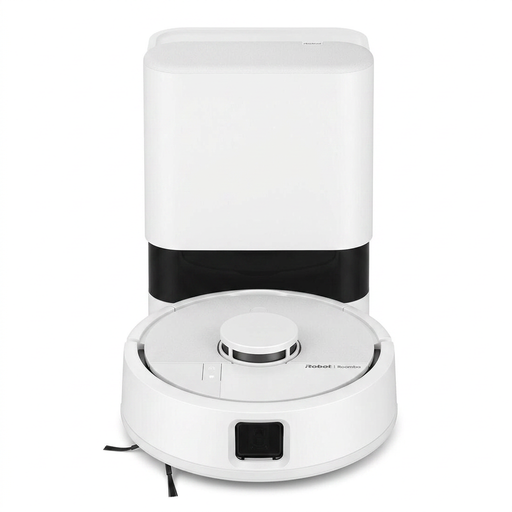
Why it stands out: Perfect for apartments and homes where every square inch counts. Its ultra-compact design allows it to get into tight spaces without skimping on advanced features like laser navigation or an auto-empty station.
It doesn't rely on its size, but on its intelligence. Its ClearView 360° LiDAR navigation guarantees methodical and complete coverage, avoiding the pitfall of random-navigation robots that miss spots.
It combines a record-breaking compact size (only 24.5 cm in diameter) with an auto-empty station and high-precision laser mapping. The perfect combo for urban living.
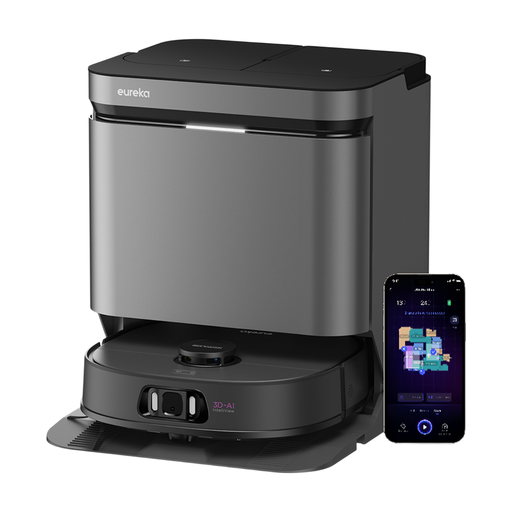
Why it stands out: Specially designed for homes with pets, it combines powerful suction with a uniquely designed brush built to tackle hair without getting tangled—a common problem with traditional brushes.
It doesn't just boast impressive raw power (16,200 Pa). It combines this with its FlexiRazor anti-tangle technology, which tackles the root cause of lost efficiency: a brush paralysed by hair and fur.
Its anti-tangle brush is a formidable weapon against pet hair. Its ultra-comprehensive station, with hot water mop washing (75 °C), guarantees impeccable hygiene.
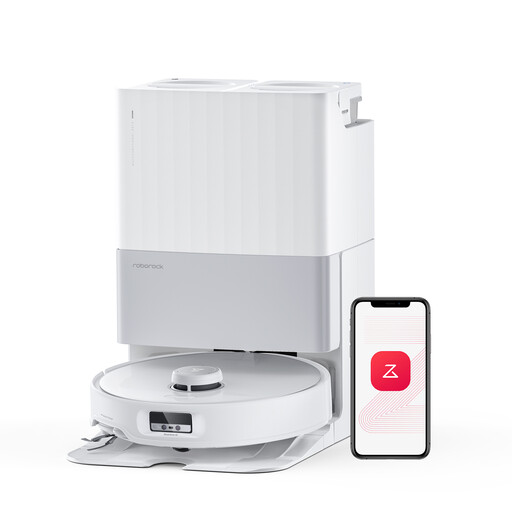
Why it stands out: For those who want absolute convenience. Its all-in-one station takes care of everything: emptying dust, refilling the water tank, washing the mops with hot water, and drying them. It's the very definition of "set it and forget it."
It delivers on the promise of autonomy where many others fail. No more chore of cleaning the mop pads after every run. The 75 °C hot water washing and hot air drying ensure hygienic, effortless maintenance.
Its fully automated docking station, with hot water mop washing, is a game-changer. Its FlexiArm articulated arm and AdaptiLift chassis optimise edge cleaning and traversal over carpets.
We have compiled a complete, up-to-date selection of models that meet our demanding selection criteria and current standards.
The lifespan of a robot vacuum and mop typically ranges from 3 to 5 years. Of course, this depends on the build quality, frequency of use, and how well it's maintained. The battery is often the first component to show signs of wear. Regular cleaning of the brushes, filters, and sensors is essential to maintain its performance and extend its life.
For day-to-day maintenance, a good robot vacuum is remarkably effective at maintaining an excellent level of cleanliness, especially on hard floors and low-pile carpets. It excels at capturing everyday dust, crumbs, and pet hair. However, for occasional deep cleaning (ceiling cobwebs, car interiors, stairs, etc.), a canister or stick vacuum remains an indispensable companion thanks to its versatility and targeted power.
No, quite the opposite. Maintenance is designed to be as simple as possible. For a station that only empties dust, you just need to change the bag or empty the container every 4 to 8 weeks. For a station that also washes the mops, you'll simply need to remember to fill the clean water tank and empty the dirty water tank, about once a week depending on your usage. A quick clean of the station's base is also recommended from time to time to prevent residue buildup. It's a negligible effort compared to manually cleaning the mop pads after each use.