
Livraison le jour même ou le lendemain

Qualité garantie

Débloquez vos offres de bienvenue: Livraison GRATUITE | Jusqu'à -80 % | 30 jours d'essai gratuits à JoyPlus
Téléchargez l'application
The idea of a spotless floor without lifting a finger is certainly appealing. However, the robot vacuum and mop market is a veritable minefield where marketing promises often clash with the harsh reality of daily use. Between incomprehensible spec sheets and aggressive marketing, it's easy to end up with a disappointing device. To avoid turning a promising investment into a costly mistake, let's break down the common pitfalls together.
First pitfall: the race for suction power. An impressive Pascal (Pa) number on the box doesn't guarantee a deep clean if the brush design or filtration system is subpar. The second trap is the "mopping" function, which too often amounts to nothing more than a damp cloth being dragged around by the robot. The result? Fine dust gets smeared around, but stains remain. Finally, be extremely wary of models with random navigation: they wander aimlessly, miss entire areas, and take forever to cover even the smallest room.
To avoid unpleasant surprises, focus on the features that truly make a difference in daily use, both in performance and convenience. Here are the three points you absolutely shouldn't overlook.
A robot's ability to move logically and efficiently is the most critical factor. While entry-level models often settle for much less precise gyroscopic navigation, LiDAR mapping technology is essential for fast, comprehensive coverage, especially in complex homes (multiple rooms, floors).
A true floor-mopping robot does more than just dampen the floor. Mopping technologies have made huge strides, and today we can distinguish between two main approaches:
One of the most significant recent revolutions is undoubtedly the robot vacuum with a self-emptying station. This base does more than just recharge the robot: it automatically empties the dust from its bin into a sealed bag, sparing you this chore after every cycle. This is an essential convenience for pet owners, whose vacuums quickly fill up with hair.
The most advanced stations take autonomy to the next level:
Because every home is unique, we've selected models that cater to specific profiles and budgets, based on the performance criteria we've just discussed.

Why it stands out: Ideal for getting an intelligent cleaning solution without the budget for a full station. It packs the essentials for a medium-sized apartment or house, with precise room management.
With its precise LiDAR navigation, it avoids the trap of random-moving robots that get lost and clean unevenly.
Its fast mapping and multi-floor management (up to 5 levels) via the app—a feature usually reserved for much more expensive models.
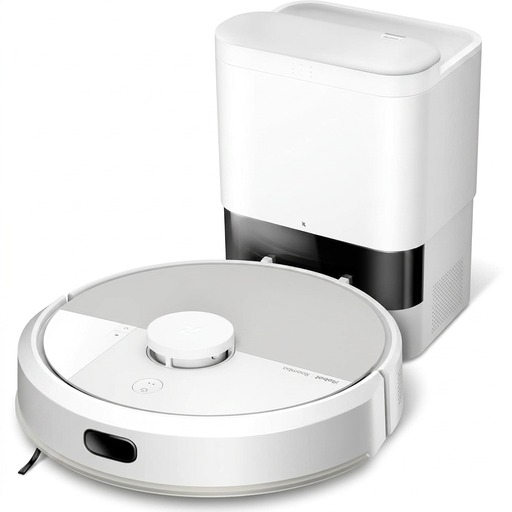
Why it stands out: Built for demanding environments, it combines powerful suction that's formidable against pet hair with a self-emptying station that gives you up to 75 days of peace of mind. The perfect ally for active families who want to cross cleaning off their to-do list.
With its advertised 15,000 Pa and anti-tangle brush, it directly tackles the scourge of pet hair where many competitors give up.
Its AutoEmpty self-emptying station stores dirt for over two months, drastically reducing manual maintenance.
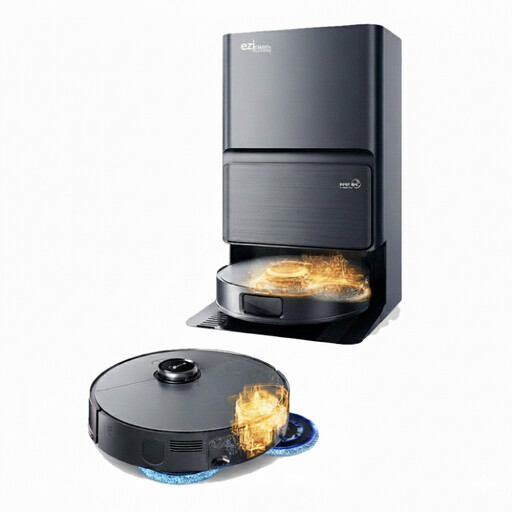
Why it stands out: For fans of total automation. Its all-in-one station handles everything: emptying dust, washing the mops, drying them at 60°C, and refilling the water tank. This is the closest we've come to a 100% autonomous cleaning service.
It shatters the concept of a "token mopping feature" with its active mopping (DualMopLift) and fully automated pad maintenance, ensuring impeccable hygiene.
Its 4-in-1 station with hot air drying (HeatDry 60°C) prevents the growth of odours and mould on the mops. A detail that makes all the difference for truly minimal maintenance.
We've put together a complete selection of tested and approved models that meet all our demanding criteria.
It depends on the model. The simplest robots must be manually blocked from going onto carpets in mopping mode. More advanced models, like some featured here, use ultrasonic sensors to detect carpets. They can then either increase suction power (in vacuum-only mode) or lift their mopping pads to avoid getting them wet. If you have mixed flooring, be sure to check for a carpet detection or mop lifting feature.
Battery life typically ranges from 120 to 200 minutes, depending on the cleaning mode and suction power. This is more than enough to cover most homes in a single charge. Almost all robots with smart mapping feature "charge and resume" functionality. When the battery drops below a certain threshold (usually 15-20%), the robot automatically returns to its base to recharge, then resumes cleaning exactly where it left off.
No, the process is now very simple and fully guided. Just download the manufacturer's app, connect the robot to your 2.4 GHz Wi-Fi network (be aware, most models still don't support 5 GHz), and follow the steps. The first run is dedicated to mapping: the robot tours your home to save its floor plan. After that, you can customise cleaning, create virtual barriers, and schedule sessions, all from your smartphone.