
Livraison le jour même ou le lendemain

Qualité garantie

Débloquez vos offres de bienvenue: Livraison GRATUITE | Jusqu'à -80 % | 30 jours d'essai gratuits à JoyPlus
Téléchargez l'application
A robot lawn mower without boundary wire can make caring for a 600 to 3,000 m² lawn considerably easier. There is no need to bury a wire around the entire garden: installation is usually quicker, and mowing boundaries can be set using an app. However, the differences between models can be significant, particularly when it comes to navigation accuracy, handling slopes and detecting obstacles.
Before choosing a robot lawn mower without boundary wire, it is therefore worth looking beyond the marketing claims and examining a few practical features.
The absence of a boundary wire does not make installation instantaneous. An RTK model may require a reference antenna installed in an open area, with a power supply and sufficiently stable signal reception. A mower equipped with an intelligent vision system, meanwhile, may depend heavily on lighting, weather conditions and the visibility of lawn edges.
Before switching it on for the first time, take the time to:
A capacity of 800 or 1,200 m² generally refers to very specific operating conditions. A garden divided into several areas, with slopes, narrow passages or dense grass, may require more mowing time and more frequent recharging.
When choosing a robot lawn mower for large areas, compare the recommended coverage, battery life per charge, charging time and the mower’s ability to resume mowing automatically after returning to the station.
A camera or 3D sensor can help the mower avoid garden furniture, trees and certain animals. Very thin objects or those lying close to the ground, such as a garden hose or cable, are more difficult to detect. When the blades are running, children and pets must always be kept at a safe distance.
Obstacle detection makes mowing easier, but it does not remove the need to prepare the garden properly.
An RTK robot lawn mower uses satellite signals and a reference station or antenna to determine its position accurately. This technology is particularly effective in open areas. Very dense trees, tall buildings or metal structures can nevertheless interfere with the signal.
A robot lawn mower with AI navigation, or one equipped with an intelligent vision system, uses cameras and algorithms to identify the lawn and obstacles. It may be more convenient when installing an RTK antenna is difficult. Some models even combine RTK, GNSS, vision and depth sensors to minimise deviations from the planned route.
The ability to climb a slope is generally expressed as a percentage or in degrees. Take care: these two units are not interchangeable. A 45% slope corresponds to approximately 24°, while 60% is equivalent to nearly 31°. Also check whether the advertised figure applies to the entire mowing area or only to the lawn edges.
For a sloping garden, pay particular attention to:
A multi-zone robot lawn mower should be able to save several maps or areas, define no-go zones and schedule different mowing times. Its app will generally allow you to adjust the cutting height, monitor progress and start or stop a mowing session remotely.
Check the connectivity options carefully: Wi-Fi, Bluetooth, GNSS or mobile network. A highly comprehensive app will be of little use if the signal does not reach the far end of the garden properly.
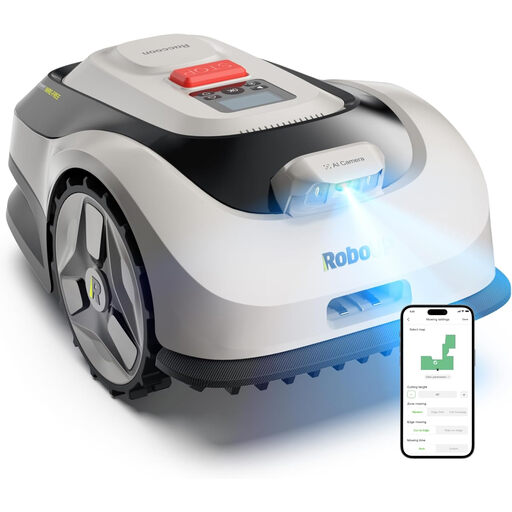
Why this is a good match for these needs: This model is designed for well-defined gardens of up to 600 m², without an RTK antenna or buried wire. It can be started directly from the mower or controlled via the app.
Its coverage is suitable for smaller gardens, and the mower can manage up to three zones. The cutting height can be adjusted across 12 levels, from 3 to 8 cm.
Up to 150 minutes of stated battery life, fast charging in around 70 minutes, a stated noise level of 56 dB(A) and IPX6 protection.
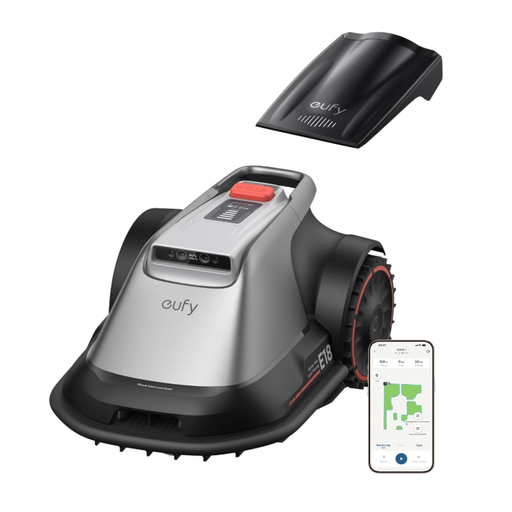
Why this is a good match for these needs: Its combination of TrueVision, GNSS and RTK is designed for lawns of up to 1,200 m². The mower is controlled via the app and delivers precise cutting along lawn edges.
The product information specifies the limitations of vision in dense fog or very low light, as well as the thin objects that may not be detected reliably.
Cutting range from 25 to 75 mm, stated slope capability of up to 40%, 90 to 110 minutes of battery life and a stated noise level of 56 dB.
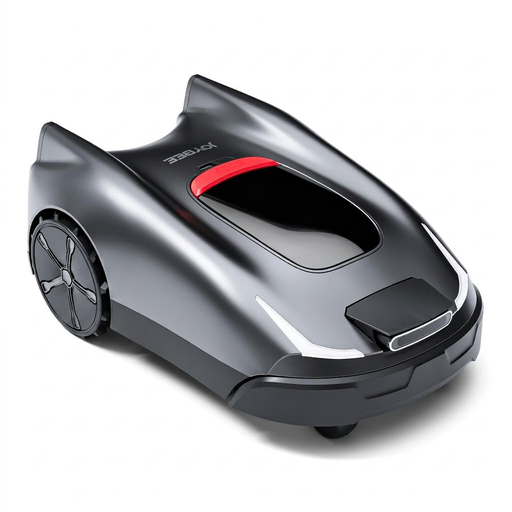
Why this is a good match for these needs: With recommended coverage of 3,000 m² and virtual management of several zones, this model is suitable for large gardens with slopes, ponds or terraces.
The product information details camera-based obstacle detection from 10 to 100 cm and recommends installing the RTK unit in an open area.
Stated slope capability of up to 45%, 22 cm cutting width, adjustable height from 25 to 60 mm and an anti-theft alert available through the app.
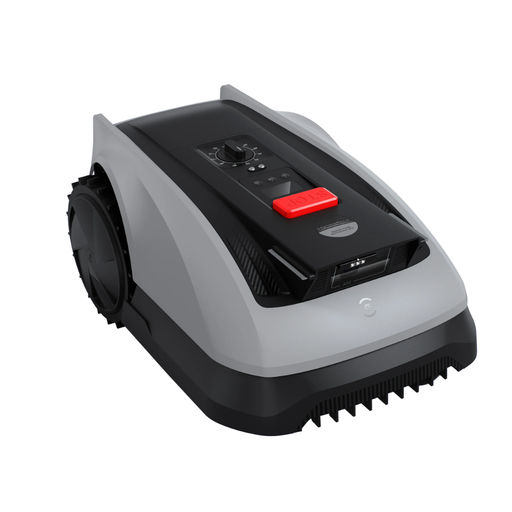
Why this is a good match for these needs: It is designed for areas of up to 600 m² and combines RTK navigation, a detection camera and zone management through the app.
The product information clearly distinguishes the coverage, maximum slope and charging time, making it easier to compare its specifications with those of your garden.
Stated coverage of up to 600 m², slope capability of up to 45%, cutting height from 30 to 80 mm, charging in around 55 minutes and a stated noise level of 50 dB(A).
We have brought together a comprehensive, real-time selection of products that meet these exacting criteria, as well as European safety standards.
It depends on the technology used. A vision-based model may require you to map the lawn for the first time using the app. With an RTK model, you will generally need to position the reference antenna, charging station and any signal accessories correctly. In both cases, preparing the lawn edges and no-go areas remains essential.
This varies according to mowing frequency, weather conditions, maintenance and the replacement of blades or the battery. Clean the underside of the mower regularly, check the condition of the wheels and charging contacts, and store the mower in a sheltered place during extended periods of freezing weather. Before buying, also check the warranty period and the availability of spare parts.
Electricity consumption depends on the area to be mowed, the slope, grass density and the number of charging cycles. You should also budget for replacement blades and, depending on the model, a possible subscription for mobile connectivity. To assess the true cost, compare these expenses with the manual mowing time saved rather than looking only at the purchase price.