
Livraison le jour même ou le lendemain

Qualité garantie

Débloquez vos offres de bienvenue: Livraison GRATUITE | Jusqu'à -80 % | 30 jours d'essai gratuits à JoyPlus
Téléchargez l'application
Roasted peanuts come in a huge variety of formats, textures and recipes. Plain, salted, coated, wasabi-flavoured or barbecue-seasoned, they’re just as welcome at aperitif time as they are in a bag for a quick snack on the go or in a homemade recipe. The trouble is, the packaging doesn’t always tell you what to expect in terms of taste, texture or how much you’re actually getting.
Before you give in to a peanut-based snack, three common pitfalls keep cropping up:
Peanuts are one of the allergens that must be declared by law. Coated recipes often add wheat or gluten, soya, mustard or tree nuts. Wasabi peanuts, for example, may contain wheat flour and flavourings. Barbecue versions, meanwhile, frequently include soya sauce powder.
Read the ingredients list in descending order of quantity. A high proportion of peanuts generally makes the recipe clearer, but it isn’t enough to judge its taste or quality. If you have an allergy, also check for the “may contain traces of” statement.
Not all salted peanuts contain the same amount of salt. As a guide, the data provided for the selected products ranges from 0.4 g of salt per 100 g for Golden Turtle wasabi peanuts to 2.4 g for sweet and spicy Thai peanuts.
Flavoured recipes can also be higher in sugar. Golden Turtle chilli peanuts have 14 g of sugars per 100 g, compared with 2 g for MONT ASIE plain roasted peanuts. These figures let you compare different options based on your own habits, without turning the nutrition label into a health claim.
For snacking on the move, a small bag is the most practical option. At 36 g, the SUNDY format is easy to finish in one go. Bags of 70 to 140 g are better suited to an individual break, while 220 to 230 g formats are more designed for sharing.
Once opened, store the packet in a cool, dry place away from light and moisture. Large bags need to be sealed carefully to keep the peanuts crunchy. Some products recommend eating them quickly or storing them in the fridge after opening – always follow the instructions printed on the packaging.
The products below are designed for different uses. Our selection is based on the ingredients, formats and nutritional values provided for each item.
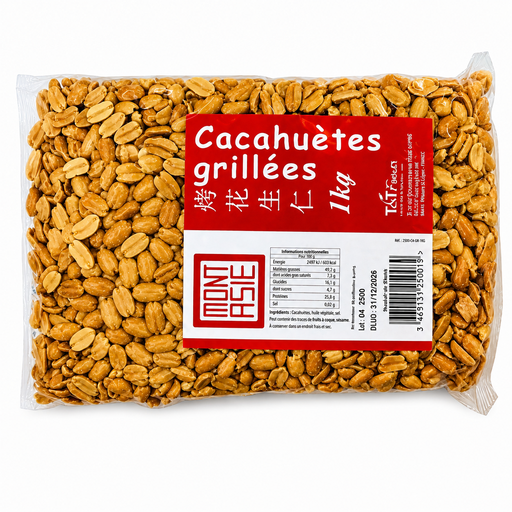
Why this product suits this profile: this large plain format is ideal for households that eat roasted peanuts regularly, whether as a snack or in cooking.
The ingredients list only mentions peanuts, with no added salt stated – so there’s no risk of ending up with a seasoning you can’t control.
A 1 kg bag, 586 kcal and 28 g of protein per 100 g according to the product sheet – perfect for nibbling or using as an ingredient.
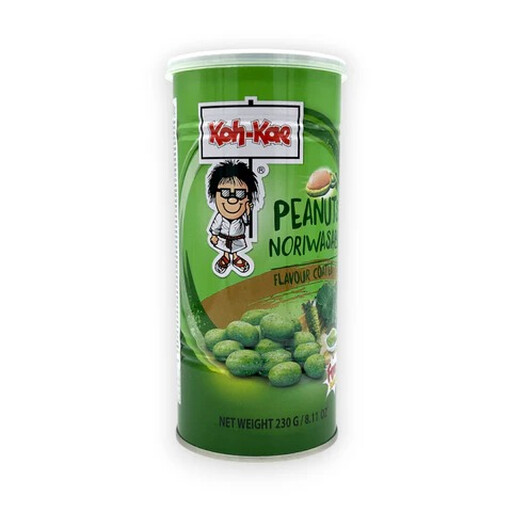
Why this product suits this profile: the combination of wasabi and nori seaweed delivers a real Asian signature, ideal for flavour lovers who want something that stands out.
The product sheet specifies 6% wasabi flavouring and 1% seaweed – much more informative than relying on the packet’s design alone.
A 230 g bag, a well-coated texture and a bold nori-wasabi flavour profile – note the presence of peanuts and wheat.
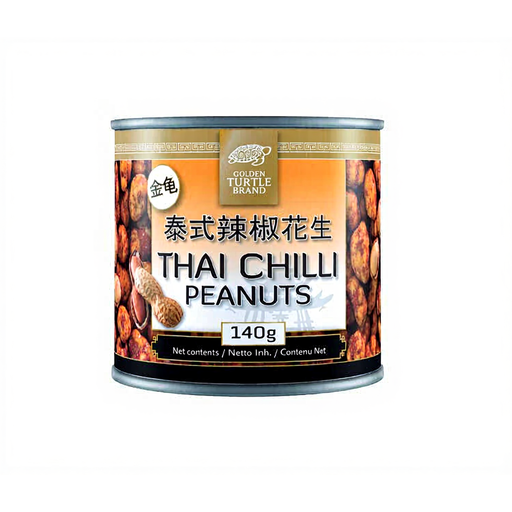
Why this product suits this profile: this compact format is aimed at those looking for chilli peanuts to serve at aperitif time or enjoy in small portions.
The product sheet states 0.4% chilli powder and lists the other coating ingredients – so it’s best not to judge the heat from the word “chilli” alone.
A 140 g bag, 480 kcal and 22 g of protein per 100 g according to the product sheet – contains gluten, peanuts and soya.
We’ve put together a full, real-time updated selection of products that meet these demanding criteria and comply with European food safety regulations.
Yes, as long as you store them in a dry place and seal the bag properly. How long they last depends on the recipe and the type of packaging. Some product sheets recommend eating them within three days or soon after opening. The best-before date and the manufacturer’s instructions are the most reliable indicators.
Plain roasted peanuts are primarily about the roasted peanut itself, sometimes with a little oil and salt. Coated peanuts add a layer made from flour, starch, sugar, spices or flavourings. Their texture is thicker and their taste more elaborate, but their ingredients list and allergen information are generally longer.
An individual bag of 36 to 80 g is ideal for snacking on the move. Formats of 110 to 230 g are better suited to sharing or aperitifs. For regular consumption or for use in recipes, a 500 g to 1 kg bag can be a good choice, provided you have an airtight container and a dry storage space.