
Livraison le jour même ou le lendemain

Qualité garantie

Débloquez vos offres de bienvenue: Livraison GRATUITE | Jusqu'à -80 % | 30 jours d'essai gratuits à JoyPlus
Téléchargez l'application
Choosing a garden fence seems simple on the surface. However, the market for rigid plastic fencing is filled with promises that rarely stand the test of time. Make the wrong choice, and you're guaranteed a fence that warps in the sun, fades, or turns brittle at the first frost, forcing you to start all over again. As a Product Specialist at Joybuy, I'm here to help you decode the labels and invest in a truly durable solution.
Before you commit, let's review the three most common pitfalls that turn a good investment into a real headache:
To avoid these traps, here are the technical specifications that truly make a difference. These are the real guarantees of quality and longevity for your future plastic garden fence.
The choice of plastic is crucial. While polyethylene (PE) is common, polypropylene (PP) stands out for its far superior rigidity and tensile strength. Insist on a UV stabilisation treatment. Without this shield, the sun's rays break down the plastic's molecular structure, causing it to become brittle and lose its colour in just a few seasons. A quality product must guarantee colourfastness and unwavering strength.
The strength of a plastic fence panel isn't just about its thickness. Advanced manufacturing processes, like molecular orientation (or bi-orientation), align the polymer chains in both directions (longitudinal and transverse). This technique, used in the Tenax Millennium fence range, for example, gives the mesh spectacular tear and tensile strength, far beyond that of simply extruded plastic. This is how a lightweight fence can prove to be as strong as a much heavier barrier.
Finally, common sense prevails: match your choice to your project. A small roll of plastic mesh that's 50 cm high is perfect for a flowerbed border. But to fence off a property or create an animal enclosure, you should aim for a height of 1.50 m or 2 m. Also, remember to check the roll lengths (10 m, 25 m, 50 m...) to optimise your budget and minimise joins, which are always weak points.
To see how these criteria translate into real-world products, here is our selection of solutions for different needs.
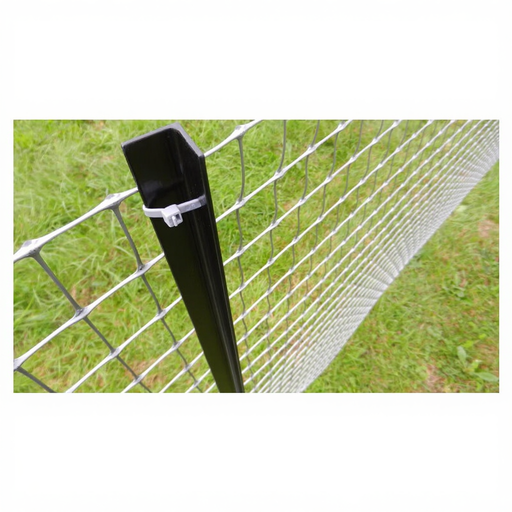
Why we chose it: This is the ultimate long-term solution for coastal areas. Its 100% polypropylene composition makes it completely immune to salt corrosion—the Achilles' heel of metal fences, even galvanised ones.
This model is a pure seaside fence. It eliminates the risk of hidden corrosion because it is completely free of metal parts. Its silver colour, integrated directly into the material, ensures a metal-like finish that will never peel.
Absolute resistance to salt corrosion and UV rays, combined with rock-solid strength thanks to molecular orientation.
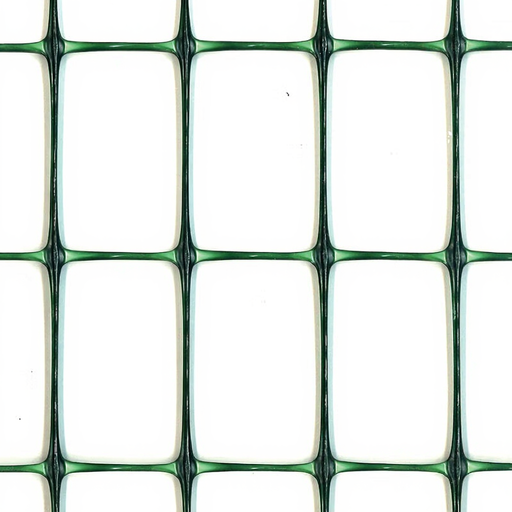
Why we chose it: This is the all-rounder of fences for everyday projects. Its discreet green colour blends into the landscape, and its light weight makes it a breeze to transport and install, even on your own.
It sidesteps the "deceptive rigidity" trap. Thanks to its oriented molecular structure, this mesh is flexible to handle but becomes incredibly strong once tensioned, without ever turning brittle.
An excellent balance of versatility and durability. Perfect for marking out a vegetable garden, securing a balcony, or acting as a support for climbing plants.
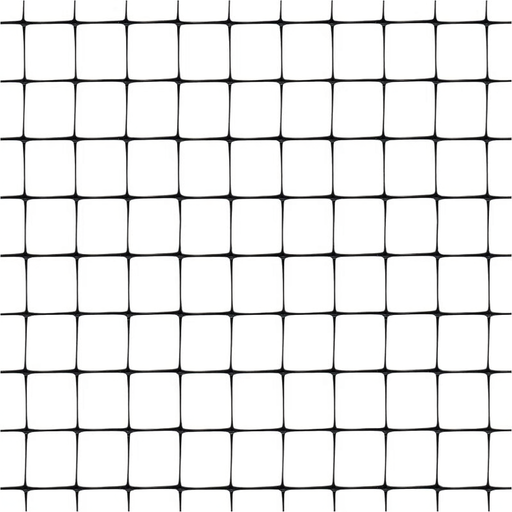
Why we chose it: Essential for covering large areas or building sturdy enclosures for poultry and small animals. Its exceptional tensile and tear strength makes it a reliable and durable containment barrier.
Here, performance trumps aesthetics. Its raw strength comes from its bi-oriented molecular process, guaranteeing it won't fail under pressure from animals or the stresses of heavy-duty use.
Very high mechanical resistance and supplied in a large roll (100 m), offering an unbeatable cost-per-area ratio for large projects.
Explore our full selection of fences that meet these demanding specifications and durability standards.
It all depends on the quality! A budget-friendly rigid plastic fence without UV treatment will show signs of weakness after 3 to 5 years. In contrast, a premium polypropylene model with UV stabilisation and a reinforced molecular structure will maintain its appearance and strength for over 10 years, even when exposed to harsh weather.
Absolutely, and the difference is striking. The secret is the weight: a roll of plastic mesh is much lighter than an equivalent metal roll. Transport, handling, and installation become a breeze, even for one person. A good pair of scissors or cutting pliers is all you need to cut it, and it attaches to posts with simple ties, requiring no heavy tools.
The era of "cheap" looking plastic is over. High-end models, like the Tenax Millennium range, offer silver or anthracite finishes that are coloured through-and-through. The result is a satin, modern look, very close to brushed aluminium or painted steel, with one major advantage: it can't peel, scratch, or fade. It's the best of both worlds: the aesthetics of metal with the durability of plastic.