
Livraison le jour même ou le lendemain

Qualité garantie

Débloquez vos offres de bienvenue: Livraison GRATUITE | Jusqu'à -80 % | 30 jours d'essai gratuits à JoyPlus
Téléchargez l'application
A rigid A6 lined notebook slips easily into a bag, coat pocket or work satchel. But not all compact models are created equal, nor do they all meet the same needs. A cover that warps, pages that are too thin or an impractical closure can quickly turn an appealing purchase into an accessory left at the bottom of a drawer.
Before choosing your A6 pocket notebook, check three essential elements: the quality of the cover, the paper weight and the presence of accessories that are genuinely useful day to day.
Terms like "faux leather" and "PU leather" usually refer to a polyurethane cover. This material can look smart and be easy to clean, but it doesn't have the same properties as real leather. A rigid cover protects the pages better when you're on the move; a soft cover, on the other hand, is lighter but offers less protection.
For everyday use on public transport, at university or in the office, check for a rigid cover, the quality of the stitching and finishing, and the manufacturer's care instructions.
A notebook advertised as having 160 pages may actually contain 80 sheets that can be written on both sides. This distinction matters if you write a lot, keep a diary or regularly jot down lists. Also check the actual dimensions: the A6 format measures approximately 10.5 × 14.8 cm, but the overall thickness varies depending on the cover and binding.
An elastic band keeps the notebook closed more securely in a bag. A bookmark prevents you from dog-earing pages, while a pen holder saves you from rummaging around in your pencil case for your writing instrument. These details won't make up for poor binding, but they do make the notebook much more pleasant to use every day.
Paper weight affects writing comfort and ink show-through. 100 gsm paper, like that in the Jubiluu notebook featured below, offers a more substantial surface for a ballpoint pen, rollerball or fine-tipped marker. However, it's still a good idea to check compatibility with your writing instrument: show-through also depends on the type of ink you use.
Lighter 80 gsm paper works well for quick notes, lists and light sketching, especially when every gram counts. For a lined notebook intended for regular writing, 100 gsm is well worth prioritising.
A stitched or glued binding is perfectly fine for note-taking and journaling. A spiral binding usually allows the notebook to open flatter, which makes drawing or one-handed writing easier. On the downside, the spiral takes up a little more room in a small pocket.
A refillable, undated model can be handy for organising loose-leaf pages. However, don't confuse it with a standard notebook: the pages of a rigid A6 lined notebook aren't necessarily replaceable.
For a notebook for lists or ideas, go for a durable cover, consistent lines and a format that's easy to carry. For keeping a diary, the elastic closure offers more privacy by keeping the notebook shut. In a professional setting, the bookmark and pen holder save you from unnecessary fumbling.
A faux leather cover can be cleaned with a slightly damp, soft cloth. Avoid large amounts of water, abrasive products and storing it in a damp environment. Small items like the ribbon, elastic band or pen loop should be kept out of the reach of children under three.
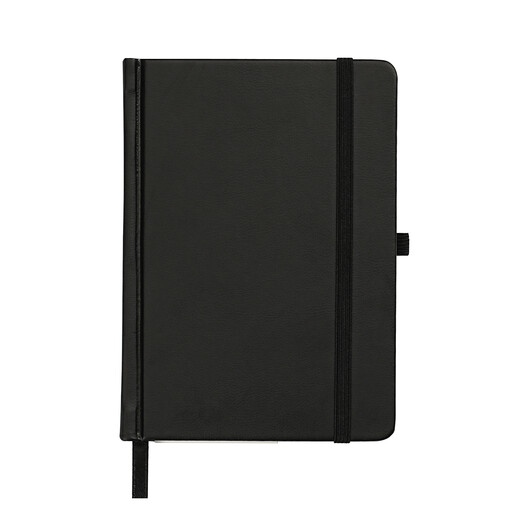
Why this choice suits this profile: Its compact size, rigid PU cover and lined pages make it a great companion for first notes, lists and ideas scribbled on the go.
The specifications are clearly stated: approximately 10.5 × 14.8 cm, 160 pages, 100 gsm lined paper and an elastic closure.
100 gsm cream offset paper, integrated bookmark and pen loop.
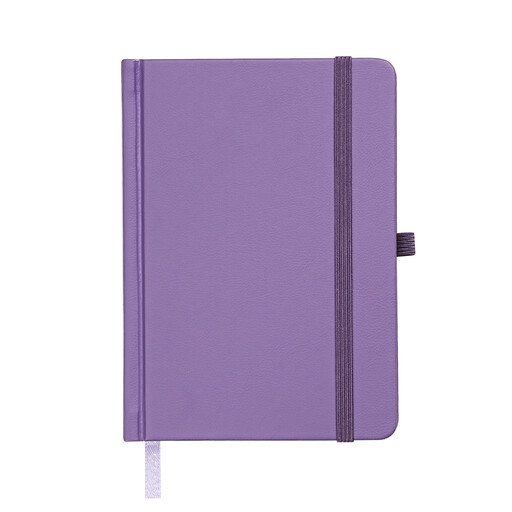
Why this choice suits this profile: Its smart presentation and soft colour fit easily into a routine of journaling, undated planning or personal writing.
The rigid cover and elastic band keep the notebook closed, while the bookmark lets you find the last page without dog-earing it.
160 lined pages, 100 gsm paper and three integrated accessories: elastic band, ribbon bookmark and pen holder.

Why this choice suits this profile: Its 80 sheets and storage accessories suit those who switch between meetings, projects, lists and personal notes in a single notebook.
The A6 format keeps bulk to a minimum, while the pen holder and elastic band mean you don't have to carry extra accessories.
PU cover, 100 gsm lined offset paper and a stated capacity of 160 pages.
We've put together a comprehensive, real-time selection of products that meet these demanding criteria and European safety regulations.
Yes, provided you prioritise features that aid organisation: a rigid cover, lined pages, a bookmark and a pen holder. Its size works well for short meetings, to-do lists and reminders, but its capacity is smaller than that of an A5 notebook.
It all depends on how often you use it, the pressure you put on the binding and the conditions it's carried in. A rigid cover and an elastic closure can reduce wear and tear from travel. However, keep the notebook away from moisture and avoid forcing the cover or tearing out pages.
For regular writing, 100 gsm paper provides a more substantial base than 80 gsm paper. The result varies depending on the ink and nib you use: always test your pen on a page if you're using a rollerball, felt-tip or very liquid ink.