
Livraison le jour même ou le lendemain

Qualité garantie

Débloquez vos offres de bienvenue: Livraison GRATUITE | Jusqu'à -80 % | 30 jours d'essai gratuits à JoyPlus
Téléchargez l'application
Finding the perfect ride-on toy for your child can sometimes feel overwhelming. Between the dozens of models, the safety standards to check, and the desire to give a child's gift that won't end up gathering dust in the garage after one season, it's easy to feel lost. Our mission? To help you make sense of it all. Follow our guide to find the ideal outdoor toy: one that is safe, durable, and, above all, incredibly fun.
Before diving into our selection, let's review the key points for a successful purchase that ticks all the boxes for discerning parents and meets safety standards.
Your first instinct? Check the toy's compliance. Look for the CE mark, which guarantees it meets European safety standards. Next, examine the vehicle's stability. For toddlers, a ride-on walker or a three-wheeled scooter will offer much better support. Don't forget the braking system: a foot brake on a scooter or brakes on a go-kart are crucial elements for controlling speed during outdoor play.
Kids grow in the blink of an eye. For a smart and sustainable purchase, opt for adjustable models. A kids' scooter with an adjustable handlebar or a pedal go-kart with an adjustable seat will keep up with their growth for several years. This ensures lasting fun and excellent value for money.
There is no single perfect vehicle, but there is a model suited to each stage of development and every personality:
Here are three models that caught our eye. Each caters to different desires, but all share excellent play potential and a well-thought-out design.

Why we love it: This model is the perfect blend of fun and practicality. The wheels light up without batteries as soon as the child starts riding (thanks to kinetic energy!), while the deck features 8 light modes for an awesome look. Its lean-to-steer system is brilliant for learning balance intuitively. Foldable and ultra-light (2.8 kg), it's a breeze to transport and store.
Benefits:
Who is it for? Ideal as a first scooter, it will delight kids who love lights and gadgets. Parents will appreciate its adaptable, practical, and durable design.

Why we love it: The pedal go-kart is a timeless classic that never fails to impress. With its sturdy metal frame and four all-terrain wheels, it's built for adventure. The two-position adjustable seat accommodates your child's growth, ensuring years of comfortable play. Forward and reverse gears offer complete freedom of movement to explore the garden from every angle.
Benefits:
Who is it for? Perfect for energetic little drivers who love exploring the backyard. It's an excellent choice for developing strength, coordination, and endurance while having fun.
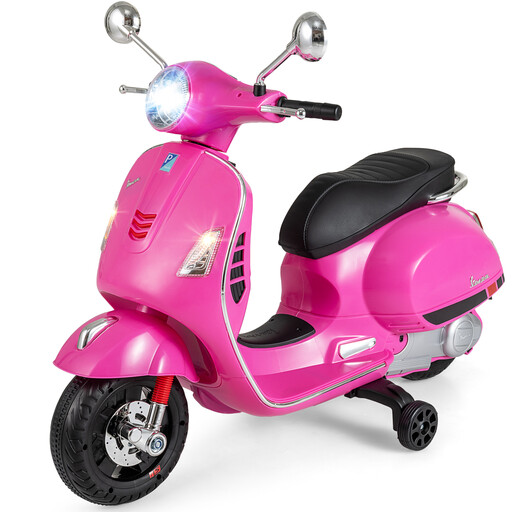
Why we love it: It's hard to resist this official replica of the legendary Vespa scooter! An iconic look that will charm both kids and parents. Designed for the safety of 3-6 year-olds, it comes with removable training wheels for a smooth start. More than just a toy, it features a horn, music, and even stories to make rides even more fun.
Benefits:
Who is it for? For little ones who already dream of being "just like the grown-ups." An original gift that combines the thrill of a first two-wheeler with all the safety required for this age.
Our selection is just a sneak peek. To explore a wider range of models, especially for younger children, feel free to browse our complete category of Outdoor Toys for 4-Year-Olds.
A child can start learning on a three-wheeled scooter as early as 2 or 3 years old. These highly stable models are perfect for confidently mastering the basics of balance. We recommend switching to a two-wheeled scooter around age 5 or 6, once coordination and balance are better developed.
Safety relies on a winning combination: equipment, environment, and supervision. Equipment: A helmet is non-negotiable, supplemented by knee and elbow pads. Environment: Choose a safe area with no traffic (a park, yard, or private driveway). Supervision: An adult should always keep an eye on the child, especially with younger ones.
It all comes down to power! The pedal go-kart is 100% muscle-powered: the child pedals to move forward, making it a great physical activity. The electric scooter, on the other hand, runs on a battery. It offers the first sensations of motorised riding, always at a controlled speed. The choice depends on your priorities: encouraging physical effort or offering a more contemplative and playful "driving" experience.