Fans of rich cocoa
You’re mainly looking for a cup with a pronounced cocoa flavour at the weekend. The stated cocoa content helps you compare recipes, but it can’t predict the flavour of the drink once prepared.


For a cup with a pronounced cocoa flavour, start by comparing the stated cocoa content and ingredients rather than relying on the word ‘intense’ alone. A high-cocoa powder is a good choice if you want a ready-made recipe; unsweetened cocoa gives you more control over what you add, while a powder labelled ‘less sugar’ meets a different priority and doesn’t guarantee a richer flavour.
You’re mainly looking for a cup with a pronounced cocoa flavour at the weekend. The stated cocoa content helps you compare recipes, but it can’t predict the flavour of the drink once prepared.
You want to compare the sugar in a prepared cup or choose unsweetened cocoa so you can decide what to add yourself.
You like a recipe that combines cocoa with other ingredients, such as the cereals in Banania Original. Checking the ingredients is especially important if someone in your household needs to avoid certain allergens.
For a weekend breakfast, first decide between a ready-made, high-cocoa recipe, unsweetened cocoa you can measure out yourself, or a powder labelled ‘less sugar’. Then compare the ingredients and nutritional values on the same basis: these three options don’t meet the same needs.
| What matters | What to check | Who it’s for |
|---|---|---|
| Pronounced cocoa flavour | Compare the stated cocoa content and ingredients; how much you use will also affect the drink in your cup. | I want cocoa to take centre stage at breakfast. Around 36% of consumers make this intensity their priority. |
| Managing sugar | Check the sugar per 100 g and, if provided, per prepared serving; take into account anything you add to your cup. | I prefer to choose how much sugar to add, or compare the sugar in my usual drink. Around 29% of consumers prioritise this control. |
| A family-friendly recipe | Check the cereals, other ingredients and allergen information for the recipe you choose. | When sharing a more complex recipe, I care about its ingredients as much as its flavour. Around 21% of consumers put this type of recipe first. |
| A handy format | Check the net weight and choose a pack size that suits how often you have breakfast at home. | Once I’ve chosen a recipe, I want a pack size that suits my household. This is the main priority for around 14% of consumers. |
The name alone isn’t enough to compare two recipes: Chocolat Poulain states that Grand Arôme Intense contains 70% cocoa, while Carrefour France says Carrefour Classic’ Intense contains at least 32%.
Check the cocoa content and ingredients for each product, then adjust the amount you use to suit your cup.
Poulain Grand Arôme Intense also contains sugar. With unsweetened cocoa, the ingredients in your drink will depend in part on what you add.
Compare the sugar figures on the packaging and factor in anything you add when preparing your drink.
Brands don’t necessarily use the same product as a benchmark for their sugar-reduction claims. For example, Nestlé compares NESQUIK Moins de Sucres per mug with the average for cocoa drinks for children.
To compare the powders themselves, look at their sugar values per 100 g, then compare prepared servings if these are listed.
Banania says its Original recipe contains wheat, barley and malted wheat. Poulain Grand Arôme Intense and Carrefour Classic’ Intense state that they may contain milk.
If someone in your household needs to avoid an ingredient, check the ingredients list and allergen information on the pack you buy.
Grand Arôme Intense is for those looking for a recipe with a pronounced cocoa flavour.
NESQUIK Moins de Sucres is designed for those looking to reduce their sugar intake compared with the benchmark used by the brand.
Original is a blended recipe for households looking for something other than a simple cocoa powder.
The Intense product’s stated cocoa content is worth checking when comparing powders.
EQUADOR unsweetened cocoa lets you choose whether to add anything when preparing your drink.
These three products include two pack sizes of Poulain powder and a BENCO powder labelled ‘Less Sugar’. If you’re looking for a rich cup, compare the ingredients on the packaging; this claim alone doesn’t tell you how much sugar will be in your prepared drink.
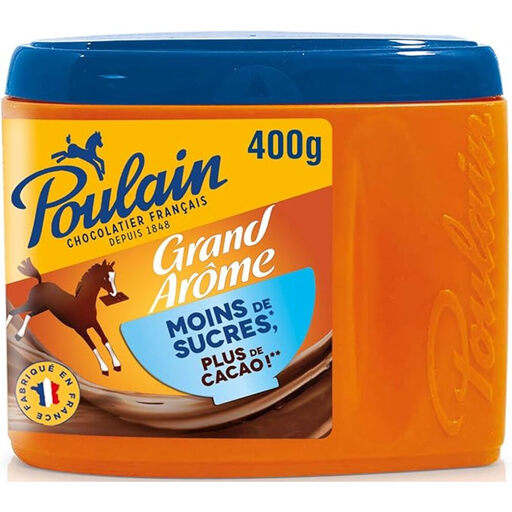 Image unavailable
Worth a look if you’re after a Poulain recipe for your weekend hot chocolate.
Stated pack size: 400 g. Check the cocoa content, sugar and ingredients on the packaging for this product.
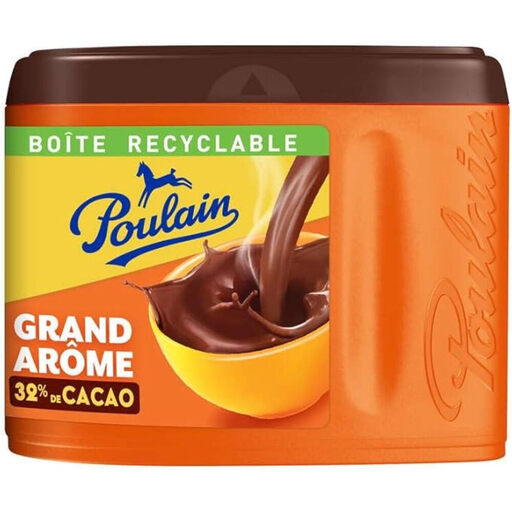 Image unavailable
This pack size may suit you if you’re looking for a Poulain powder to enjoy at breakfast.
Stated pack size: 450 g. Don’t assume its ingredients are the same as those in the 400 g pack: check both labels.
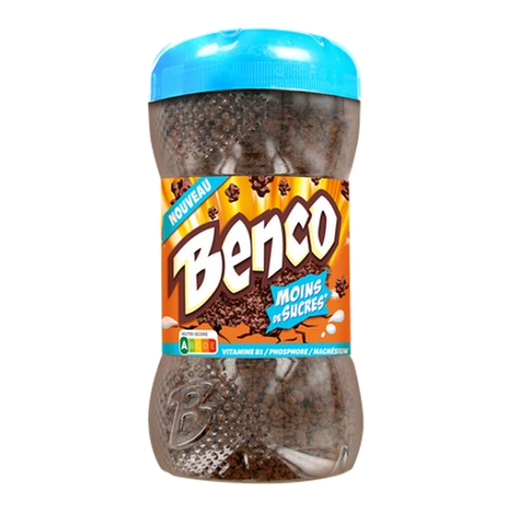 Image unavailable
Worth comparing if the ‘Less Sugar’ label catches your eye, but don’t mistake it for a guarantee of a rich cocoa flavour.
Stated pack size: 400 g. Check the sugar per 100 g and the recommended serving before judging how much you’ll use in a cup.
Compare the stated cocoa content, then check the ingredients and recommended amount. Chocolat Poulain states that Grand Arôme Intense contains 70% cocoa, while Carrefour France says Carrefour Classic’ Intense contains at least 32%. These figures describe the powders, not how rich each prepared cup will taste.
No. In France, the Ministry of Health describes Nutri-Score labelling as voluntary. If it appears on a product, consider it alongside the ingredients list, sugar content and nutritional information rather than relying on it as your only guide.
Check the ingredients and allergen information on the packaging you buy. Banania says Original contains wheat, barley and malted wheat; Poulain Grand Arôme Intense and Carrefour Classic’ Intense state that they may contain milk.