What should you check before buying?
First, decide whether the rice will be a side dish, a flavoured recipe or a complete dish. Then compare the nutritional information for products intended for the same use, and check that their format and ingredients are suitable for the service you have planned.
| Criterion |
What to check |
Who it matters to |
| Declared sugars |
Compare the ‘of which sugars’ figure per 100 g across recipes intended for the same use, and read their ingredients lists. Don’t confuse this figure with total carbohydrates. |
If my priority is to limit declared sugars, I want to compare recipes without treating sugars as the same thing as the starch in rice. Around 42% of consumers put this need first. |
| Service pace and portions |
Compare the weight and stated number of portions with the number of diners, then check that the reheating instructions suit the equipment available. |
When you need to serve lots of meals in a short time, I need to know how many pouches the team can reheat and portion out. Around 33% of consumers put this need first. |
| Menu suitability |
Check the ingredients and allergens in the product you buy, and distinguish a side dish from a complete dish. |
To include rice in a range of menus, I prefer a product whose ingredients suit the diners’ dietary restrictions. Around 25% of consumers prioritise this compatibility. |
Brands and retailers to know
These examples cover different types of rice and sales channels. Their features should not be taken to apply to every product from the same brand or retailer.
BEN’S ORIGINAL
The Express Rice range includes 220 g pouches for reheating, including a wholegrain rice and a Mediterranean recipe.
- According to BEN’S ORIGINAL France, Wholegrain Express Rice contains 0.5 g of sugars per 100 g and is made with steamed, precooked wholegrain rice and sunflower oil.
- According to the brand, the Mediterranean recipe contains 2.5 g of sugars and 0.56 g of salt per 100 g. For both recipes, also consider how the individual pouch format will affect service.
TABLES DU MONDE
Its 400 g Cantonese Rice, described by E.Leclerc, is a complete dish and should be assessed separately from plain rice served as a side.
- E.Leclerc lists 1.5 g of sugars per 100 g for this product.
- The recipe includes ham, egg, wheat flour and fish sauce, among other ingredients. Check that it is suitable for each relevant menu.
Carrefour
This retailer sells express rice products; it is not being assessed here as a manufacturer of cooked rice.
- Carrefour’s listing for BEN’S ORIGINAL Basmati Rice 2 min shows a 220 g pouch and gives reheating times of two minutes in the microwave or three minutes in a pan.
- A retail product listing on its own cannot tell you what format or supply arrangements are available to a canteen.
Ready-to-serve rice available on Joybuy
These products suit two different uses: cooked rice to pair with other menu items, and ready-to-heat flavoured rice. Before choosing either for a canteen, make sure the format suits the number of diners and check the nutritional information and ingredients.
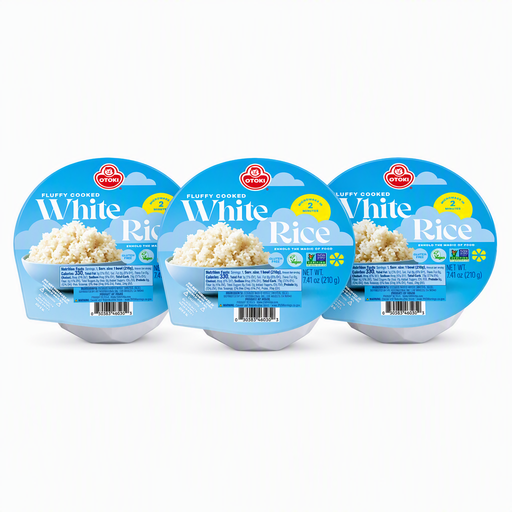 Image unavailable
Ottogi Cooked Rice, 210 g, pack of 3
This cooked rice can be used as a base for a side dish, with the other ingredients chosen separately. With a pack of three, check how many units you’ll need, along with the reheating instructions and your service capacity.
View on Joybuy
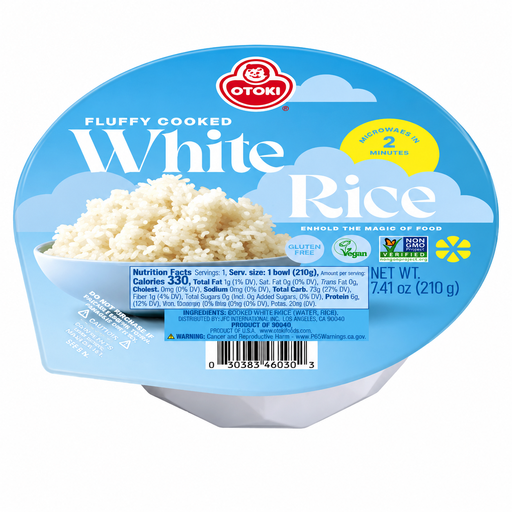 Image unavailable
OTOKI Cooked Rice Cup, 210 g
The individual bowl is a convenient option for serving cooked rice with other ingredients prepared separately. Before adding it to your service, check the reheating instructions, the quantities you’ll need and the ingredients listed on the product you buy.
View on Joybuy
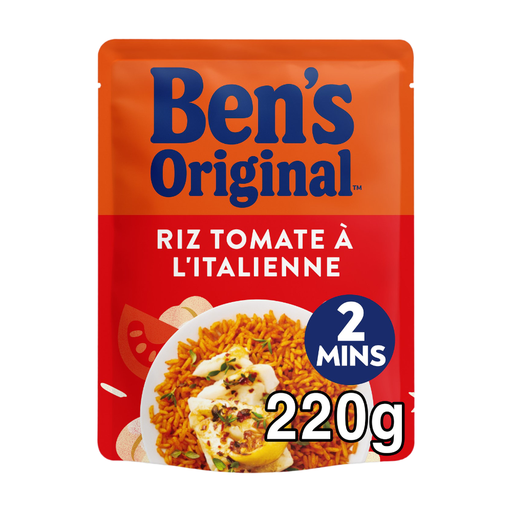 Image unavailable
Ben's Original Express Microwave Rice with tomato and olive oil, 220 g
This flavoured recipe serves a different purpose from plain rice that you season in the kitchen. Check the presence of milk listed for this product against the menus you serve, then make sure the reheating instructions and portion size work for your service volume.
View on Joybuy
Frequently asked questions
Does rice with little sugar always contain few carbohydrates?
No. The Anses distinguishes sugars from starch, which is also found in rice. To compare declared sugars, use the ‘of which sugars’ figure per 100 g, without presenting it as a measure of total carbohydrates.
Which figures should I compare across the rice products reviewed?
According to information from BEN’S ORIGINAL France and E.Leclerc, BEN’S ORIGINAL Wholegrain Express Rice contains 0.5 g of sugars per 100 g, TABLES DU MONDE Cantonese Rice contains 1.5 g, and BEN’S ORIGINAL Mediterranean Express Rice contains 2.5 g. As the Cantonese rice is a complete dish, don’t choose between these three products based on this figure alone. Also consider their place on the menu and their ingredients.
Can you describe rice as ‘reduced sugar’ because its figure is low?
No. A low ‘of which sugars’ figure is not enough to justify this claim. Nutrition claims are governed by Regulation (EC) No 1924/2006. Before using wording that suggests a reduction, check which claim applies to the product and which product it should be compared with.
Will an express rice pouch suit every service volume?
Not necessarily. BEN’S ORIGINAL lists its Wholegrain Express Rice in a 220 g pouch for two portions, with a stated reheating time of two minutes in the microwave or three minutes in a pan. Calculate how many pouches you’ll need to prepare and check that your equipment, portioning and handling processes suit the service you have planned.
What should you check before including a complete rice dish in menus with dietary restrictions?
Check the ingredients and allergens listed on the product you actually buy. The TABLES DU MONDE Cantonese Rice listing from E.Leclerc includes egg, wheat flour and fish sauce, among other ingredients. Assess it as a complete dish, rather than as plain rice.


