
Livraison le jour même ou le lendemain

Qualité garantie

Débloquez vos offres de bienvenue: Livraison GRATUITE | Jusqu'à -80 % | 30 jours d'essai gratuits à JoyPlus
Téléchargez l'application
Rice paper for spring rolls might seem easy to choose. Yet a few small details can make all the difference between a pleasant preparation and sheets that tear, stick together or become impossible to roll. The diameter, the ingredients and the way you rehydrate them all directly affect the final result.
Whether you are making Vietnamese spring rolls, fried spring rolls or vegetarian bites, here are the criteria to check before placing your order.
A 16 cm sheet is best suited to canapés, small portions and children’s preparations. At 22 cm, the size offers more room for vermicelli, crunchy vegetables, herbs and a reasonable filling. 31 cm rice paper is more appropriate for large rolls, buffets and professional use.
Choosing a large diameter to make small bites risks increasing waste and making handling trickier. Conversely, a small sheet will tear more easily if it has to hold a generous filling.
These descriptions don’t always mean the same thing from one product to another. The texture also depends on the proportion of rice, tapioca starch and, sometimes, wheat flour. A sheet that contains wheat will not be suitable for anyone looking for gluten-free rice paper.
So take the time to check the ingredients list and the allergen declaration. Some Bamboo Tree products, for example, contain wheat, while others state no declared allergens. If you have an allergy or intolerance, only the label on the product you receive can be relied upon.
A dry sheet should not be completely soft when it comes out of the water. It usually continues to soften once laid on the work surface. Soaking it for too long makes it sticky and particularly fragile.
Fill a plate or shallow dish with warm water – never boiling – then dip each sheet in for a few seconds. The ideal time varies depending on the thickness of the sheet and the water temperature.
The weight of the pack is also worth your attention. A 340 to 400 g bag is suitable for regular family use. A 1 kg pack becomes worthwhile for large gatherings, community groups, caterers or Asian restaurants.
Recipes based on rice, tapioca starch, water and salt are common. They are often suitable for vegetarian preparations, but several cases need to be distinguished:
Moisture is the main enemy of Vietnamese rice paper. Keep the pack in a cool, dry place away from direct light. After opening, reseal the packaging carefully or place the sheets in an airtight container.
A dry, brittle sheet is not necessarily faulty: it may have absorbed moisture or been stored in poor conditions. Always check the best-before date and the general condition of the pack.
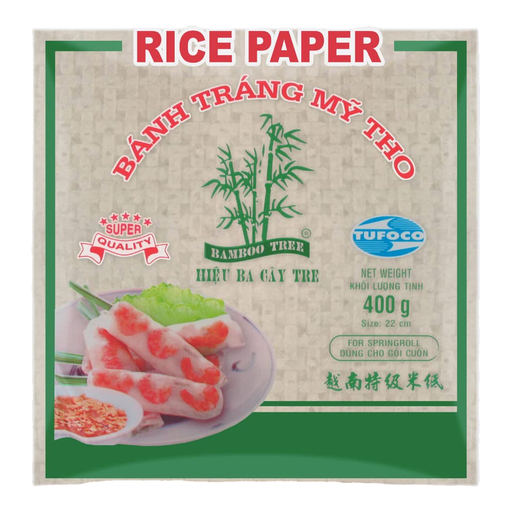
Why this choice suits this profile: Its 22 cm square size is ideal for first attempts and regular family use. The product page lists a composition of tapioca starch, water, rice and salt, with no declared allergens.
Its medium diameter stops you ending up with sheets that are too small or oversized for a home recipe. For allergies, however, always rely on the labelling of the product you receive.
22 cm size, 400 g net weight and quick preparation after a few seconds of soaking in warm water.
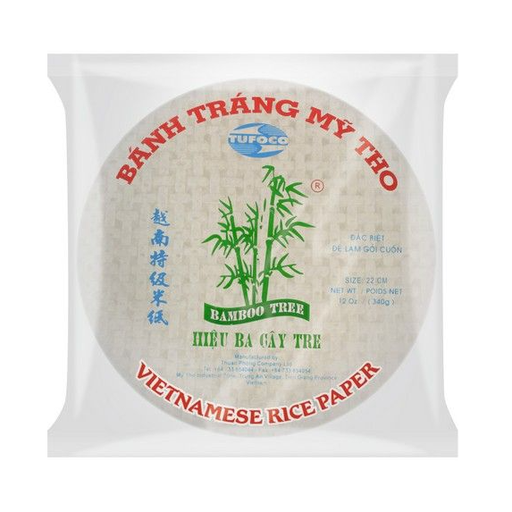
Why this choice suits this profile: The 31 cm round sheets offer plenty of surface area for making generously filled rolls and for presentation. The product page lists them as vegan and gluten-free.
The large diameter gives you enough room to fold the filling without forcing it. A few seconds of soaking in warm water softens it without making it fragile.
31 cm round size, recipe presented with simple ingredients and the option to use them fresh or after frying.
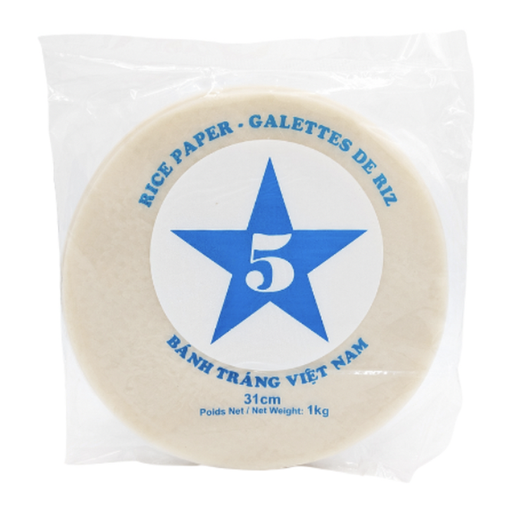
Why this choice suits this profile: The 1 kg pack meets the needs of large families, events, restaurateurs and cooks who regularly prepare spring rolls or fried spring rolls.
The large pack size stops you having to open multiple small bags during heavy service. Perfectly airtight storage is still essential to limit moisture absorption.
31 cm diameter, 1 kg pack and declared ingredients – rice, salt and water – with no allergens listed on the product page.
We have compiled a complete, real-time selection of products that meet these exacting criteria and European safety regulations.
For rice paper for fried spring rolls, the filling should be fairly dry to limit splattering during frying. For a fresh roll, drain the vegetables and vermicelli thoroughly to help the sheet hold its shape.
The 22 cm size is suitable for most family preparations. Go for 31 cm if you want to add more filling, make large rolls or cook in bulk.
No. Some products contain wheat flour or are made in an environment where gluten-containing cereals are handled. Before eating them, check the ingredients list, allergens and any statements on the packaging.
Store them at room temperature, in a dry place away from sunlight and moisture. Reseal the pack carefully or use an airtight container. Check the date on the packaging and throw away any sheets that have an unusual smell or appearance.