
Livraison le jour même ou le lendemain

Qualité garantie

Débloquez vos offres de bienvenue: Livraison GRATUITE | Jusqu'à -80 % | 30 jours d'essai gratuits à JoyPlus
Téléchargez l'application
Rice noodles are ideal for preparing pad Thai, pho, Vietnamese salads or a stir-fried wok dish. But not all varieties are cooked in the same way. Choosing the wrong thickness, soaking them for too long or buying an oversized pack can turn a quick meal into a sticky dish that is difficult to serve.
Before filling your cupboards, here are the pitfalls to avoid and the criteria to check.
Rice vermicelli is very fine, generally around 1 mm. It is suitable for salads, spring rolls, light soups and quick stir-fries. Wider rice sticks — from 3 to 10 mm — have a more substantial texture and stand up better to thick sauces.
A product described simply as “Asian noodles” may therefore be unsuitable for your recipe if its width is not clearly stated.
Noodles made from rice and water are naturally gluten-free. However, people with coeliac disease or particular sensitivities should check the information regarding cross-contamination. Some facilities also manufacture products made from cereals containing gluten.
Always check the ingredients list and the information shown on the packaging.
Some pad Thai noodles need to be rehydrated in warm water for 20 to 30 minutes, while very fine vermicelli only needs a few minutes in hot water. Overcooking makes them soft, especially when they need to finish cooking in the wok afterwards.
The preparation time given by the manufacturer is still the best guide — far more reliable than a general rule.
Shape also matters: straight noodles are easy to measure, while folded noodles take up less cupboard space and may be easier to portion.
For a simple recipe, choose a short ingredients list, such as rice flour or starch and water. Some varieties also contain tapioca, salt or other starches. These ingredients can affect the noodles’ flexibility, transparency and ability to hold their shape after rehydration.
Nutritional values vary from one recipe to another. The products featured here are generally high in carbohydrates, which reflects their role as a starchy staple. To compare several products, check the values per 100 g rather than figures based on different serving sizes.
A 400 g pack of rice noodles suits many households and allows you to prepare several meals. For regular use, a multipack of three or a pre-portioned carton reduces handling and makes it easier to calculate quantities.
Catering professionals should also consider storage space, shelf life and the price per kilogram. A 3 kg carton is only worthwhile if the quantity consumed justifies such a format.
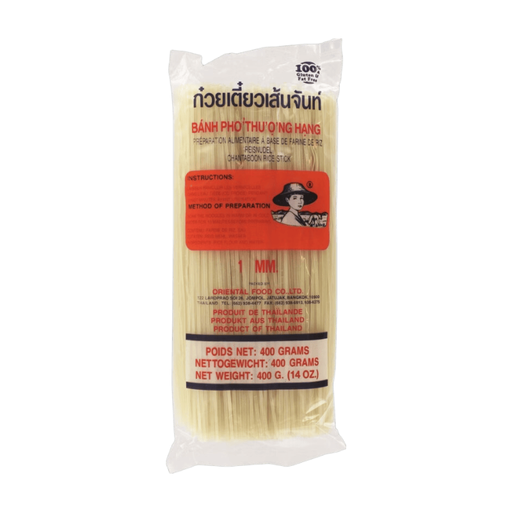
Why this choice suits this profile: At 400 g, this pack lets you try rice noodles without investing in a large carton. Its fine format is suitable for salads, soups and simple stir-fries.
The 1 mm width is clearly stated and the ingredients list mentions rice flour and water. You know exactly what you are buying.
400 g pack, with no allergen declared in the product details, to be stored away from moisture.
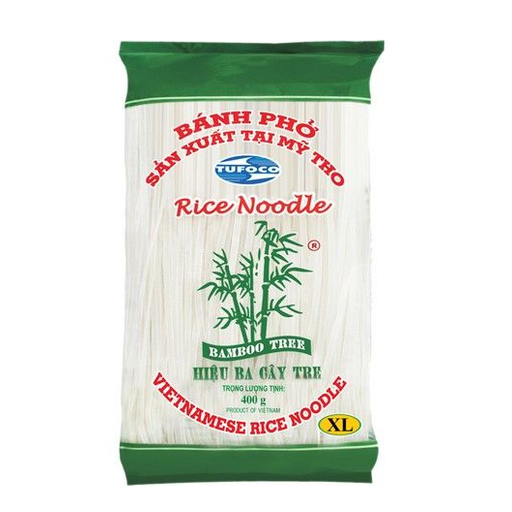
Why this choice suits this profile: Its wide format is ideal for cooks looking for a more substantial texture in stir-fries, soups and certain pho recipes.
The 10 mm width is clearly stated. There is no mistaking these wide rice ribbons for fine vermicelli.
400 g format, made with rice, tapioca and water, with no allergen declared in the information provided.
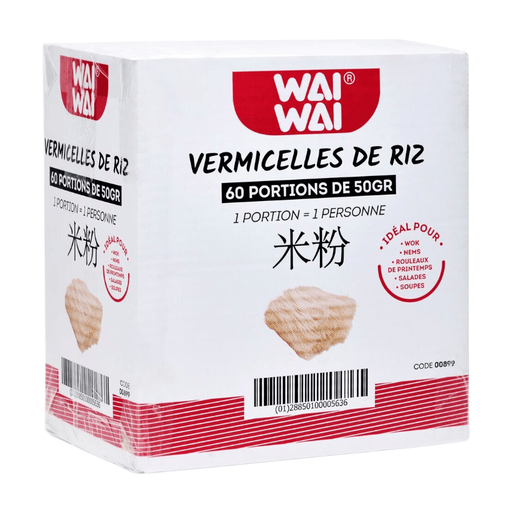
Why this choice suits this profile: The 60 portions of 50 g make serving easier in a small catering business, community kitchen or household that regularly prepares Asian dishes.
The pre-portioned packaging means you do not need to open a large bag and measure out each serving by hand.
3 kg carton, comprising 60 portions of 50 g, to be stored at room temperature in a dry place.
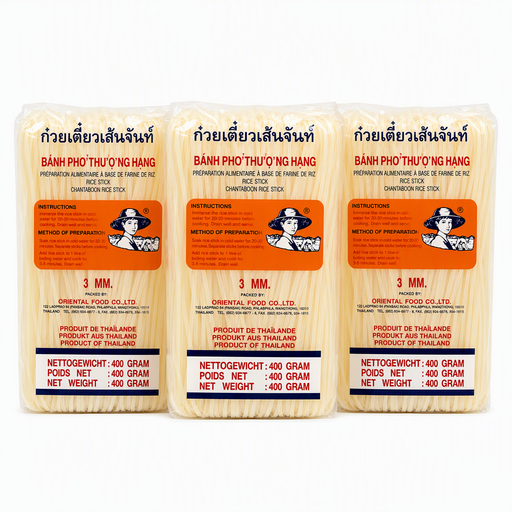
Why this choice suits this profile: This three-pack is ideal for those who alternate between pho, pad Thai, salads and wok dishes without moving straight to catering-size packaging.
The 3 mm width and the weight of each pack are clearly stated, making it easier to compare with finer vermicelli.
Three 400 g packs, with the ingredients listed as rice and water. Suitable for soups, stir-fries and salads.
We have put together a complete, real-time updated list of products that fully meet these strict selection criteria and European safety regulations.
For noodles intended for the wok, avoid cooking them completely before stir-frying. Rehydrate them according to the instructions on the label, drain them thoroughly, then add them with the sauce during the final few minutes of cooking. In soup, add them late enough to preserve their texture.
After opening, reseal the bag carefully and store it in a cool, dry place away from direct light. Moisture can affect the texture of dried noodles. Fresh noodles may need to be kept in the refrigerator after opening: always check the instructions on the packaging.
For a main course, allow 60 to 100 g of dried noodles per adult. Adjust this amount according to the vegetables, meat, tofu or stock added. Pre-portioned 50 g servings may be suitable for soup or as a side dish.
Follow the rehydration time, drain the noodles as soon as they are soft and rinse them if the manufacturer recommends it. For a stir-fry, a quick toss in the wok with the sauce helps separate them. Above all, avoid leaving them in hot water for too long.
A recipe made with rice, water and possibly tapioca or salt may be gluten-free. However, you should check the labelling, particularly where there is a risk of cross-contamination at the manufacturing facility.