
Same-day & Next-day Delivery

Quality Guaranteed

Unlock Your Welcome Offers: FREE Delivery | Up to 80% OFF | Free 30-day JoyPlus trial
Download the APP
Rice noodles are a staple in Vietnamese, Thai, Chinese and Korean cuisine. But not all of them are prepared in the same way. Choosing the wrong thickness, or a different composition from the one you need, can turn pad Thai into a mushy dish, phở into an unbalanced soup, or a salad into a limp preparation with no structure.
Before adding a packet of rice vermicelli or Asian noodles to your basket, there are three particularly easy pitfalls to avoid.
Thickness directly affects the texture in the mouth and the noodles’ ability to hold broth or sauce.
An indication such as “5 mm” or “10 mm” therefore makes it possible to compare products in practical terms, rather than relying solely on a vague promise of authenticity.
To choose gluten-free rice noodles, look for a short ingredients list consisting of rice or rice flour and water. Some products also contain tapioca, starch or salt. These ingredients can alter the texture, without necessarily being a drawback.
Mung bean vermicelli and sweet potato noodles often become translucent after cooking. They should therefore not automatically be considered rice noodles. Similarly, an instant recipe may contain wheat in its seasoning, even when the noodles themselves are made entirely from rice.
If you have an allergy or follow a medically prescribed diet, always check the labelling, highlighted allergen information and any possible traces.
Dry rice noodles often require soaking in lukewarm water for 10 to 30 minutes, depending on their width. Very fine vermicelli can sometimes be cooked directly in boiling water, while thicker formats generally finish cooking in the wok or broth.
To avoid ending up with a sticky mass:
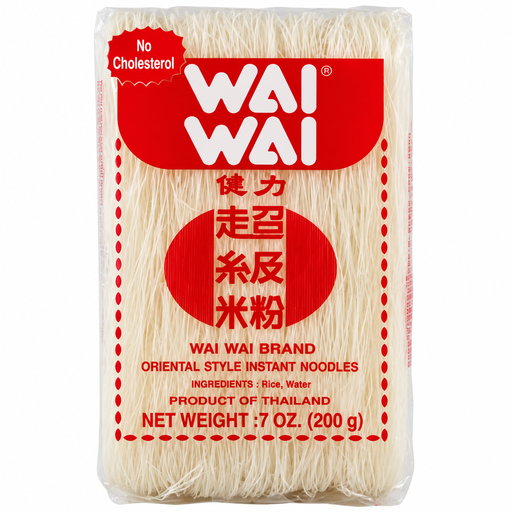
Why this choice suits this profile : With its 200 g pack size and cooking time of around two minutes, this packet is an easy way to try rice vermicelli without committing to a large pack.
The ingredients list states 90 % rice and water, with no declared allergens. Nevertheless, check the label on the batch you receive.
A compact 200 g pack, quick cooking and the option to stir-fry them in a wok.
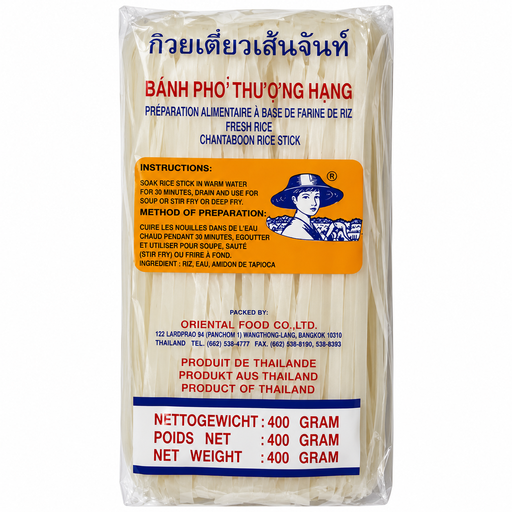
Why this choice suits this profile : Anyone who enjoys a thicker texture and a more substantial presence on the plate will appreciate these 10 mm Thai noodles.
The width is clearly stated : there is no chance of accidentally ordering fine vermicelli for making pad Thai.
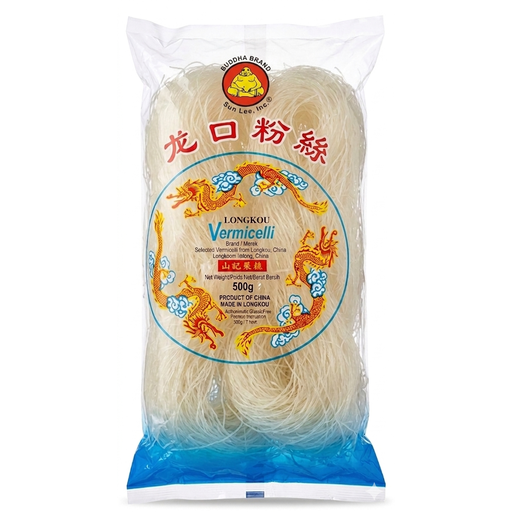
Why this choice suits this profile : Its 500 g pack is suitable for families, shared kitchens and regular preparation of soups, salads, Chinese hotpots and stir-fries.
The Longkou name and the presence of mung bean starch clearly show that these are not classic rice noodles.
Translucent vermicelli, a 500 g pack and separate instructions for soup, wok dishes, cold salads and hotpot.
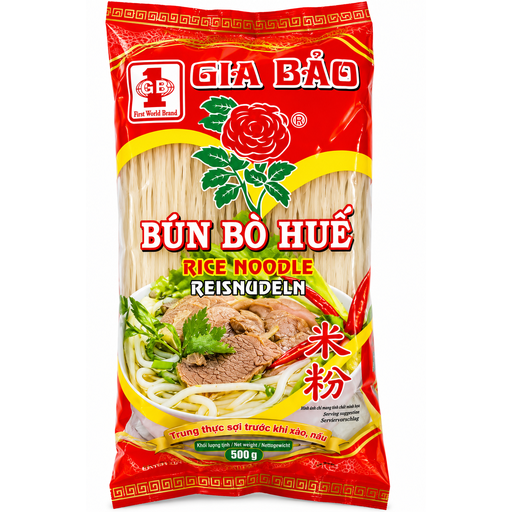
Why this choice suits this profile : With its 1.5 mm diameter, this product is designed for hearty Vietnamese soups, particularly bún bò Huế. It can also be used in salads or stir-fries.
The diameter and intended use appear in the product name. This reduces the risk of choosing strands that are too fine for a richly seasoned broth.
The ingredients are listed as rice and water. The 500 g pack is suitable for family meals and preparing several portions.
We have brought together a complete, real-time updated selection of products that meet these exacting criteria, in line with European safety regulations.
No, not always. Noodles made solely from rice and water are generally described as gluten-free in product listings. However, some recipes contain wheat, wheat starch or a seasoning based on soya sauce. Always check the labelling and allergen information before buying.
Both methods are used. Very fine vermicelli and some instant rice noodles can be cooked directly in boiling water. Thicker dry formats are often rehydrated in lukewarm water before finishing their cooking in the wok or broth. Depending on the product, the process may take a few minutes or almost half an hour.
Store dry noodles in a cool, dry place away from moisture. Once opened, ideally place them in an airtight container. For fresh noodles, follow the refrigeration instructions and eat them promptly. In all cases, the best-before date and storage conditions shown on the packaging should be followed.